
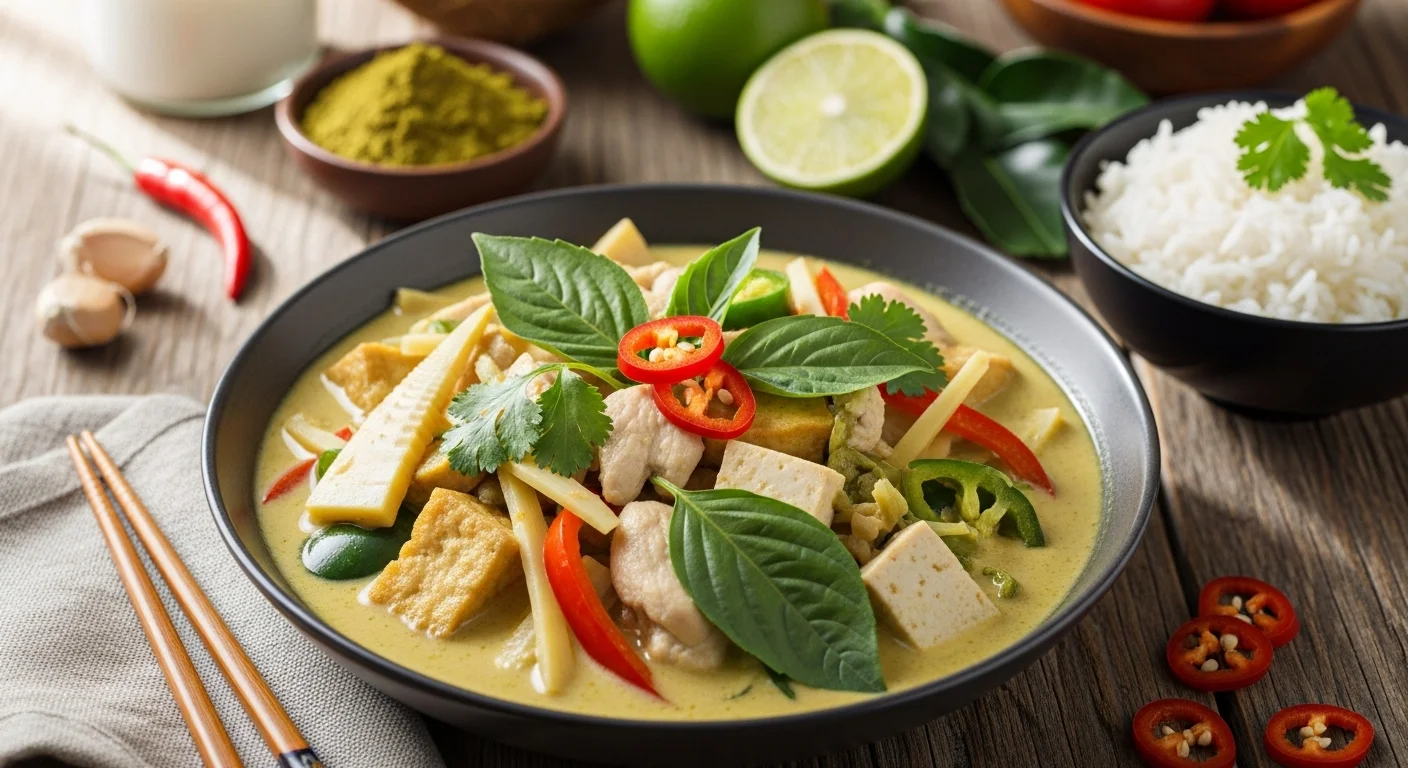
If you’re looking for a quick and delicious meal, my 30-minute Thai Green Curry recipe is the answer! Whether you choose chicken or tofu, this vibrant dish is bursting with flavor and easy to whip up on a busy weeknight. Read Interesting article: Curry Secrets: How to Make Authentic Thai Green Curry Paste
Overview of Thai Green Curry
What is Thai Green Curry?
Thai Green Curry is one of those dishes that feels like a warm hug on a plate. It’s a fragrant, spicy, and creamy dish that typically features a rich coconut milk base flavored with green curry paste. This paste is a unique blend of fresh herbs and spices, giving the curry its distinctive color and flavor. I love how it balances the heat with a touch of sweetness, making it incredibly satisfying. Traditionally, it’s made with chicken or beef, but I often switch it up with tofu for a vegetarian twist.
History and Origin of Green Curry
Thai Green Curry has its roots deep in Thai cuisine, which is influenced by various cultures, including Chinese, Indian, and Malay. I’ve learned that the green curry paste was created in the 20th century and is a staple in Thai households. My grandmother used to tell me stories about how each region in Thailand has its own variations, but they all share that signature green color. The vibrant hue comes from fresh green chilies, and I can still remember the first time I tasted it; it was a game changer!
Key Ingredients in Thai Green Curry
When it comes to making Thai Green Curry, the ingredients are essential for creating that authentic taste. Here’s what typically makes the cut:
- Coconut Milk: The creamy base that makes the curry luscious.
- Green Curry Paste: A blend of green chilies, garlic, lemongrass, and more.
- Protein: Chicken, beef, or tofu depending on your dietary preference.
- Vegetables: Bell peppers, zucchini, and eggplant are common choices.
- Fresh Herbs: Basil and cilantro add a fresh touch.
These ingredients work together to create a dish that’s not just filling but also bursting with different flavors. Every time I make it, I feel like I’m bringing a little piece of Thailand into my kitchen.
Essential Ingredients for 30-Minute Thai Green Curry
Primary Ingredients: Chicken or Tofu
Choosing between chicken or tofu can be a tough decision, but I’ve found that it really depends on what I feel like eating that day. Chicken cooks quickly and absorbs the flavors beautifully. On the other hand, tofu is a fantastic option if you’re looking for a vegetarian or vegan dish. I recommend firm tofu, as it holds its shape well during cooking. Whichever you choose, both proteins complement the curry perfectly.
Vegetables to Include
Vegetables are the heart of any great curry, and I love experimenting with different kinds. Common choices include bell peppers, bamboo shoots, and eggplant. I also like to throw in some snap peas or broccoli for added crunch. It’s amazing how the vegetables not only add texture but also enhance the flavor profile of the dish. Don’t be afraid to use what you have on hand – that’s part of the fun!
Thai Green Curry Paste: What to Look For
Finding the right green curry paste can make or break your dish. When shopping, I look for a brand that lists fresh ingredients and doesn’t contain preservatives. If you have a local Asian grocery store, that’s often the best place to find authentic pastes. I’ve even tried making my own, but I must admit, it takes a bit of time and effort. If you decide to go the store-bought route, make sure to taste it first; that’s the key to a delicious curry. Read Interesting article: Quick Fish Curry (A 20-Minute Weeknight Meal)
Coconut Milk: Importance and Alternatives
Coconut milk is what makes this curry so rich and creamy. I always opt for full-fat coconut milk for the best flavor. However, if you’re watching your calories, light coconut milk can work too, though it may be less creamy. There are also plant-based alternatives like almond or soy milk, but I find they don’t quite capture the essence of traditional Thai Green Curry. It’s worth it to stick with coconut milk for that authentic taste.
Herbs and Spices for Authentic Flavor
Fresh herbs play a crucial role in achieving that authentic Thai flavor. Thai basil is a must-have; it adds a sweet, aromatic touch that I can’t get enough of. I also like to sprinkle some cilantro on top before serving for a fresh contrast. Ginger and lemongrass are other staples that elevate the dish. I’ve learned that balancing the flavors is key; you want the herbs to enhance the curry, not overwhelm it.
Preparation and Cooking Time
Time-Saving Tips for Quick Prep
When I’m in a rush but still want something delicious, I’ve learned a few tricks to speed up the prep time for my Thai Green Curry. First off, I like to prepare my ingredients ahead of time—this makes the cooking process feel almost effortless. Chopping vegetables and measuring out spices in advance can save precious minutes when it’s time to cook. Another tip I’ve adopted is to buy pre-chopped vegetables or frozen mixes from the store. They’re not only a huge time-saver but also keep well, so I always have them on hand for quick meals. For the protein, if I’m using chicken, I often buy pre-cut pieces. If I’m opting for tofu, I make sure to press it before storing it, so it’s ready to go when I need it.
Cooking Techniques for Perfect Curry
Cooking Thai Green Curry is all about technique. I’ve found that starting with a hot pan is crucial. When I heat the pan beforehand, it helps to release the flavors from the curry paste, which is key to a rich and satisfying dish. I usually sauté the paste in a bit of oil until it becomes fragrant before adding any other ingredients. This step really brings the curry to life! I also like to add the coconut milk slowly, stirring it in gradually. This helps to create a smooth, creamy texture without any lumps. Lastly, I make sure not to overcook the vegetables. I aim for a nice crunch, so I typically add them in stages, depending on how long they take to cook.
One-Pot vs. Multi-Pot Cooking
I’ve experimented with both one-pot and multi-pot methods when it comes to making Thai Green Curry. For quick weeknight meals, I usually go with the one-pot approach. This method saves on cleanup and allows all the flavors to meld beautifully together. I simply cook my protein first, then add the vegetables, curry paste, and coconut milk in the same pot. However, there are times when I want a bit more control over the cooking process, especially if I’m making a larger batch. In those instances, I’ll use separate pots for sautéing the protein and veggies, which gives me more flexibility to achieve the perfect texture for each ingredient. Both methods have their perks, but I find that one-pot cooking is often my go-to for a hassle-free meal.
Step-by-Step Recipe for 30-Minute Thai Green Curry
Ingredients List
Here’s what you’ll need to whip up a delicious 30-minute Thai Green Curry:
- 1 lb. chicken (or firm tofu), cut into bite-sized pieces
- 1 can (400 ml) coconut milk
- 2-3 tablespoons green curry paste (adjust to taste)
- 1 bell pepper, sliced
- 1 cup zucchini, sliced
- 1 cup eggplant, cubed
- 1 cup snap peas (optional)
- Fresh Thai basil and cilantro for garnish
- Cooked jasmine or brown rice for serving
Preparation Steps
Getting everything ready before you start cooking really helps to keep things organized. Here’s how I prep:
- Chop all your vegetables and set them aside.
- If using chicken, cut it into bite-sized pieces. If using tofu, press it to remove excess moisture and then cut it into cubes.
- Measure out your green curry paste and coconut milk.
- Prepare your rice according to package instructions, so it’s ready to go when the curry is done.
Cooking Instructions
Now that everything is prepped, it’s time to cook! Follow these steps:
- In a large pot or deep skillet, heat a tablespoon of oil over medium heat.
- Add the green curry paste and sauté for about 1-2 minutes until fragrant.
- If using chicken, add the pieces now. Cook for about 5 minutes, stirring often, until the chicken is no longer pink. If using tofu, add it after the next step.
- Pour in the coconut milk and bring to a gentle simmer.
- Once simmering, add the vegetables (bell pepper, zucchini, eggplant, and snap peas). Cook for an additional 5-7 minutes, until the veggies are tender but still vibrant.
- If using tofu, gently fold it in at this stage and let it warm through.
- Taste and adjust seasoning if needed. You can add a little more green curry paste for spice or some sugar for sweetness.
Serving Suggestions
Serving Thai Green Curry is one of my favorite parts! I usually ladle it over a generous scoop of fluffy jasmine or brown rice. For a pop of freshness, I love to garnish with fresh Thai basil and cilantro. Sometimes, I’ll add a squeeze of lime juice on top for a zesty finish. It’s not just about flavor; the colors and aromas make the meal feel special. I also like to serve it with a side of Thai cucumber salad to balance the richness of the curry. Trust me, it’s a combination that you won’t forget! Read Interesting article: Quick & Easy Shrimp Curry (Ready In 20 Minutes)
Variations of Thai Green Curry
Vegetarian and Vegan Options
I’ve always been fascinated by how versatile Thai Green Curry can be. For those who follow a vegetarian or vegan diet, there are countless ways to adapt this recipe while keeping all the rich flavors intact. Instead of chicken, I often use an array of vegetables like mushrooms, carrots, and bell peppers, creating a vibrant medley. I also enjoy using different types of beans, such as chickpeas or black beans, for added protein. If you’re in the mood for something different, adding in some sweet potatoes or butternut squash can bring a lovely sweetness that pairs beautifully with the curry’s spice. It’s exciting to discover new flavors while still enjoying the essence of a traditional Thai Green Curry!
Spice Level Adjustments
One of the most personal aspects of cooking for me is adjusting the spice level. I’m a fan of a little heat, but I know not everyone shares my love for fiery dishes. If you prefer a milder curry, you can simply reduce the amount of green curry paste you use. I often start with just a tablespoon, then taste as I go. You can also balance out the heat with extra coconut milk or a bit of sugar, which can help mellow the spices. On the flip side, if you’re like me and enjoy a good kick, feel free to add extra chilies or even a splash of sriracha at the end for an extra layer of heat. Cooking is all about personal preference, so don’t hesitate to make it your own!
Alternative Proteins: Shrimp and Beef
When I want to switch things up, I often turn to shrimp or beef as alternative proteins. Shrimp cooks so quickly and adds a delightful sweetness that plays well with the curry’s flavor. I usually toss them in during the last few minutes of cooking to avoid overcooking them. On the other hand, if I’m using beef, I like to choose cuts that are tender and cook them just until they’re done. I’ve found that flank steak or sirloin works best. It’s amazing how different proteins can transform the dish while still allowing the ingredients to shine. Each variation offers a new experience, and I love exploring all the possibilities!
Side Dishes to Serve with Thai Green Curry
Rice Options: Jasmine Rice vs. Brown Rice
When it comes to serving Thai Green Curry, rice is a must-have for me. I have a soft spot for jasmine rice because of its fluffy texture and fragrant aroma that beautifully complements the curry. I remember the first time I paired it with my curry; the flavors just danced on my palate! However, I’ve also started to incorporate brown rice more often, especially when I want something a bit heartier. Brown rice has a nutty flavor and adds a lovely chewiness that contrasts nicely with the creamy curry. Plus, it’s a healthier alternative, packed with fiber. The choice really boils down to what mood I’m in that day.
Complementary Dishes and Salads
To balance out the richness of the curry, I love serving it with complementary dishes. Thai cucumber salad is one of my favorites! The crunchiness of the cucumbers, combined with a tangy dressing, provides a refreshing contrast. I’ve also enjoyed serving a light, simple Asian slaw on the side; the crisp veggies and zesty dressing add a nice crunch that enhances the meal experience. I’ve found that these sides not only brighten up the plate but also help cleanse the palate, making each bite of curry feel exciting.
Pairing Beverages with Thai Green Curry
Choosing the right beverage to enjoy with Thai Green Curry can elevate the entire meal. I often opt for something light and refreshing, like a chilled Thai iced tea or a crisp lager. The sweetness of the iced tea complements the spiciness of the curry perfectly. If I’m in the mood for something non-alcoholic, a coconut water is a great choice, as it hydrates and offers a subtle flavor that pairs well with the dish. For those who enjoy wine, a Riesling or Pinot Grigio works wonderfully too, as their fruity notes can balance the heat and richness. I love how a well-paired drink can enhance the overall dining experience!
Nutritional Information
Caloric Breakdown: Chicken vs. Tofu
Understanding the nutritional content of my meals is something I’ve come to appreciate, especially with dishes like Thai Green Curry. When I use chicken, a typical serving can range from 400 to 500 calories, depending on how much coconut milk and vegetables I include. On the other hand, if I opt for tofu, the calorie count usually drops slightly, landing around 300 to 400 calories per serving. I find that the choice of protein not only affects the flavor but also the caloric content, making it easy to tailor the dish to my dietary needs.
Health Benefits of Key Ingredients
One of the reasons I love cooking Thai Green Curry is the health benefits of its key ingredients. For instance, coconut milk, while rich and creamy, contains medium-chain triglycerides (MCTs) which can provide quick energy. The vegetables I add, like zucchini and bell peppers, are packed with vitamins and antioxidants. If I use tofu, I’m also getting a healthy source of plant-based protein, which is vital for muscle repair and overall health. I feel good knowing that I’m enjoying a meal that’s not just delicious but also nourishing!
Dietary Considerations
When considering dietary restrictions, I’ve found that Thai Green Curry can be incredibly adaptable. For those who are gluten-free, this dish fits the bill perfectly as long as you check your curry paste for any hidden gluten. It’s also a great option for those on a dairy-free diet, thanks to the creamy coconut milk. I love that I can make small tweaks to the recipe to accommodate different eating habits while still enjoying the same vibrant flavors.
Storing and Reheating Thai Green Curry
Best Practices for Storage
Leftovers are always a bonus in my kitchen! I typically store any extra Thai Green Curry in an airtight container in the fridge, where it can last for about three to four days. If I know I won’t be eating it within that time frame, I often freeze individual portions. Freezing is great because it allows me to enjoy my curry later without sacrificing flavor. I just make sure to let it cool completely before transferring it to freezer-safe containers.
How to Reheat Without Losing Flavor
Reheating can sometimes be tricky, but I’ve learned a few tricks to keep the flavors intact. When I reheat my curry, I prefer doing it on the stovetop over low heat, stirring gently to ensure even warming. This way, the coconut milk doesn’t separate, and the spices stay vibrant. I often add a splash of water or extra coconut milk to help restore the creamy texture if it seems too thick. Microwaving works in a pinch, but I’ve found that the stovetop method truly preserves the integrity of the dish.
Common Mistakes to Avoid
Overcooking Ingredients
One mistake I’ve made in the past is overcooking the vegetables. I love a bit of crunch in my curry, and overcooked veggies can turn mushy and lose their vibrant colors. I’ve learned to keep an eye on the cooking time and to add the vegetables in stages to maintain their texture and freshness.
Using the Wrong Type of Coconut Milk
Coconut milk is vital to a great Thai Green Curry, and I’ve realized that not all coconut milk is created equal. Using low-quality coconut milk can lead to a lackluster dish. I always reach for full-fat coconut milk for its richness, but if I go light for health reasons, I make sure to balance it out with extra spices or herbs for flavor.
Neglecting Balance of Flavors
Cooking is an art, and achieving the perfect balance of flavors is key. I used to underestimate the importance of tasting my curry as I cooked. Adjusting the sweetness, spice, and saltiness throughout the process is essential to creating a harmonious dish. I recommend tasting and tweaking until you find that sweet spot!
FAQs about Thai Green Curry
Can I make it ahead of time?
Absolutely! I often make Thai Green Curry ahead of time. The flavors actually deepen and improve after a day in the fridge. Just remember to store it properly and reheat gently when you’re ready to enjoy it.
How can I make it less spicy?
If you find that Thai Green Curry is too spicy for your taste, I suggest starting with less curry paste and gradually increasing it as you cook. Adding more coconut milk can also help mellow the heat.
What can I substitute for green curry paste?
If you can’t find green curry paste, you can create a makeshift version using a blend of ingredients like green chilies, garlic, ginger, and lemongrass. While it won’t be exactly the same, it can still bring delicious flavors to your curry.
Final Thoughts
Thai Green Curry has been a delightful addition to my cooking repertoire. Whether I’m preparing it for a quick weeknight meal or a cozy gathering with friends, it always brings a burst of warmth and flavor to the table. I love the versatility of the dish, allowing me to adjust ingredients based on what I have on hand or cater to the preferences of those I’m serving. It’s a recipe that not only nourishes the body but also comforts the soul, reminding me of the rich culinary heritage of Thailand. I hope you find as much joy in making and enjoying this dish as I do!
Frequently Asked Questions
What is Thai Green Curry?
Thai Green Curry is a fragrant, spicy, and creamy dish typically made with a coconut milk base flavored with green curry paste. It is known for its distinctive color and flavor, balancing heat with a touch of sweetness.
What are the key ingredients in Thai Green Curry?
The key ingredients in Thai Green Curry include coconut milk, green curry paste, a protein choice (chicken, beef, or tofu), vegetables (such as bell peppers, zucchini, and eggplant), and fresh herbs like basil and cilantro.
Can I make Thai Green Curry vegetarian or vegan?
Yes! Thai Green Curry can easily be made vegetarian or vegan by using tofu or a variety of vegetables and beans instead of meat. Options like mushrooms, carrots, and sweet potatoes work well to maintain rich flavors.
How can I adjust the spice level in Thai Green Curry?
To adjust the spice level, start with less green curry paste and gradually add more to taste. You can also balance the heat by adding extra coconut milk or a bit of sugar.
What type of rice pairs well with Thai Green Curry?
Jasmine rice is a popular choice for its fluffy texture and fragrant aroma, but brown rice is also suitable for a heartier option. Both types complement the curry well.
How should I store leftovers of Thai Green Curry?
Leftovers should be stored in an airtight container in the fridge for about three to four days. For longer storage, you can freeze individual portions in freezer-safe containers.
What is the best way to reheat Thai Green Curry?
The best way to reheat Thai Green Curry is on the stovetop over low heat, stirring gently to ensure even warming. Adding a splash of water or coconut milk can help restore the creamy texture if needed.
Can I make my own green curry paste?
Yes, you can make your own green curry paste using a blend of green chilies, garlic, ginger, and lemongrass. However, it may take more time and effort compared to store-bought versions.
What are some common mistakes to avoid when making Thai Green Curry?
Common mistakes include overcooking vegetables, using low-quality coconut milk, and neglecting the balance of flavors. It’s important to taste and adjust seasoning throughout the cooking process.
Is Thai Green Curry gluten-free?
Yes, Thai Green Curry can be gluten-free as long as you check the curry paste for any hidden gluten ingredients. It is also dairy-free due to the use of coconut milk.