
Are you ready to embark on a unique culinary adventure? The carnivore diet, which emphasizes meat and animal products, has gained attention for its potential health benefits. Let me guide you through a 7-day meal plan that will help you dive into this fascinating way of eating.
Understanding the Carnivore Diet
The carnivore diet, often referred to as a zero-carb diet, focuses solely on animal products. This means that everything from steaks and chicken to fish and eggs is on the menu, while fruits, vegetables, grains, and legumes are strictly off-limits. I’ve been intrigued by this diet for a while now, and as I started my journey, I found it essential to understand not just the foods included, but also the potential benefits and challenges that come with it.
What to Expect on the Carnivore Diet
As I began to immerse myself in the carnivore lifestyle, I quickly realized that it was more than just a diet; it was a complete shift in how I approached food. The primary focus is on high-quality animal products, which can provide essential nutrients and protein. The idea is to eliminate carbohydrates entirely, which can lead to various metabolic changes in the body. For some, this means increased energy levels, improved mental clarity, and even weight loss. However, I also learned that it can take time for the body to adjust, and some people might experience temporary side effects like fatigue or digestive changes during the transition.
Benefits I Noticed
Throughout my week on the carnivore diet, I discovered several benefits that kept me motivated. I experienced a reduction in cravings for sugary snacks, which was a significant win for me. I felt more satiated after meals, largely due to the high protein and fat content in my diet. Additionally, I noticed an improvement in my mental focus, which was a pleasant surprise. For many, these benefits can be attributed to the absence of carbohydrates, which can often lead to energy crashes and brain fog.
Challenges Faced
While there were many positives, it wasn’t all smooth sailing. I encountered some challenges that I had to navigate carefully. One of the biggest hurdles for me was the limited variety in my meals. At times, I missed the textures and flavors of fruits and vegetables. I also had to plan my meals meticulously to ensure I was getting enough nutrients, as there are concerns about deficiencies when following such a restricted diet. Staying hydrated was another aspect I had to pay extra attention to, as the diet can lead to a higher loss of electrolytes.
Crafting a 7-Day Meal Plan
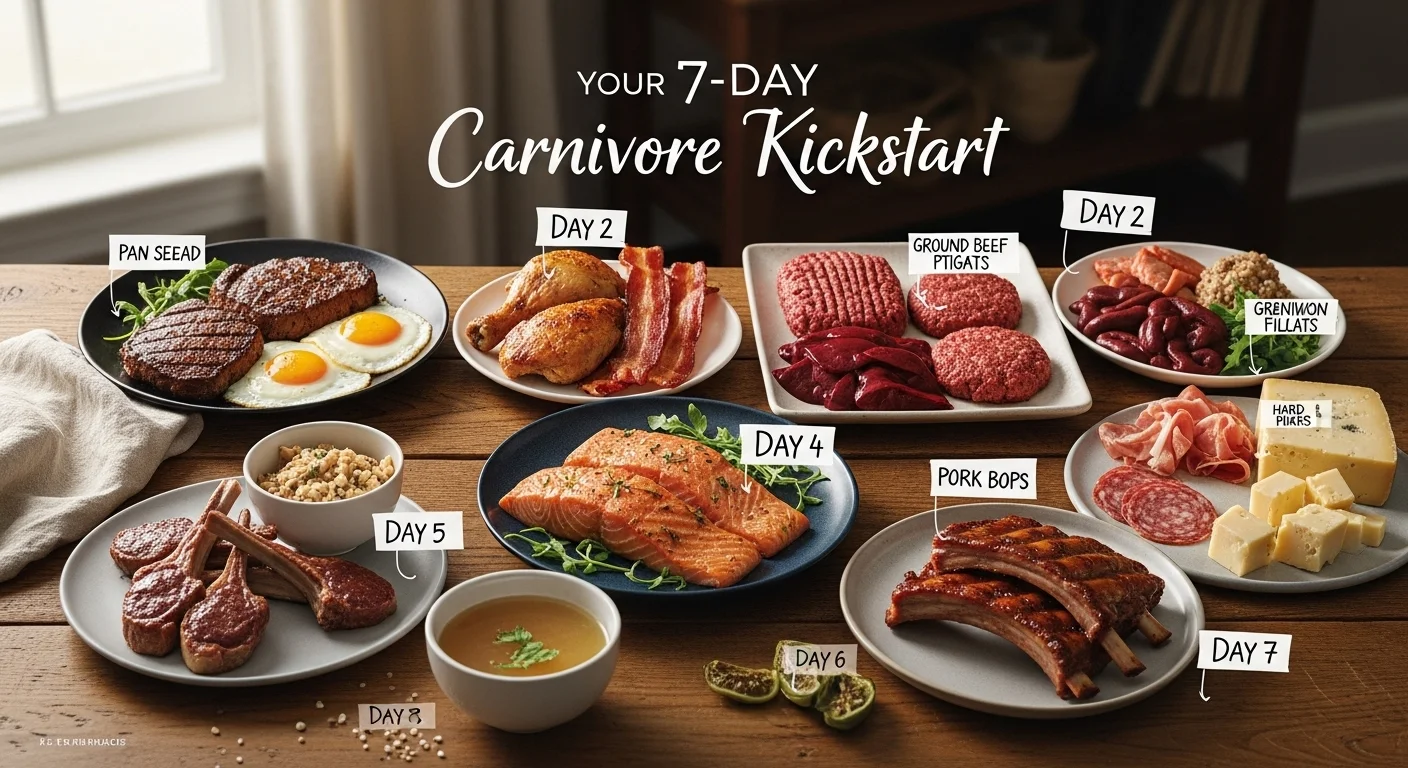
So, how does one go about planning meals for an entire week on the carnivore diet? I found it helpful to keep things simple and repetitive, which not only made shopping easier but also streamlined my cooking process. Below is a sample 7-day meal plan that I created, focusing on variety while sticking to the core principles of the diet.
Day 1
For breakfast, I started my day with scrambled eggs cooked in butter followed by crispy bacon. Lunch consisted of a juicy ribeye steak, seasoned simply with salt and pepper. For dinner, I indulged in grilled chicken thighs, topped with a little melted cheese.
Day 2
I switched things up by having an omelet filled with cheese and diced ham for breakfast. For lunch, I prepared a salmon filet, pan-seared with skin on, accompanied by a side of shrimp. Dinner was a hearty beef roast, slow-cooked to perfection.
Day 3
Breakfast featured boiled eggs and a few slices of salami. I opted for a burger for lunch, skipping the bun but adding cheese, and I finished the day with a roasted whole chicken, seasoned with herbs and spices.
Day 4
On this day, I enjoyed a breakfast of fried eggs and pork belly. For lunch, I had a variety of meats including grilled sausages and slices of roast beef. Dinner was an elegant affair with lamb chops, cooked to my liking.
Day 5
Breakfast was hearty with a steak and eggs combo. For lunch, I had tuna salad, using mayonnaise for a creamy texture. Dinner included a rack of ribs, slathered in a sugar-free barbecue sauce.
Day 6
Starting with a breakfast of soft-boiled eggs, I felt energized. Lunch was a simple beef brisket, which was flavorful and tender. Dinner involved a side of liver, which is often touted for its nutrient density, paired with grilled pork steaks.
Day 7
For my final day, I revisited some favorites. Breakfast consisted of bacon and egg muffins. Lunch was a tender filet mignon served with a side of creamy crab meat. I concluded the week with a delicious roast duck, appreciating every bite.
This meal plan is just a starting point, and throughout my journey, I learned that personal preferences and nutritional needs might vary. The key is to listen to your body and adjust based on how you feel. I hope this guide helps you jump-start your own carnivore adventure!
Tips for Success on the Carnivore Diet
As I continued my journey on the carnivore diet, I realized that a few key strategies made a significant difference in my experience. I found that these tips not only helped me stay committed but also ensured I was getting the most out of the diet. Here’s what I learned along the way.
Prioritize Quality
One of the first things I embraced was the importance of choosing high-quality meats. I discovered that grass-fed and pasture-raised options not only taste better but also tend to have a higher nutrient profile. It became a fun challenge to source my meats from local farms and farmers’ markets. This not only supported sustainable agriculture but also allowed me to build relationships with those who raised the animals. I noticed that when I prioritized quality, my meals felt more satisfying, and I was more energized throughout the day.
Experiment with Preparation Methods
Variety is the spice of life, even on a restrictive diet like the carnivore diet. To avoid monotony, I started experimenting with different cooking techniques. Whether it was using a slow cooker for tender roasts, grilling for that smoky flavor, or baking for crispiness, I found that changing up the preparation made my meals more enjoyable. I also began to play with various seasonings, sticking to those that are allowed, such as salt, pepper, and certain herbs. This experimentation not only kept my taste buds happy but also reignited my passion for cooking.
Stay Hydrated and Mind Electrolytes
During my time on the carnivore diet, I learned that hydration is critical. I made sure to drink plenty of water throughout the day, but I also became more aware of my electrolyte intake. Without the carbohydrates that typically help retain water in the body, I noticed I was more prone to dehydration. To counteract this, I started including bone broth regularly in my meals, which not only provided hydration but also delivered essential minerals. I made it a habit to sip on it in the morning, and it soon became a comforting ritual.
Listen to Your Body
This tip might seem simple, but it’s crucial. Part of my success came from tuning into how my body felt on the carnivore diet. There were days when I craved something outside the parameters of the diet, and instead of feeling guilty, I asked myself what my body needed. Sometimes, a little flexibility was necessary, leading me to incorporate small amounts of animal-based dairy or organs like liver for added nutrients. Listening to my body ensured I didn’t feel deprived and helped me maintain my mental well-being throughout the week.
Engage with the Community
Connecting with others who are following the carnivore diet was a game-changer for me. I found online forums and social media groups where I could exchange experiences, tips, and recipes with fellow carnivores. The community’s support provided motivation and accountability, making it easier to stick to my goals. I was inspired by others’ journeys and learned from their successes and challenges. Sharing my own experiences also helped me feel more committed to my journey.
Exploring Variations of the Carnivore Diet
As I delved deeper into the carnivore diet, I discovered that there are various ways to approach it. While the strict version focuses solely on animal products, some people incorporate different elements based on their preferences and health goals. I began to explore these variations and found them intriguing.
Animal-Based Keto
This version combines principles of the ketogenic diet with the carnivore approach. It allows for higher fat intake while still focusing primarily on animal products. I experimented with adding high-fat foods like butter and cream, which made meals even more satisfying. This variation helped me stay in a state of ketosis, which some claim enhances fat burning and mental clarity.
Carnivore with Dairy
Some people choose to include dairy products in their carnivore diet, which can offer additional sources of fats and protein. I tried incorporating items like cheese and heavy cream into my meals and found that they added delicious flavors and variety. However, I made sure to choose high-quality, full-fat options to maximize the benefits.
Seasonal and Regional Variations
Exploring regional meats or seasonal availability also added excitement to my meals. I experimented with local specialties, which helped me appreciate the diversity of animal products. I found myself looking forward to visiting butcher shops and discovering cuts of meat I had never tried before. This approach not only made my meals more enjoyable but also encouraged me to support local farmers and producers.
Final Thoughts
The carnivore diet has been a transformative journey for me. Through exploration, experimentation, and community engagement, I’ve learned to navigate this unique way of eating with confidence and joy. Each week has brought new insights and successes, motivating me to continue refining my approach. If you’re curious about the carnivore diet, I encourage you to take the plunge, listen to your body, and enjoy the experience!