
If you’ve ever wondered what it’s like to eat like a carnivore, you’re in for a treat! This 7-day food guide will help you dive into a meat-centric lifestyle, packed with delicious options and nutritional insights.
Understanding the Carnivore Diet
When I first stumbled upon the carnivore diet, I was intrigued. The idea of consuming only animal products seemed radical yet liberating. I had spent years trying various diets, each promising the world but often leaving me feeling unsatisfied or deprived. The carnivore diet flipped the script; it simplified my meals while giving me the freedom to enjoy hearty, flavorful foods. But what exactly is the carnivore diet? At its core, it’s a dietary regimen that encourages the exclusive consumption of animal products, which includes meat, fish, eggs, and certain dairy products. Fruits, vegetables, grains, and sugars are completely off the table.
The Appeal of the Carnivore Diet
As I began to explore this diet, I quickly learned that many people are drawn to it for various reasons. Some of my friends and acquaintances report significant weight loss, increased energy levels, and improved mental clarity. It’s fascinating how a diet can transform not just the body, but also the mind. For me, the allure was simplicity. I could focus on high-quality meats without the fuss of counting calories or macronutrients. Plus, I knew that animal products are rich in essential nutrients like protein, vitamin B12, iron, and omega-3 fatty acids.
What to Expect When Transitioning
Transitioning to a carnivore diet isn’t always a walk in the park, and I’ve found it comes with its own set of challenges. In the beginning, I experienced what many refer to as the “keto flu”—a temporary period of fatigue, headaches, and irritability as my body adjusted to burning fat for fuel instead of carbohydrates. I’ve read that staying hydrated and ensuring adequate salt intake can help ease these symptoms. After a week or so, I noticed a remarkable shift. My cravings for sugar and carbs diminished, and I felt more focused than ever.
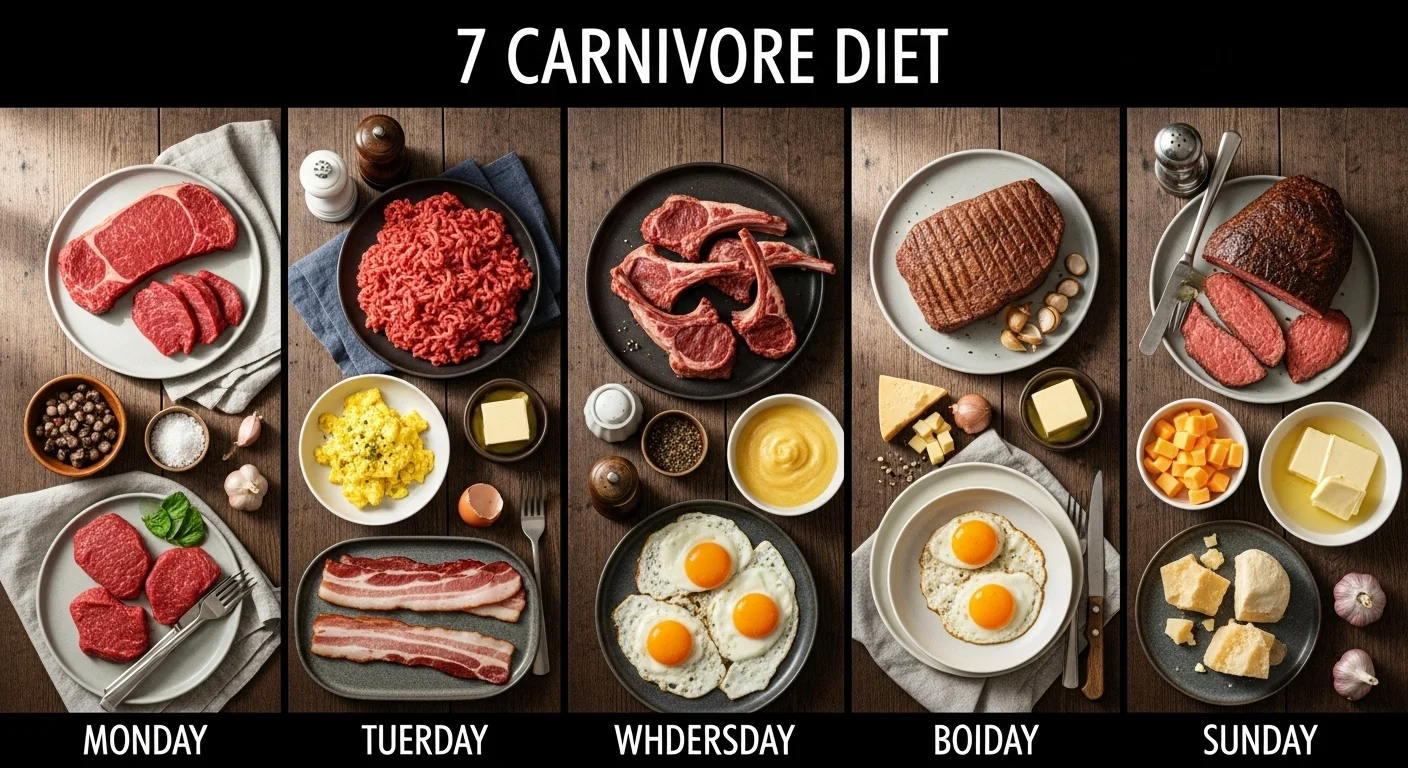
Planning Your Week: A 7-Day Food Guide
Now that I’ve shared my initial experiences, let’s dive into the meal planning aspect of the carnivore diet. Having a well-structured week can set you up for success and keep you motivated. Here’s how I plan my meals:
Day 1: Beef and Eggs
Breakfast: I love starting my day with scrambled eggs cooked in grass-fed butter. Sometimes, I toss in a few slices of crispy bacon for added flavor. This combo is not only satisfying but also provides a great dose of protein and healthy fats.
Lunch: For lunch, I often whip up a juicy ribeye steak. I prefer cooking it on a cast-iron skillet for that perfect sear. The rich flavor is unparalleled and keeps me full throughout the afternoon.
Dinner: I like to finish the day with a hearty beef stew. Using a mix of beef chuck and bone broth, I let it simmer for hours. The result? A nutrient-dense meal that warms the soul!
Day 2: Pork Paradise
Breakfast: On day two, I switch things up with a delicious pork belly. The crispy edges and tender meat make for an indulgent start to the day.
Lunch: I’ll often make a simple pork chop seasoned with salt and pepper. Grilling it adds a nice smoky flavor that I can’t resist.
Dinner: I enjoy preparing a slow-roasted pork shoulder. The long cooking time renders it super tender, and leftovers can be great for the next day!
Day 3: Seafood Sensations
Breakfast: I typically enjoy smoked salmon and cream cheese. It’s a luxurious treat that packs a punch of omega-3s.
Lunch: A seared tuna steak is a perfect midday meal for me. I like it cooked rare, drizzled with a little lemon juice.
Dinner: I often indulge in a seafood platter featuring shrimp and scallops. A little garlic and butter elevate this dish to another level.
Day 4: Game Meat Glory
Breakfast: I try to incorporate variety, so I opt for venison sausage this morning. It’s lean and flavorful, perfect for keeping me energized.
Lunch: Ground bison tacos (sans the tortilla, of course) are on the menu today. Using lettuce leaves as wraps can be a fun way to enjoy this dish.
Dinner: I love a grilled lamb chop, seasoned with rosemary. The strong flavor pairs beautifully with the richness of the meat.
Day 5: Poultry Perfection
Breakfast: Chicken liver pâté on hard-boiled eggs is a great way to kick off the day. It’s rich in nutrients and super satisfying.
Lunch: I roast a whole chicken, and the leftover meat becomes my go-to for quick snacks or salads.
Dinner: Duck breast with a crispy skin is a treat I reserve for special occasions. The richness of the meat never disappoints!
Day 6: Dairy Delight
Breakfast: I’ll often enjoy a cheese omelet. High-quality cheese adds a creamy texture that I find irresistible.
Lunch: A charcuterie board with various cured meats is perfect for a light meal. I love indulging in prosciutto, salami, and aged cheddar.
Dinner: I like making a creamy alfredo sauce using heavy cream and cheese, served over grilled chicken.
Day 7: A Meat Medley
Breakfast: I wrap up the week with a classic steak and eggs breakfast. It’s hearty, fulfilling, and a perfect way to start my last day.
Lunch: A mixed grill featuring beef, pork, and chicken is a great way to celebrate the end of the week.
Dinner: I indulge in a celebratory feast with a prime rib roast. It’s a fitting way to end a week of carnivore dining.
By planning my meals and staying committed, I’ve found the carnivore diet to be an exciting culinary adventure. My journey has just begun, and I look forward to sharing more insights as I continue to explore this unique way of eating.
Exploring Nutritional Benefits
As I continued my journey on the carnivore diet, I became increasingly curious about the nutritional benefits associated with this way of eating. It wasn’t just about enjoying delicious meals; I wanted to understand how focusing on animal products could impact my health positively. One of the first things that struck me was the abundance of essential nutrients found in meat and animal products.
For instance, I learned that red meat is an excellent source of iron, particularly heme iron, which is more easily absorbed by the body than the non-heme iron found in plant foods. This became particularly relevant for me since I’ve always been conscious about my iron levels. Feeling energized and alert was a noticeable difference after including more red meat in my diet. I also found that vitamin B12, which is crucial for nerve function and the production of DNA and red blood cells, is plentiful in animal products. Before transitioning, I never realized how much I was missing out on by avoiding these nutrient-dense foods!
Another fascinating aspect of the carnivore diet is its impact on inflammation. I’ve read numerous accounts from others who report a reduction in inflammation markers and symptoms. I began paying attention to my body’s response to various foods, and lo and behold, I noticed that my occasional joint discomfort subsided as I removed plant-based foods from my diet. It was as if my body was thanking me for providing it with what it truly craved.
Additionally, the rich omega-3 fatty acids found in fatty fish like salmon and sardines played a significant role in my overall health. Omega-3s are known for their anti-inflammatory properties, and as someone who has struggled with mild anxiety, I was hopeful that they could contribute positively to my mental well-being. I’ve since added more fish to my meals, and I genuinely feel a sense of calm and clarity that I hadn’t experienced before.
Addressing Common Concerns
Adopting a carnivore diet comes with a fair share of skepticism, and I found myself grappling with some common concerns as well. One of the major critiques I encountered was the potential for nutrient deficiencies. Initially, I worried about missing out on vitamins and minerals that are typically obtained from fruits and vegetables. However, through my research and conversations with others on the diet, I learned that many of these nutrients are available in animal foods.
For example, I discovered that organ meats are incredibly nutrient-dense. Incorporating liver into my diet not only provided me with iron and vitamin A but also introduced me to a whole new culinary experience. The first time I pan-fried some liver, I was amazed at how rich and flavorful it turned out! This opened my eyes to a world of possibilities beyond just muscle meats.
Another concern that frequently pops up is the sustainability aspect of a meat-heavy diet. It’s a topic that I take seriously, especially as I strive to make responsible choices. I made it a point to source my meats from local, sustainable farmers where possible. Knowing that the animals were raised humanely and environmentally soundly made a significant difference in how I approached my meals. Plus, supporting local producers felt rewarding and meaningful.
Listening to My Body
One of the most important lessons I learned during this journey is the value of tuning into my body. Everyone’s experience with the carnivore diet will be unique, and I found that what works for me may not necessarily work for someone else. I’ve noticed fluctuations in my energy levels and digestive comfort, prompting me to adjust my food choices accordingly. Staying attuned to how I felt after each meal guided my decisions.
For example, I’ve discovered that while I adore steak, eating it every day can sometimes lead to a feeling of heaviness. I began incorporating lighter options like chicken or seafood on alternate days to help balance things out. This flexibility has made the diet feel less restrictive and more enjoyable for me.
Moreover, I’ve started keeping a food journal to track my meals and how I feel afterward. It’s been an eye-opening experience, revealing patterns that I hadn’t noticed before. This practice has encouraged me to be more mindful about my food choices and has allowed me to appreciate the variety within the carnivore diet.
Social Aspects and Dining Out
One of the more challenging aspects of the carnivore diet has been navigating social situations and dining out. I’ve often found myself in scenarios where my dietary choices differ significantly from those around me. At first, I felt a bit apprehensive about being the odd one out at gatherings, but I discovered that embracing my choices has led to some intriguing conversations.
When dining out, I’ve become adept at customizing my orders. I often ask for a protein-heavy dish, like a steak or grilled chicken, and skip the sides. Many restaurants are accommodating when it comes to dietary preferences, and I’ve found that being upfront about my needs usually results in a satisfying meal. I’ve even had the chance to introduce friends to some delicious cuts of meat that they might not have considered otherwise!
Ultimately, I’ve realized that while the carnivore diet can feel isolating at times, it has also provided me with opportunities to connect with others who are curious about this lifestyle. Sharing my experiences and recipes has become a fun way to engage with friends and family, sparking discussions about nutrition and dietary choices.
Final Thoughts
The carnivore diet has been a transformative experience for me. From exploring new flavors to understanding the nutritional benefits, I feel like I’m not just eating to survive but thriving in this culinary adventure. While challenges exist, I’m excited to continue this journey, learning more and sharing my experiences along the way.