
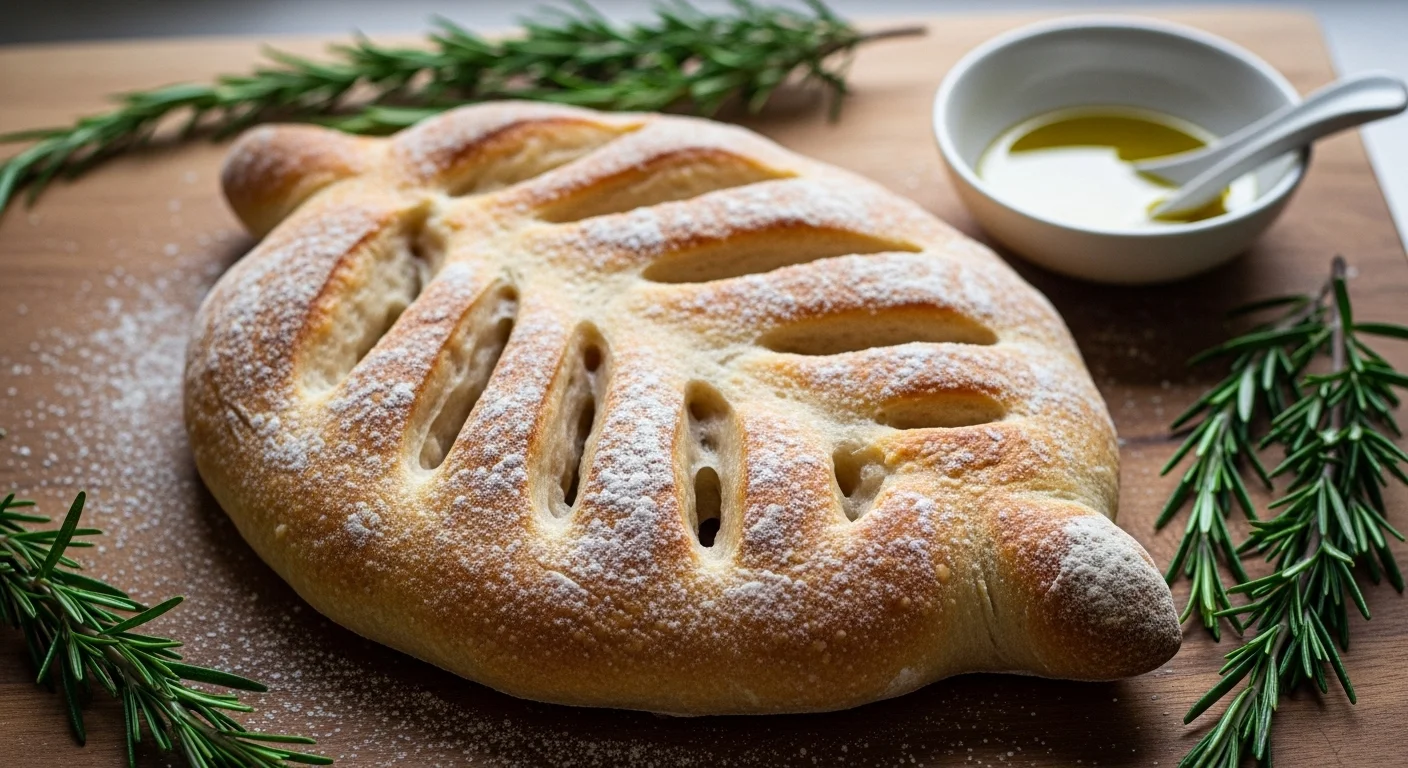
Imagine pulling a beautifully crafted loaf of sourdough fougasse from your oven, its golden crust glistening with olive oil and herbs. This artistic bread is not just a treat for the taste buds but also a feast for the eyes!
What is Sourdough Fougasse?
Sourdough fougasse is a type of bread that has its roots in the south of France. Its unique shape, often resembling a leaf or an ear of wheat, makes it visually appealing. Fougasse is typically flavored with herbs, olives, or other ingredients, making it a versatile addition to any meal. For those looking for a gluten-free option, check out The Best Gluten-Free Naan Bread (Soft, Bubbly, & Chewy).
Origin and History of Fougasse
The origins of fougasse can be traced back to ancient Roman times, where it was made as a flatbread. In the south of France, it evolved into a more enriched bread, often served during special occasions. I remember the first time I learned about fougasse—it was during a culinary class where the instructor spoke passionately about its history. He explained that fougasse was traditionally baked in the wood-fired ovens of the region, giving it a unique flavor and texture. Over the years, bakers have adapted it, adding local ingredients and flavors, which makes each loaf a representation of its region.
Difference Between Fougasse and Other Breads
When I first started baking, I often confused fougasse with other flatbreads or focaccia. However, I soon realized that fougasse has its own identity. Unlike focaccia, which is typically thicker and more pillowy, fougasse is flatter and has a more rustic appearance. It’s often adorned with cuts that allow for better baking and cooling. The visual aspect is just as important as the taste, and that’s something I truly love about making fougasse—it’s like creating a piece of art that you can eat!
Essential Ingredients for Sourdough Fougasse
Creating a delicious sourdough fougasse requires a few essential ingredients. Each plays a crucial role in the final loaf’s flavor, texture, and overall success. Here’s what you need to know about each ingredient.
Sourdough Starter
Your sourdough starter is the heart of this recipe. It’s a living culture of flour and water that ferments and rises, giving your fougasse its distinct tangy flavor. I’ve had my share of challenges with maintaining a starter, but I’ve learned that a healthy starter is key. If you’re new to sourdough, I recommend feeding your starter regularly and keeping it at room temperature for the best results.
Flour Types (Bread Flour vs. All-Purpose Flour)
When it comes to flour, I prefer using bread flour for my fougasse. It has a higher protein content, which provides better structure and chewiness. While all-purpose flour can work in a pinch, I find that the texture of the bread is worth the extra effort to use bread flour. If you’re feeling adventurous, experimenting with a mix of flours can yield delightful results!
Water Quality and Temperature
Water is another crucial ingredient in sourdough baking. I always use filtered water because I’ve noticed that the chlorine in tap water can adversely affect the fermentation process. Temperature also matters; warm water helps to activate your starter more quickly. I’ve found that using water at around 80°F gives me the best results.
Salt and Its Role in Fermentation
Salt not only enhances flavor but also controls fermentation. I like to use sea salt for its clean taste. When adding salt to the dough, it’s vital to mix it in thoroughly. I learned this the hard way when I once sprinkled salt on top instead of mixing it in—it led to uneven flavor in my bread. Salt strengthens the gluten structure as well, so it’s an essential part of the process.
Step-by-Step Guide to Making Sourdough Fougasse
Now that we have our ingredients ready, let’s dive into the process of making sourdough fougasse. This is where the magic happens!
Preparing the Sourdough Starter
Before starting, make sure your sourdough starter is active. I like to feed mine the night before I plan to bake. This ensures it’s bubbly and ready to go. When I see those bubbles, I know I’m on the right track!
Mixing the Dough
To mix the dough, I combine the starter, flour, water, and salt in a large bowl. Using my hands, I mix until everything comes together. I remember the first time I did this—it felt so satisfying to feel the dough transform from a sticky mess to a cohesive ball. It’s a sensory experience that connects me to the process.
The Importance of Autolyse
Autolyse is a technique I swear by. After mixing, I let the dough rest for about 30 minutes. This resting period allows the flour to fully hydrate, making the dough easier to handle later. I’ve noticed that my fougasse turns out significantly better when I take this step.
Bulk Fermentation Process
During bulk fermentation, I let the dough rise for several hours. I like to stretch and fold the dough every 30 minutes to help build strength. This part of the process is where I often feel a bit impatient, but I remind myself that good things take time.
Shaping the Fougasse
Once the dough has risen, I gently transfer it onto a floured surface for shaping. This is where the fun really begins! I typically form it into an oval and flatten it out. It’s amazing to see how the dough changes under my hands, becoming more elastic and easier to shape.
Creating Traditional Patterns and Cuts
When it comes to traditional patterns, I love making slashes that resemble leaves. I use a sharp knife or a lame for this. It’s an artistic touch that gives my fougasse its characteristic look. I’ve found that the slashes not only look beautiful but also help the dough expand while baking.
Proofing the Dough
After shaping, I let the dough proof for another hour or so. I often find myself peeking under the cloth to check on its progress. This is another stage where patience is key; I learned to resist the urge to rush this step as it greatly influences the final texture of the bread.
Baking Techniques for Perfect Fougasse
Finally, it’s time to bake! I preheat my oven with a baking stone inside, which helps achieve that crispy crust we all love. I place the fougasse on the hot stone, and the smell that fills my kitchen is simply divine. I often bake it until it’s golden brown and sounds hollow when tapped on the bottom. That’s when I know I’ve created something truly special.
Flavor Variations and Add-Ins
One of the things I love most about sourdough fougasse is its versatility. You can easily customize it to suit your taste or to pair perfectly with a meal. Over time, I have discovered several flavor variations and add-ins that elevate this already delicious bread, like pairing it with a Quick & Easy Shrimp Curry (Ready In 20 Minutes).
Herbs and Spices (Rosemary, Thyme, etc.)
Herbs are a fantastic way to infuse your fougasse with flavor. My absolute favorite is rosemary. The aromatic notes of fresh rosemary combined with the tangy sourdough create a delightful harmony. I often chop fresh rosemary and fold it into the dough during mixing or sprinkle it on top before baking. Thyme is another great option; its earthy flavor pairs beautifully with the crusty bread. I remember a time when I experimented with a blend of both herbs, and the result was a fragrant loaf that made my kitchen smell heavenly!
Cheese Options (Feta, Parmesan, etc.)
Incorporating cheese into my fougasse has been a game-changer. Feta cheese adds a salty, creamy burst of flavor, especially when crumbled and mixed into the dough. I recommend sprinkling some on top as well for an extra layer of taste. Parmesan is another cheese that works great. I love to grate it and fold it in, letting it melt into the bread as it bakes, creating a rich and savory profile. I once made a fougasse with both feta and sun-dried tomatoes, and it quickly became a favorite in my household!
Adding Vegetables (Olives, Sun-Dried Tomatoes, etc.)
Vegetables can also add a delightful twist to your fougasse. I often chop up some black olives and mix them into the dough. The briny flavor of the olives contrasts beautifully with the tang of the sourdough. Sun-dried tomatoes are another excellent addition; their sweetness and chewy texture complement the bread perfectly. I remember the first time I added sun-dried tomatoes—I was blown away by how they intensified the flavor of the fougasse. You can really get creative here, and I encourage you to experiment with different combinations!
Serving Suggestions and Pairings
After spending time baking and customizing my sourdough fougasse, I always look forward to serving it. There are so many delightful ways to enjoy this bread that can turn a simple dish into something special.
Best Accompaniments (Cheese, Charcuterie)
Fougasse pairs beautifully with a variety of accompaniments. I love serving it alongside a cheese platter. A selection of soft cheeses like brie, sharp cheddar, or a creamy goat cheese complements the crusty texture of the bread flawlessly. Adding some sliced cured meats to the mix, like prosciutto or salami, can elevate the experience even further. One of my favorite gatherings was when I set up a charcuterie board with my fougasse, and everyone raved about how well they went together!
Pairing with Soups and Salads
Another fantastic way to enjoy sourdough fougasse is with soups and salads. A warm bowl of tomato basil soup served with a slice of freshly baked fougasse is pure comfort food. The bread is perfect for dipping, soaking up all that delicious broth. I also love to serve it alongside a fresh garden salad. The crusty bread adds a nice textural contrast to the crisp greens. I remember one summer evening, I made a light lemon vinaigrette salad paired with my fougasse, and it was a hit at the dinner table!
Storing and Reheating Sourdough Fougasse
After all the hard work of making this beautiful bread, it’s essential to know how to store it properly. I’ve learned a few tips along the way that help keep my sourdough fougasse fresh for longer.
Best Practices for Storage
To store my sourdough fougasse, I usually wrap it in a clean kitchen towel and place it in a breathable bag. This helps maintain its crusty exterior while preventing it from getting too dry. I’ve found that storing it at room temperature is best if I plan to eat it within a day or two. For longer storage, I recommend placing it in an airtight container or a freezer bag and freezing it. Just be sure to let it cool completely before freezing to avoid condensation. I’ve had great success storing my fougasse this way!
How to Reheat for Optimal Freshness
When it comes to reheating, I prefer using the oven to bring back that fresh-baked quality. I preheat my oven to 375°F and place the fougasse directly on the rack for about 5-10 minutes. It’s amazing how the heat revives the crust, making it crispy again. If I’m in a hurry, I’ll also pop a slice in the toaster, which works wonders too! I remember one busy morning when I reheated a slice for breakfast, and it tasted just like it came out of the oven. There’s nothing quite like that warm, crispy goodness!
Common Mistakes to Avoid
Even with the best intentions, mistakes can happen in the kitchen. I’ve learned a few lessons over the years that I wish I could have avoided. Here are some common pitfalls to watch out for when making sourdough fougasse.
Overproofing or Underproofing the Dough
Getting the proofing stage right can be tricky. I’ve definitely overproofed my dough before, leading to a loaf that didn’t rise well in the oven. On the flip side, underproofing can result in a dense texture. I’ve found that keeping an eye on the dough and learning to recognize its signs of readiness, like a slight dome shape and a puffy appearance, has made a huge difference in my outcomes.
Using the Wrong Flour Type
Choosing the right flour is crucial. I’ve experimented with all-purpose flour, hoping to save time, but it just didn’t yield the same results. The structure and chewiness that bread flour provides are worth the extra effort. If you want that bakery-style crust and crumb, stick with bread flour or a mix that suits your taste.
Improper Shaping Techniques
Shaping is an art in itself. I learned this the hard way when I didn’t pay enough attention to how I was shaping my fougasse. If the dough isn’t shaped properly, it can lead to uneven baking and a less attractive appearance. I recommend taking your time with this step and practicing those slashes to create that iconic look.
Frequently Asked Questions (FAQs)
As I’ve shared my love for sourdough fougasse, I’ve often come across some questions that I think are worth addressing.
Can I Make Fougasse Without a Sourdough Starter?
Yes! While sourdough gives fougasse its signature flavor, you can make a quicker version using commercial yeast. Just keep in mind that the texture and taste will differ.
How Long Does Fougasse Last?
Freshly baked fougasse is best enjoyed within a couple of days. If stored properly, it can last up to a week, but I find it’s usually gone much sooner!
Can I Freeze Sourdough Fougasse?
Absolutely! Freezing is a great option. Just make sure it’s completely cooled, wrapped well, and you can enjoy it later by reheating it in the oven for that fresh-baked taste.
What is Sourdough Fougasse?
Origin and History of Fougasse
I find the history of sourdough fougasse fascinating. This bread dates back to ancient times, likely to the Romans who baked flatbreads. I can just imagine those early bakers crafting their breads in rustic ovens, using whatever local ingredients were at hand. As the centuries passed, fougasse evolved into a more sophisticated bread in the south of France, often enriched with olive oil and herbs. During my travels in Provence, I witnessed locals enjoying fougasse with their meals, and it made me realize how deeply rooted this bread is in their culture. It’s not just food; it’s a tradition that has been passed down through generations.
Difference Between Fougasse and Other Breads
When I first started exploring different types of bread, I noticed that fougasse stands out in both texture and presentation. Unlike other flatbreads, it has structure and a crusty exterior, thanks to its unique preparation method. For example, focaccia is thicker and usually topped with herbs or salt, while fougasse tends to be flatter and more artistic in its appearance, often adorned with slashes and shapes. I love that by simply making a few cuts, you can create a stunning loaf that looks as good as it tastes. It’s like giving your bread a personality!
Essential Ingredients for Sourdough Fougasse
As I mentioned earlier, the essential ingredients for sourdough fougasse play a crucial role in achieving that perfect loaf. Let’s break down each component a bit more.
Sourdough Starter
Your sourdough starter acts as the backbone of the bread. I remember being anxious when I first started my starter, worried it wouldn’t be active enough. But as I continued to feed it and nurture it, I grew more confident. A robust starter provides the fermentation necessary for that lovely rise and unique flavor. It’s satisfying to know that you’re working with a living culture that evolves with each bake!
Flour Types (Bread Flour vs. All-Purpose Flour)
When it comes to flour, my go-to choice is bread flour. The higher protein content really makes a difference in the texture of the bread, giving it that chewy, crusty edge that I adore. I’ve tried using all-purpose flour in a pinch, but I always come back to bread flour for the best results. If you feel adventurous, you can blend different flours, like whole wheat or spelt, for different flavors and textures. I remember once experimenting with a 50/50 mix of bread and whole wheat flour, and the result was a delightful, nutty flavor that I enjoyed immensely!
Water Quality and Temperature
I’ve learned that not all water is created equal when it comes to baking. I always opt for filtered water to avoid any chemicals that could interfere with fermentation. Temperature plays a key role, too; I find that using water around 80°F helps activate my starter quickly, leading to a more successful rise. It’s these little details that can make a huge difference, turning a good loaf into a great one!
Salt and Its Role in Fermentation
Salt is often underestimated in baking. For me, it’s not just an additive; it’s a crucial part of the process. It enhances flavor and controls fermentation, helping to strengthen the gluten structure of the dough. I learned this after a few attempts where I either forgot the salt or added it unevenly. Now, I make sure to mix it thoroughly into the dough to create a balanced flavor profile. It’s amazing how something so simple can elevate your bread!
Step-by-Step Guide to Making Sourdough Fougasse
Now that we’ve covered the essential ingredients, let’s dive into the exciting process of making sourdough fougasse!
Preparing the Sourdough Starter
Before I even think about mixing the dough, I ensure my sourdough starter is at its peak. I usually feed it the night before, and by the morning, it’s bubbly and ready to go. It’s a moment I cherish—watching the starter come to life, knowing it’s going to contribute to that beautiful loaf.
Mixing the Dough
Mixing the dough can be one of my favorite parts. I combine the starter, flour, water, and salt in a large bowl, using my hands to mix everything together. I still remember the first time I felt that sticky dough transform under my fingers. It’s almost therapeutic! Watching it come together is a reminder of how simple ingredients can create something magical.
The Importance of Autolyse
I can’t stress enough how valuable the autolyse step is. After mixing, I let the dough rest for about 30 minutes. This allows the flour to hydrate fully, which makes the mixing and kneading process smoother. I’ve found that my fougasse turns out much lighter and more airy when I take this crucial step.
Bulk Fermentation Process
Bulk fermentation is where the magic really begins. I let the dough rise for several hours, and during this time, I stretch and fold it every 30 minutes. This helps develop strength in the dough. I have to admit, I sometimes get impatient waiting for it to rise, but I remind myself that patience is key. It’s like watching a flower bloom—it takes time, but the result is worth it!
Shaping the Fougasse
Shaping is an art form, and I relish this part of the process. Once the dough has risen, I carefully transfer it to a floured surface and shape it into an oval. Watching it become more elastic and easier to handle is incredibly satisfying. Each time I shape my fougasse, I feel like I’m putting my personal touch on it.
Creating Traditional Patterns and Cuts
This is where my creative side shines! I love making slashes in the dough that resemble leaves or wheat. Using a sharp knife or a lame, I carefully cut patterns into the surface. Not only do these slashes look stunning, but they also help the dough expand during baking. I remember the thrill of seeing my designs come to life in the oven as the bread baked.
Proofing the Dough
After shaping, I let the dough proof for another hour. This is another moment of anticipation, and I can’t help but peek under the cloth to check on its progress. I’ve learned that rushing this step can lead to disappointing results. The dough should look puffy and ready to go into the oven, and when I finally see it, I can’t help but feel a wave of excitement!
Baking Techniques for Perfect Fougasse
Finally, it’s time to bake! I preheat my oven with a baking stone inside to help create that beautiful, crispy crust. When I slide the fougasse onto the hot stone, the aroma fills my kitchen, and I know I’m in for a treat. I usually bake it until it’s golden brown, and I tap the bottom to listen for that hollow sound—this is my signal that I’ve nailed it! The moment I pull it from the oven is always a proud one.
Frequently Asked Questions
What is Sourdough Fougasse?
Sourdough fougasse is a type of bread that originated in the south of France, characterized by its unique shape resembling a leaf or an ear of wheat. It is often flavored with herbs, olives, or other ingredients, making it versatile for any meal.
What are the essential ingredients for making Sourdough Fougasse?
The essential ingredients for sourdough fougasse include sourdough starter, bread flour (or all-purpose flour), filtered water, and sea salt. Each ingredient plays a crucial role in the flavor, texture, and success of the bread.
How do I prepare the sourdough starter?
To prepare the sourdough starter, ensure it is active by feeding it the night before you plan to bake. This ensures it is bubbly and ready to use in the dough.
What is the importance of autolyse in the fougasse-making process?
Autolyse is a technique where the dough rests for about 30 minutes after mixing, allowing the flour to fully hydrate. This step makes the dough easier to handle and contributes to a lighter and airier final product.
Can I add ingredients like herbs, cheese, or vegetables to my fougasse?
Yes! Sourdough fougasse is highly versatile. You can incorporate herbs, cheeses (like feta or parmesan), and vegetables (such as olives or sun-dried tomatoes) to customize the flavor according to your taste.
What are some common mistakes to avoid when making sourdough fougasse?
Common mistakes include overproofing or underproofing the dough, using the wrong type of flour (all-purpose instead of bread flour), and improper shaping techniques which can lead to uneven baking and appearance.
How should I store sourdough fougasse?
To store sourdough fougasse, wrap it in a clean kitchen towel and place it in a breathable bag at room temperature for a couple of days. For longer storage, use an airtight container or freezer bag and freeze it after it cools completely.
How can I reheat sourdough fougasse to maintain its freshness?
To reheat sourdough fougasse, preheat your oven to 375°F and place the bread directly on the rack for about 5-10 minutes. This helps revive the crust, making it crispy again.
What is the difference between fougasse and focaccia?
Fougasse is flatter and has a more rustic appearance than focaccia, which is typically thicker and more pillowy. Fougasse is often adorned with cuts that enhance its visual appeal and allow for better baking and cooling.
How long does freshly baked sourdough fougasse last?
Freshly baked sourdough fougasse is best enjoyed within a couple of days. If stored properly, it can last up to a week, but it is usually consumed much sooner due to its deliciousness!