
If you’re looking for a delicious treat that’s both keto-friendly and gluten-free, chewy coconut flour chocolate cookies are a game changer. These cookies are not just a healthier option; they’re also incredibly satisfying and easy to make!
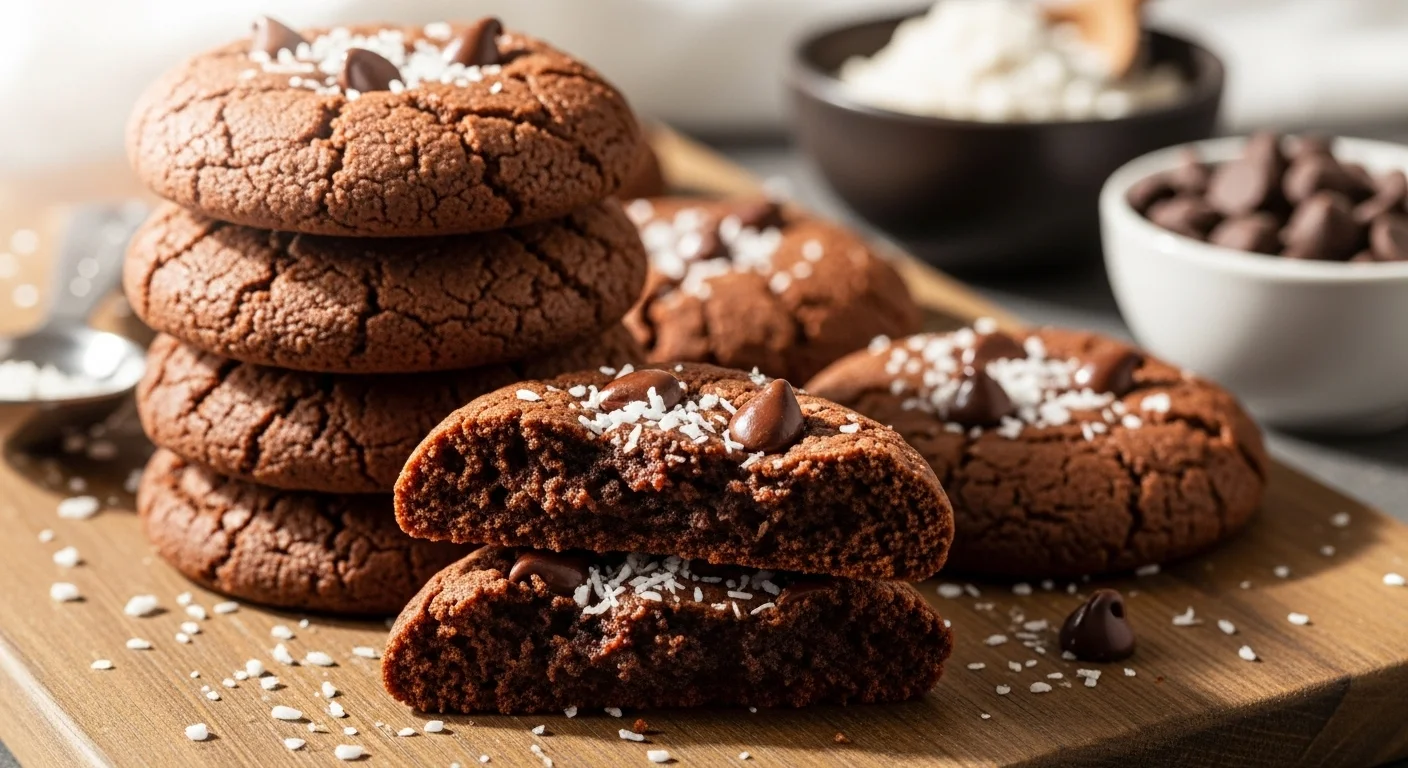
Understanding Coconut Flour in Baking
When I first stumbled upon coconut flour, I was intrigued. It’s not just another gluten-free flour; it has a unique texture and flavor that can transform traditional recipes into something excitingly new. I learned that coconut flour is made from dried coconut meat, and it’s known for its high fiber content and low-carb profile, which makes it perfect for keto baking. If you’re interested in exploring other gluten-free options, check out the Classic Gluten-Free Anzac Biscuits (Chewy Oat Cookies).
What is Coconut Flour?
Coconut flour is a finely ground flour made from dried coconut meat. It’s a staple in many gluten-free and low-carb kitchens. I remember trying it for the first time and being surprised by its light, fluffy texture. Unlike almond flour, coconut flour absorbs a lot of moisture, which means a little goes a long way. My first batch of cookies taught me that coconut flour has a mild coconut flavor, which adds a delightful twist without being overwhelming.
Benefits of Using Coconut Flour
One of the main reasons I love using coconut flour is its impressive nutritional profile. Coconut flour is rich in dietary fiber, which helps in digestion and keeps you feeling full longer. It’s also low in carbs and high in healthy fats, perfect for anyone following a ketogenic diet. Plus, it’s gluten-free, making it an excellent choice for those with gluten sensitivities. I’ve noticed that baking with coconut flour not only satisfies my sweet tooth but also aligns with my health goals. It’s a win-win!
Coconut Flour vs. Other Gluten-Free Flours
When I started my gluten-free baking journey, I experimented with various flours like almond flour, rice flour, and even chickpea flour. Each has its unique properties, but coconut flour quickly became my favorite. Unlike almond flour, which can be quite moist, coconut flour requires more liquid in recipes. This characteristic is something I had to get used to when I started baking. I often mix it with other flours to achieve a specific texture, but on its own, it brings a chewy, soft quality that makes cookies irresistible. For another delicious option, consider trying the Melt-In-Your-Mouth Almond Flour Shortbread Cookies (GF).
Key Ingredients for Chewy Coconut Flour Chocolate Cookies
Creating the perfect chewy coconut flour chocolate cookies involves selecting the right ingredients. It’s not just about using coconut flour; the combination of sweeteners, fats, and add-ins plays a crucial role in the final outcome. Here’s what I’ve discovered from my baking adventures.
Coconut Flour: The Star Ingredient
Coconut flour is indeed the star of the show. As I mentioned earlier, it absorbs a lot of moisture, so when you’re substituting it for other flours, remember that you’ll need to adjust the liquid ingredients. I typically use a ratio of about 1/4 cup of coconut flour for every egg in my recipes to keep things balanced. This ensures my cookies remain chewy and not overly dry.
Sweeteners Suitable for Keto Cookies
When it comes to sweeteners, I’ve experimented with several options. Erythritol and monk fruit are my top picks for keto baking because they provide sweetness without the carbs. I remember the first time I used erythritol in my cookies; I was pleasantly surprised at how well it mimicked sugar without that overly sweet aftertaste. I find a combination of sweeteners often works best to achieve a balanced flavor.
Choosing the Right Fats: Butter vs. Coconut Oil
Choosing the right fat can make a significant difference in the texture and flavor of your cookies. I love using unsalted butter for its rich taste, but coconut oil is a fantastic alternative, especially if you want a more coconut-forward flavor. Just remember, if you opt for coconut oil, it should be melted for easier mixing. I once made a batch with solid coconut oil, and let’s just say, the cookies were more like small hockey pucks!
Add-ins: Chocolate Chips and Nuts
No cookie is complete without some add-ins, in my opinion. I love adding sugar-free chocolate chips to my coconut flour cookies. They melt beautifully and create gooey pockets of chocolate that elevate the cookie experience. Sometimes, I throw in some chopped nuts or shredded coconut for added texture. I’ve found that the combination of chewy cookie and crunchy nuts is simply heavenly!
Health Benefits of Keto and Gluten-Free Cookies
I’ve always believed that the food we eat impacts our overall health, and this is especially true for the treats we indulge in. When I switched to a keto and gluten-free diet, I noticed several positive changes, and I think that’s partly due to the choices I made, like incorporating chewy coconut flour chocolate cookies into my treat rotation. Let’s explore the health benefits that come with these delightful cookies.
Nutritional Profile of Coconut Flour
Coconut flour stands out in the nutritional world. It’s packed with fiber, which is something I truly value for gut health. I’ve read that just one ounce of coconut flour contains about 10 grams of dietary fiber, which is pretty impressive! This fiber helps regulate blood sugar levels and keeps you feeling satisfied for longer, which is essential when I’m trying to avoid mindless snacking. Additionally, coconut flour is rich in healthy fats, particularly medium-chain triglycerides (MCTs), which can provide a quick energy boost. I’ve found that including coconut flour in my baked goods supports my energy needs throughout the day, especially on those busy mornings.
Low-Carb Lifestyle and Its Benefits
Adopting a low-carb lifestyle has been a game changer for me. I remember feeling sluggish and bloated after indulging in high-carb treats, but switching to keto-friendly options like coconut flour cookies has made a world of difference. By keeping my carb intake low, I’ve experienced improved mental clarity and increased energy levels. Plus, these cookies fit seamlessly into my low-carb regimen, allowing me to enjoy desserts without the guilt. I’ve noticed that my cravings for sugary snacks have lessened since I started baking with coconut flour, which is a huge win in my book!
Gluten-Free Diet: Who Should Consider It?
Many people are now exploring gluten-free diets, and for good reason. I remember learning about gluten sensitivity and how it affects a significant portion of the population. For those who experience bloating, fatigue, or digestive issues after consuming gluten, switching to gluten-free options can lead to a noticeable improvement in quality of life. Even if you’re not gluten-sensitive, incorporating gluten-free flours like coconut flour into your baking can be a healthy choice. It allows for more variety in your diet and can introduce you to new flavors and textures that you might not have tried before. I’ve found that gluten-free baking opens up a world of creativity in the kitchen, and I love experimenting with different ingredients!
How to Make Chewy Coconut Flour Chocolate Cookies
Now that we’ve covered the health benefits, let’s dive into the fun part: making chewy coconut flour chocolate cookies! I’ve created a simple recipe that’s perfect for beginners and seasoned bakers alike. Trust me; these cookies are worth the effort!
Step-by-Step Recipe Instructions
Here’s how I make my chewy coconut flour chocolate cookies:
- Preheat your oven to 350°F (175°C).
- In a mixing bowl, combine 1/4 cup of coconut flour with 1/4 cup of erythritol (or your preferred sweetener).
- Add 1/4 cup of melted butter (or coconut oil), 2 large eggs, and 1 teaspoon of vanilla extract. Mix until well combined.
- Fold in 1/2 cup of sugar-free chocolate chips until evenly distributed.
- Drop tablespoon-sized amounts of dough onto a parchment-lined baking sheet. Leave space between each cookie, as they will spread a bit.
- Bake for 10-12 minutes, or until the edges are golden brown.
- Let the cookies cool on the baking sheet for a few minutes before transferring them to a wire rack to cool completely.
Tips for Achieving the Perfect Texture
Over the years, I’ve learned a few tips to ensure my cookies turn out perfectly chewy every time. First, be careful not to overmix the dough, as this can lead to a denser texture. Also, I recommend using room temperature ingredients, especially the eggs, as this helps create a nice, even batter. Finally, don’t be afraid to experiment with baking times; every oven is different, and finding that sweet spot for baking is key to getting that perfect chewy texture!
Common Mistakes to Avoid
We all make mistakes in the kitchen, and I’m no exception! One of the biggest pitfalls I’ve encountered is using too much coconut flour. Since this flour is highly absorbent, I’ve had cookies turn out dry when I didn’t measure accurately. Another mistake is not letting the cookies cool properly before moving them. Trust me, they need that cooling time to set properly; otherwise, they might crumble. Remember, patience is crucial when baking!
Storage and Shelf Life of Keto Cookies
After all the hard work of baking those chewy coconut flour chocolate cookies, I always want to make sure they last as long as possible. I’ve learned a few different methods for storing them that can help keep them fresh and delicious. Let’s dive into how I store my cookies and ensure they maintain their chewy goodness over time.
How to Store Homemade Cookies
When it comes to storing my homemade cookies, I have a few go-to methods. First, I let the cookies cool completely on a wire rack. This step is essential because it prevents moisture from building up and making the cookies soggy. Once they’re cooled, I typically place them in an airtight container. I love using glass containers, as they don’t absorb odors and help keep the cookies fresh. I often layer parchment paper between the cookies to prevent them from sticking together, especially if I made a big batch. I’ve found that this simple trick works wonders!
Freezing Cookies for Long-Term Storage
If I know I won’t eat all the cookies within a few days, I recommend freezing them. Freezing is an excellent option for preserving the freshness of my baked goods. To do this, I place the cookies in a single layer on a baking sheet and pop them in the freezer for about an hour. This helps them firm up and prevents them from sticking together. After they’re frozen, I transfer the cookies to a freezer-safe bag or container, label it with the date, and pop it back in the freezer. From my experience, they can last for up to three months without losing their flavor or texture. When I’m ready to enjoy them again, I simply take out the desired amount and let them thaw at room temperature or warm them up in the oven for a few minutes. Trust me, a warm cookie is hard to beat!
Variations and Customizations
One of the things I love about baking is the opportunity for creativity. With chewy coconut flour chocolate cookies, there are so many ways to switch things up! I’ve played around with different flavors and dietary needs, and here are some variations that might inspire you.
Adding Flavor: Vanilla, Mint, or Orange Zest
Sometimes, I like to enhance the flavor profile of my cookies. A splash of vanilla extract is a classic addition, but I’ve also experimented with other flavors. For instance, adding a few drops of peppermint extract gives the cookies a refreshing twist, perfect for the holiday season. I’ve even grated some orange zest into the dough, which adds a lovely citrus note that pairs wonderfully with chocolate. In my opinion, a little experimentation can lead to delightful surprises!
Making Them Vegan-Friendly
If I’m hosting friends or family who follow a vegan diet, I love adapting my cookie recipe to suit their needs. Instead of using eggs, I often substitute with flaxseed meal mixed with water or unsweetened applesauce. I’ve found that 1 tablespoon of flaxseed meal combined with 2.5 tablespoons of water per egg works great as a binding agent. This way, everyone can enjoy a delicious cookie without compromising their dietary choices!
Nut-Free and Dairy-Free Options
Another customization I’ve explored is creating nut-free and dairy-free versions of these cookies. If I need to eliminate nuts, I simply replace any nut-based ingredients with seeds, like sunflower or pumpkin seeds, which add crunch without the allergens. For dairy-free options, I switch the butter for coconut oil or a dairy-free butter alternative. I’ve discovered that these small adjustments still yield tasty cookies that everyone can indulge in, regardless of dietary restrictions.
Pairing Suggestions for Coconut Flour Cookies
Once I’ve baked my chewy coconut flour chocolate cookies, I love to think about how to enjoy them even more. The right pairing can elevate the experience, whether it’s a cozy night in or a gathering with friends!
Best Beverages to Accompany Cookies
When it comes to beverages, I find that a warm cup of coffee or tea complements the rich flavors of the cookies beautifully. I personally enjoy a nice dark roast coffee, as the boldness contrasts well with the sweetness of the cookies. For those who prefer something lighter, herbal teas like chamomile or peppermint are refreshing options that provide a lovely balance. If I’m feeling indulgent, a glass of cold almond milk also pairs wonderfully with these chewy treats, enhancing the coconut flavor even more.
Serving Ideas for Parties and Events
If I’m hosting a party or event, I love showcasing my cookies in a fun way. I often arrange them on a tiered serving platter for a charming display. Sometimes, I even drizzle melted sugar-free chocolate over the top for an extra touch of elegance. I’ve also made good use of cookie bags tied with a cute ribbon for party favors, which my guests really appreciate. It’s a simple way to share a piece of my baking with others and makes for a delightful treat that everyone can take home!
Frequently Asked Questions
Can I substitute coconut flour for regular flour?
Absolutely! However, it’s important to remember that coconut flour behaves quite differently from regular flour. When I first made this substitution, I learned that coconut flour is highly absorbent, so you can’t just swap it in at a 1:1 ratio. Typically, you’ll need to use about 1/4 to 1/3 of the amount of coconut flour compared to regular flour and increase the liquid in the recipe. This adjustment can take a bit of experimenting, but the results can be deliciously rewarding!
How do I know when the cookies are done baking?
In my experience, the best way to know if your cookies are done is to look for visual cues. When the edges start to turn golden brown and the centers look set but slightly soft, that’s usually a sign they’re ready. I often take them out just before they look fully baked, as they’ll continue to cook a bit on the baking sheet after being removed from the oven. Trust your instincts and don’t be afraid to take them out a minute or two early!
Can I use different sweeteners in this recipe?
You can definitely experiment with different sweeteners! I’ve tried using stevia, monk fruit, and even allulose in my cookies, and each brings a unique sweetness and flavor profile. Just keep in mind that the sweetness level varies between sweeteners, so you may need to adjust the quantity to suit your taste. I usually start with a smaller amount and add more if necessary after tasting the dough.
What is the shelf life of these cookies?
When stored properly, my chewy coconut flour chocolate cookies can last about a week at room temperature in an airtight container. If you freeze them as I mentioned earlier, they can stay fresh for up to three months! I love being able to pull out a few cookies whenever I get a craving. Just remember to let them thaw completely, or pop them in the oven for a quick warm-up for the ultimate treat!
Final Thoughts
Baking chewy coconut flour chocolate cookies has truly been a fulfilling journey for me. It’s exciting to create something that not only satisfies my sweet tooth but also aligns with my dietary preferences. I’ve enjoyed exploring various flavors, experimenting with different ingredients, and sharing my creations with family and friends. Whether you’re new to baking or a seasoned pro, I hope this recipe inspires you to give coconut flour a try. Remember, baking is all about creativity and finding joy in the process. So, let’s keep those ovens warm and our spirits high as we enjoy these delightful cookies together!
Frequently Asked Questions
What is coconut flour?
Coconut flour is a finely ground flour made from dried coconut meat. It’s a staple in many gluten-free and low-carb kitchens, known for its light, fluffy texture and mild coconut flavor.
What are the benefits of using coconut flour?
Coconut flour is rich in dietary fiber, low in carbs, and high in healthy fats, making it perfect for a ketogenic diet. It’s also gluten-free, which is suitable for those with gluten sensitivities.
How do I make chewy coconut flour chocolate cookies?
To make chewy coconut flour chocolate cookies, you mix 1/4 cup of coconut flour with sweeteners, melted butter or coconut oil, eggs, and vanilla extract, then fold in chocolate chips and bake at 350°F (175°C) for 10-12 minutes.
Can I substitute coconut flour for regular flour?
Yes, but you cannot use a 1:1 ratio. Generally, you need to use about 1/4 to 1/3 of the amount of coconut flour compared to regular flour and increase the liquid in the recipe.
What are suitable sweeteners for keto cookies?
Suitable sweeteners for keto cookies include erythritol and monk fruit, as they provide sweetness without the carbs. You can experiment with different sweeteners, adjusting quantities to taste.
How should I store homemade cookies?
Homemade cookies should be cooled completely on a wire rack, then stored in an airtight container. Layering parchment paper between cookies can prevent sticking.
How long do these cookies last?
When stored properly, chewy coconut flour chocolate cookies can last about a week at room temperature in an airtight container. If frozen, they can last up to three months.
What common mistakes should I avoid when baking with coconut flour?
Common mistakes include using too much coconut flour, which can lead to dry cookies, and not allowing the cookies to cool properly, which can cause them to crumble.
Can I make these cookies vegan-friendly?
Yes, you can make these cookies vegan by substituting eggs with flaxseed meal mixed with water or unsweetened applesauce as a binding agent.
What beverages pair well with coconut flour cookies?
Warm coffee or tea, herbal teas like chamomile or peppermint, and cold almond milk are excellent beverages to enjoy with coconut flour cookies, enhancing their flavors.