
If you’re looking for a sweet treat that’s both satisfying and guilt-free, chewy vegan coconut macaroons dipped in chocolate might just be your new favorite. These delightful bites are a blend of coconut goodness and rich chocolate, making them the perfect indulgence. Read Interesting article: These Air Fryer Veggie Bites Are Taking Over TikTok
What Are Coconut Macaroons?
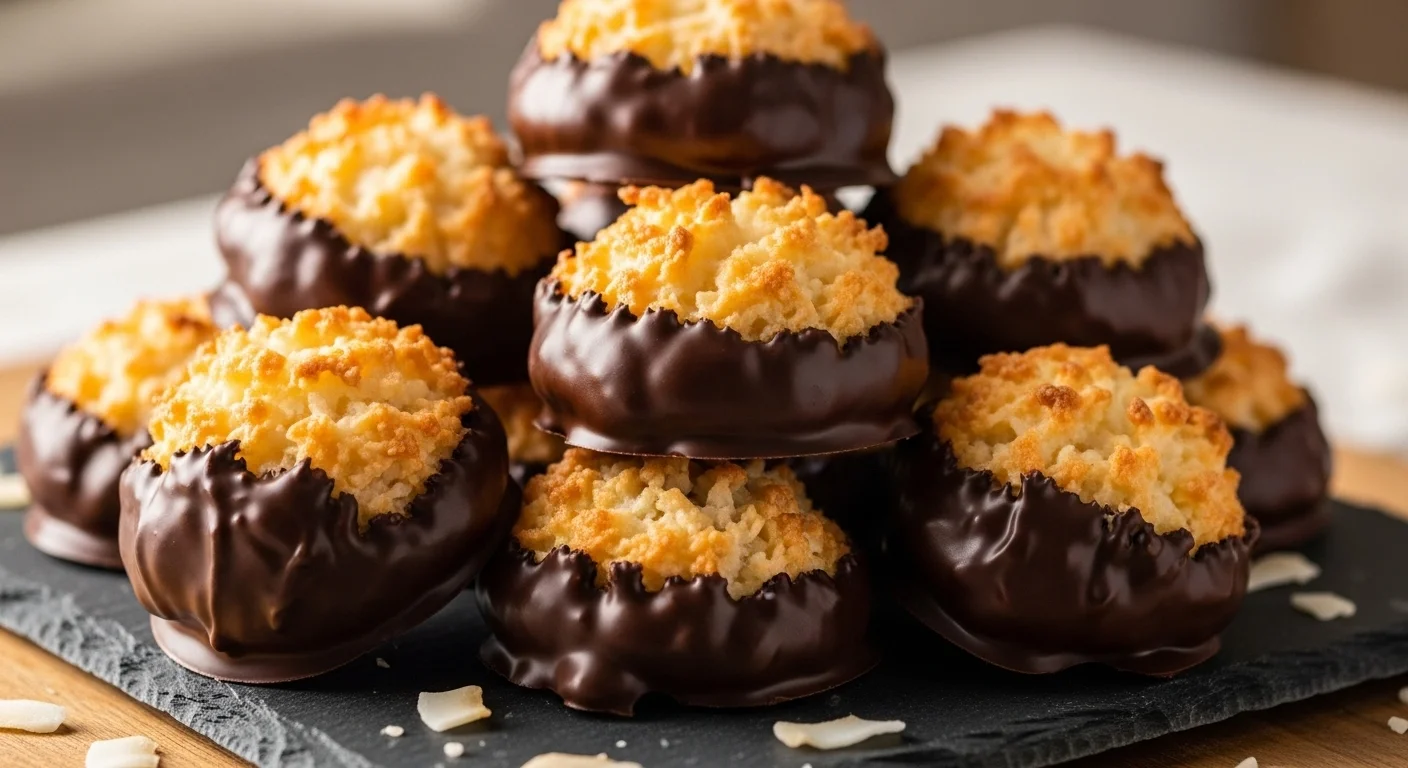
Coconut macaroons are chewy, sweet confections made primarily from shredded coconut. Often mistaken for macaron—a French meringue-based pastry—macaroons have a denser, chewier texture and are typically made with a few simple ingredients. When it comes to flavor, the sweet, nutty taste of coconut takes center stage, and they can be enjoyed plain or dressed up with chocolate. I remember the first time I tasted a homemade coconut macaroon; the soft chewiness combined with the hint of coconut was heavenly. It’s a simple yet delightful dessert that can evoke fond memories of baking in the kitchen.
History of Coconut Macaroons
The history of coconut macaroons goes back centuries, with roots tracing back to Italy. Originally, these treats were made using egg whites and ground almonds. The introduction of coconut into the recipe is believed to have occurred in the 19th century when coconut became more widely available. Over time, these treats made their way across the globe, evolving into the chewy coconut macaroons we know today. In my own kitchen, I’ve enjoyed recreating this rich history, often imagining how different cultures have cherished and adapted this sweet treat throughout the years.
Traditional vs. Vegan Variations
Traditionally, coconut macaroons include egg whites for binding, making them unsuitable for vegans. However, I discovered that it’s easy to create a vegan version that captures the same deliciousness without using any animal products. By substituting egg whites with aquafaba—chickpea brine that whips up beautifully—we can maintain that lovely texture. Additionally, I often use nut butters for added richness. Exploring these variations opened up a whole new world of coconut macaroon recipes for me, proving that indulgence doesn’t have to come at the cost of dietary preferences.
Ingredients for Chewy Vegan Coconut Macaroons
Key Ingredients Overview
Creating chewy vegan coconut macaroons is all about choosing the right ingredients. Here’s what you’ll need to bring these delightful treats to life:
- Shredded coconut
- Sweeteners (like maple syrup or agave nectar)
- Binding agents (aquafaba and/or nut butter)
- Dairy-free chocolate for dipping
Each of these components plays a crucial role in achieving the perfect texture and flavor. When I first experimented with this recipe, sourcing high-quality ingredients made all the difference in the final product.
Coconut Flakes
The star of the show is undoubtedly the coconut flakes. I recommend using unsweetened shredded coconut, as it allows you to control the sweetness of your macaroons better. The texture of the coconut flakes is also vital; I’ve found that longer shreds tend to give a chewier texture, while finer coconut can yield a softer bite. Choosing the right coconut flakes has become a personal preference for me, as I’ve discovered how they affect the overall mouthfeel of the macaroons.
Sweeteners: Maple Syrup vs. Agave Nectar
When it comes to sweetening your macaroons, both maple syrup and agave nectar are fantastic choices. Maple syrup adds a deeper, more robust flavor, which I personally love. On the other hand, agave nectar is milder and has a lower glycemic index, making it a great option for those watching their sugar intake. I often switch between the two, depending on what I have on hand or my mood for the day. Sweeteners can dramatically alter the taste, so I encourage you to experiment and find what works best for your palate.
Binding Agents: Aquafaba and Nut Butters
Aquafaba is a game-changer when it comes to vegan baking. It’s incredible how this simple chickpea brine can mimic egg whites in texture and function. I usually whip it until it forms soft peaks, then fold it into my coconut mixture for that perfect chewiness. If you prefer a richer taste, adding nut butter can enhance the flavor profile while helping to bind everything together. I often find myself reaching for almond or cashew butter, but any nut butter you love will work beautifully.
Chocolate for Dipping: Dark vs. Dairy-Free
Finally, the chocolate dip! I always opt for dark chocolate, which complements the sweetness of the coconut. Make sure to choose dairy-free chocolate to keep the recipe vegan-friendly. Melting the chocolate to a smooth consistency before dipping the macaroons ensures a lovely, glossy finish that makes them look as good as they taste. I remember the first time I dipped my macaroons; the sight of the glossy chocolate coating made me feel like a professional baker!
Step-by-Step Recipe for Chewy Vegan Coconut Macaroons
Preparation Time and Difficulty Level
When I decided to make chewy vegan coconut macaroons for the first time, I was pleasantly surprised by how simple the process was. The preparation time is about 15 minutes, and the baking time is around 25 minutes, making it an easy dessert to whip up on a whim. I would rate the difficulty level as easy, which means even novice bakers can dive right in without feeling overwhelmed. Trust me, if I can do it, so can you!
How to Prepare the Coconut Mixture
Once you’ve gathered your ingredients, the real fun begins! Start by preheating your oven to 350°F (175°C). In a large mixing bowl, combine your shredded coconut, sweetener of choice, and the aquafaba. I usually start by mixing the coconut and the sweetener first, then gradually adding the aquafaba. This way, I can see how the mixture binds together. It should be sticky enough to hold when pressed together. If it’s too dry, I add a little more aquafaba and mix again. It’s a fun process to see how everything comes together; I love the texture of the coconut, and the sweet aroma fills my kitchen, making it feel cozy.
Shaping and Baking the Macaroons
Once your coconut mixture is ready, it’s time to shape them into little mounds. I find that using a small cookie scoop or even my hands works well for this step. I like to pack the mixture tightly to ensure they hold their shape while baking. Place the macaroons on a parchment-lined baking sheet, leaving some space between them, as they do expand a little. Then, pop them in the oven for about 20-25 minutes or until they are lightly golden on the edges. I remember the first batch I made; the smell wafting through my home was intoxicating, and I couldn’t wait to see the final result!
How to Properly Dip in Chocolate
Once the macaroons are out of the oven, allow them to cool completely on the baking sheet. This step is crucial because warm macaroons can crumble when you try to dip them in chocolate. While they cool, melt your dairy-free chocolate in a microwave-safe bowl or over a double boiler, stirring until smooth. The first time I dipped my macaroons, I was a bit nervous, but I found that holding them by the base was the easiest way to dip without making a mess. I dip each macaroon halfway into the melted chocolate, letting the excess drip off before placing them back on the parchment. Watching the chocolate coating set as they cool is so rewarding; it adds that beautiful finish that makes them look like a treat from a bakery!
Tips for the Perfect Chewy Texture
Choosing the Right Coconut Flakes
As I mentioned before, selecting the right coconut flakes is key to achieving that perfect chewiness. I’ve tried various types, but for me, unsweetened shredded coconut gives the best texture. If you prefer a more substantial bite, look for larger flakes rather than the fine ones. I’ve also experimented with toasted coconut for added depth of flavor and a delightful crunch, which can be a fun twist!
Adjusting Sweetness to Taste
Don’t be afraid to play around with the sweetness level! When I made my first batch, I found that the amount of sweetener can vary based on personal preference. If you like it sweeter, add more of your chosen sweetener. I’ve also found that adding a pinch of salt can enhance the flavors even more, creating a lovely balance. It’s all about finding that sweet spot that makes your taste buds dance!
Baking Time and Temperature Considerations
The baking time can vary based on your oven, so keep an eye on your macaroons as they bake. I always set a timer for 20 minutes and then check them. If they’re not golden yet, I give them a few more minutes. The goal is to achieve that perfect golden-brown color without overbaking. Remember, they will continue to cook a little as they cool, so don’t wait until they’re too dark in the oven. I’ve learned this the hard way, and now I always err on the side of caution!
Serving Suggestions
Pairing with Beverages
These chewy vegan coconut macaroons are fantastic on their own, but they also pair beautifully with various beverages. I often enjoy them with a hot cup of coffee or a glass of almond milk. The rich chocolate and coconut flavors complement the bitterness of coffee perfectly. If I’m in the mood for something lighter, a cup of herbal tea, like chamomile or peppermint, can be a delightful contrast. I recommend experimenting with different pairings to find your favorite!
Presentation Ideas for Special Occasions
When it comes to serving these macaroons at gatherings or special occasions, presentation can elevate them to a whole new level. I love to arrange them on a beautiful cake stand, perhaps dusting them with a sprinkle of shredded coconut for an extra touch. If I’m feeling fancy, I might drizzle a bit of melted chocolate over the top for a decorative flair. Adding some fresh fruit or edible flowers around the macaroons can create a stunning centerpiece for any dessert table.
Storage and Shelf Life
How to Store Your Macaroons
After putting in all that effort to create the perfect chewy vegan coconut macaroons, it’s important to store them properly to maintain their delightful texture and flavor. I usually place my macaroons in an airtight container. This helps keep them fresh and prevents them from drying out. Depending on how many I make, I often layer them between sheets of parchment paper to avoid them sticking together. I remember one time I didn’t do this, and it was a bit of a disaster when I tried to separate them later! Keeping them in a cool, dry place is ideal, but if you live in a warm climate, you might want to store them in the refrigerator. They can typically last up to a week at room temperature or a bit longer if refrigerated.
Freezing for Longer Shelf Life
If you find yourself with a surplus of macaroons or just want to prepare ahead of time, freezing them is a fantastic option. I often make a double batch, knowing that they freeze beautifully. To freeze, I recommend placing the cooled macaroons on a baking sheet in a single layer and popping them in the freezer until they’re solid. Once frozen, I transfer them to a freezer-safe bag or container, ensuring to remove as much air as possible to prevent freezer burn. Whenever I’m craving a sweet treat, I can just grab a few from the freezer, let them thaw at room temperature for about 10-15 minutes, and they’re just as good as fresh! They can last in the freezer for up to three months, making it a convenient way to enjoy these treats anytime.
Common Questions About Vegan Coconut Macaroons
Are Coconut Macaroons Gluten-Free?
This is a great question! Yes, coconut macaroons are naturally gluten-free, which is one of the reasons I love making them. The primary ingredient, shredded coconut, contains no gluten, and with the right sweeteners and binding agents, you can easily keep the recipe gluten-free. Just make sure that the specific brands of coconut flakes and other ingredients you use are certified gluten-free if you’re preparing them for someone with gluten sensitivities. I often keep this in mind when baking for friends, ensuring everyone can enjoy these delicious bites without any worries.
Can I Substitute Ingredients?
Absolutely! One of the joys of baking is experimenting with different ingredients to suit your taste or dietary needs. For instance, if you don’t have aquafaba, you can try using flaxseed meal mixed with water as a binding agent. I’ve also swapped out almond butter for peanut butter, and the results were just as delightful. When it comes to sweeteners, you can adjust based on what you have on hand, whether it’s agave, maple syrup, or even coconut sugar. I encourage everyone to make these macaroons their own and find combinations that resonate with their palate. Read Interesting article: Chewy Oat Flour Chocolate Chip Cookies (Wholegrain & GF)
What Can I Use Instead of Aquafaba?
If you’re looking for alternatives to aquafaba, there are several options to consider. A common substitute is ground flaxseeds mixed with water, which creates a gel-like consistency similar to egg whites. I’ve tried this method a few times, and it produces a nice chewy texture as well. Another option is using chia seeds mixed with water, which also works well. If you’re not strictly adhering to a vegan diet, egg whites can be used for those who aren’t concerned about dietary restrictions. With these alternatives, you can still enjoy the deliciousness of coconut macaroons while accommodating various preferences.
Health Benefits of Vegan Coconut Macaroons
Nutritional Profile Overview
When I think about treats, I often wonder about their nutritional value. While coconut macaroons are indeed a dessert, they do have some redeeming qualities. Shredded coconut is rich in medium-chain fatty acids, which can provide quick energy and may even support metabolism. Additionally, they contain fiber, which is great for digestion. Depending on the sweetener you choose, you can also control the amount of sugar in each macaroon. I’ve found that using natural sweeteners like maple syrup or agave can offer a healthier alternative compared to refined sugars, allowing us to indulge a bit more guilt-free!
Benefits of Coconut
Coconut, the star ingredient in these macaroons, comes with a variety of health benefits. It’s not just delicious; it’s also packed with nutrients. I’ve learned that coconut can help support heart health thanks to its healthy fats, and it contains antioxidants that can assist in fighting inflammation. Plus, coconut is often touted for its potential to help improve brain function. With all these benefits, I feel a little better about indulging in a macaroon or two (or three) now and then!
Vegan vs. Traditional Macaroon Health Comparison
Comparing vegan macaroons to their traditional counterparts, there are some notable differences. Traditional recipes often use egg whites and refined sugars, which can add unwanted calories and cholesterol. On the other hand, vegan macaroons replace eggs with plant-based ingredients and can use natural sweeteners, making them a healthier option overall. From my perspective, choosing to make them vegan not only aligns with my dietary choices but also allows for more creativity in flavor and texture. I truly believe that you can enjoy a delightful treat without compromising on health! Read Interesting article: Rich & Creamy Vegan Chocolate Mousse (With A Secret)
Frequently Asked Questions
What are coconut macaroons?
Coconut macaroons are chewy, sweet confections made primarily from shredded coconut. They have a denser, chewier texture compared to French macarons and can be enjoyed plain or dipped in chocolate.
What is the history of coconut macaroons?
The history of coconut macaroons dates back to Italy, where they were originally made with egg whites and ground almonds. The introduction of coconut in the 19th century led to the chewy coconut macaroons we know today.
What are the key ingredients for chewy vegan coconut macaroons?
Key ingredients include shredded coconut, sweeteners (like maple syrup or agave nectar), binding agents (aquafaba and/or nut butter), and dairy-free chocolate for dipping.
How can I make vegan coconut macaroons?
To make vegan coconut macaroons, substitute egg whites with aquafaba, which can mimic the texture of eggs. Combine shredded coconut, a sweetener, and aquafaba to form a mixture, shape into mounds, bake, and then dip in dairy-free chocolate.
Are coconut macaroons gluten-free?
Yes, coconut macaroons are naturally gluten-free since their primary ingredient, shredded coconut, contains no gluten. Ensure that the specific brands of coconut flakes and other ingredients are certified gluten-free if needed.
Can I substitute ingredients in the macaroon recipe?
Absolutely! You can experiment with different ingredients, such as using flaxseed meal mixed with water instead of aquafaba, or swapping nut butters based on your preferences. Sweeteners can also be adjusted according to what you have on hand.
What can I use instead of aquafaba?
Alternatives to aquafaba include ground flaxseeds mixed with water or chia seeds mixed with water. If dietary restrictions allow, egg whites can also be used.
What are the health benefits of vegan coconut macaroons?
Coconut macaroons can provide quick energy due to their medium-chain fatty acids, and they contain fiber beneficial for digestion. Using natural sweeteners can also make them a healthier option compared to refined sugars.
How should I store coconut macaroons?
Store coconut macaroons in an airtight container to maintain freshness. They can last up to a week at room temperature or longer if refrigerated. For longer shelf life, freeze them in a single layer and then transfer to a freezer-safe bag or container.
What drinks pair well with coconut macaroons?
Coconut macaroons pair beautifully with beverages like coffee, almond milk, or herbal tea. The rich flavors of the macaroons complement the bitterness of coffee and offer a delightful contrast with lighter teas.