
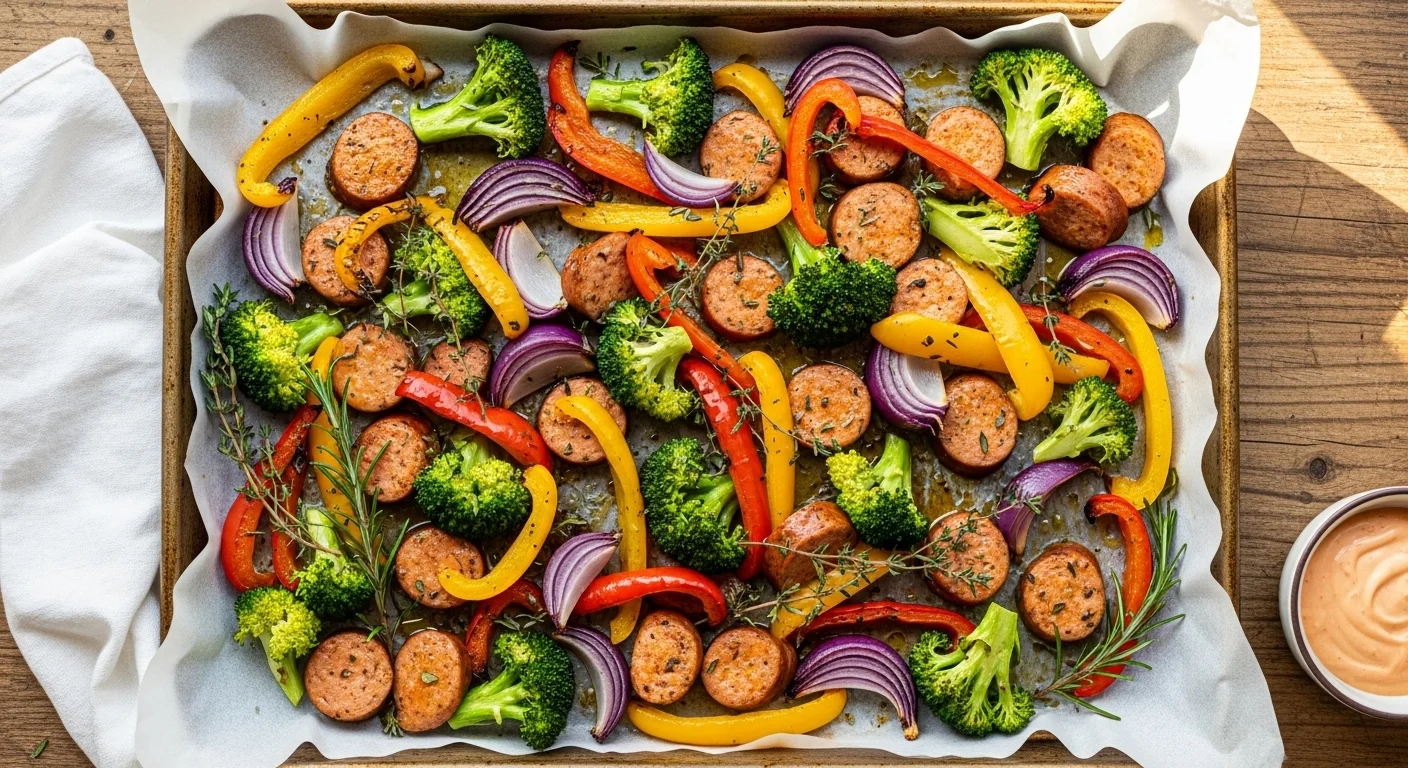
Imagine a cozy weeknight dinner where delicious flavors come together without the hassle of multiple pots and pans. Easy Sheet Pan Sausage and Veggies is a simple, satisfying dish that promises minimal cleanup and maximum taste!
Understanding Sheet Pan Meals
What is a Sheet Pan Meal?
When I first discovered sheet pan meals, it was like a light bulb went off in my kitchen. A sheet pan meal is essentially a one-pan dish where you roast your protein and vegetables together. Everything goes on a single baking sheet, and into the oven it goes. It’s the perfect way to create a hearty meal without getting bogged down by extensive prep or cleanup. I remember the first time I tried it; I was amazed at how easy it was to throw everything together and pop it in the oven, freeing up my evening for more important things—like binge-watching my favorite shows! You can also try a delicious Sheet Pan Sausage and Peppers recipe for a different twist on this cooking method!
Benefits of Cooking with a Sheet Pan
There’s something incredibly appealing about the simplicity of sheet pan cooking. For starters, you cut down on the number of dishes you need to wash. I’ll take any excuse to avoid a mountain of dirty pots! Not only that, but the roasting process intensifies the flavors of the ingredients. The natural sugars in the veggies caramelize beautifully, and the sausage adds a savory depth that’s hard to resist. Plus, I found that it’s an excellent way to use up any leftover veggies hanging out in my fridge. It’s like a clean-out-the-fridge dinner that turns into a delicious, satisfying meal.
Why Choose Sausage and Veggies?
Sausage and veggies are a match made in heaven. I love how versatile sausage can be—you can choose from spicy Italian, sweet apple, or even chicken sausage, depending on your mood. The rich flavors of the sausage complement a wide range of vegetables, making it easy to customize based on what you have on hand. I often find myself tossing in whatever veggies are about to go bad, and it always turns out great! This dish is also a fantastic way to pack in nutrients without feeling like you’re eating a boring salad. The vibrant colors of the roasted vegetables not only make the meal visually appealing but also offer a variety of vitamins and minerals. Trust me, your taste buds and your body will thank you! If you’re in the mood for something sweet to balance out your savory dish, consider making an Easy homemade pancake in 20 minutes for dessert!
Essential Ingredients for Easy Sheet Pan Sausage and Veggies
Choosing the Right Sausage
When it comes to sausage, the options are endless! I’ve experimented with different kinds over the years, and I’ve found that the choice really affects the final flavor of the dish. For a classic taste, I recommend using Italian sausage, whether spicy or sweet. If you’re looking for something a bit lighter, chicken or turkey sausage can be a great alternative. I’ve even tried plant-based sausages, and they work wonderfully too! Just make sure to choose high-quality sausage that you enjoy eating on its own, as it will be the star of the show.
Best Vegetables for Roasting
Now, let’s talk veggies. I’ve learned that not all vegetables are created equal when it comes to roasting. Some of my favorites include bell peppers, zucchini, red onions, and broccoli. They all roast beautifully, developing that lovely caramelization I can’t get enough of. I also love using root vegetables like sweet potatoes or carrots, especially in the colder months. The key is to cut everything into similar-sized pieces to ensure even cooking. I remember the first time I used Brussels sprouts, and they quickly became a family favorite. They get crispy and tender, and they pair so well with the sausage.
Herbs and Spices to Enhance Flavor
Don’t overlook the power of herbs and spices! I’ve found that a sprinkle of garlic powder, paprika, and a bit of Italian seasoning really kicks things up a notch. Fresh herbs like thyme or rosemary can add a fragrant touch as they roast. I like to toss everything in olive oil, salt, and pepper before baking. It’s amazing how just a little seasoning can elevate the dish. Sometimes, I’ll even throw in a splash of balsamic vinegar for a tangy twist. Experimenting with different combinations is part of the fun!
Optional Ingredients for Extra Nutrition
If you want to boost the nutritional value of your meal, consider adding some extra ingredients. Chickpeas can add protein and fiber; I’ve added them into the mix many times. Leafy greens like kale or spinach can be tossed in for added nutrients; just add them towards the end of the cooking time so they don’t wilt too much. I’ve also thrown in some nuts or seeds for a crunch factor. It’s all about making the dish work for your dietary preferences and what you have available!
Step-by-Step Preparation Guide
Preparing the Sausage
Preparing the sausage is one of the most straightforward parts of this recipe. I like to slice the sausage into bite-sized pieces to ensure they cook evenly and get that lovely caramelization. If you’re using links, it’s easy—just cut them into rounds. For me, the sound of the knife slicing through the sausage is oddly satisfying, as it signals that dinner is on its way! If you want to get a little fancy, you can also cut them into half-moons or even quarters for a different texture. This little step can really change how the sausage integrates with the veggies, and I’ve noticed that it helps with the flavor distribution as well.
Chopping the Vegetables
Next up is chopping the vegetables. I find this part of the process almost meditative. I usually lay out all my veggies and start cutting them into similar-sized pieces, which helps everything cook evenly. For example, I like to cut bell peppers into strips, zucchini into half-moons, and red onions into wedges. I’ve tried using a mix of colors—like red, yellow, and green peppers—for a vibrant presentation. There’s something about the variety of colors that makes the meal feel celebratory, even on a regular Tuesday night! I also give a little more attention to harder vegetables like carrots or sweet potatoes, making sure they’re cut slightly smaller so they roast just as quickly as the softer ones.
Seasoning Tips for Maximum Flavor
Once everything is chopped, it’s time for the fun part—seasoning! I’ve learned that the secret to a fantastic sheet pan meal lies in how you season your ingredients. I usually toss everything in a large bowl with olive oil, salt, and pepper first. This ensures that every piece is coated and ready to soak up the flavors. Then, I sprinkle in my favorite spices: garlic powder, paprika, and Italian seasoning. I feel like these spices really bring out the best in the sausage and veggies. If I’m in the mood for something a little different, I’ll add a splash of balsamic vinegar or a squeeze of lemon juice just before baking. The acidity brightens everything up and adds a really nice contrast to the savory sausage.
Arranging Ingredients on the Sheet Pan
Now comes the part where you get to showcase your culinary skills—arranging everything on the sheet pan! I like to spread the sausage and veggies out in a single layer. This is super important because it allows everything to roast rather than steam. If they’re too crowded, you can end up with mushy veggies, and nobody wants that! I usually place the sausage pieces in the center and then scatter the chopped veggies around them. I try to keep similar vegetables together; for instance, I’ll cluster the bell peppers and zucchini in one section and the root vegetables in another. This way, each area can shine, and it’s visually appealing when it comes out of the oven. Plus, it makes it easier to scoop everything onto our plates later!
Cooking Instructions
Optimal Oven Temperature and Cooking Time
For cooking, I’ve found that a high temperature yields the best results. Preheat your oven to 425°F (220°C). I’ve learned that this temperature allows the sausage to become golden and crispy while also beautifully caramelizing the veggies. I usually pop the sheet pan into the oven for about 25 to 30 minutes, depending on how thick the sausage pieces are and what veggies I’ve used. I always set a timer because I can get caught up in whatever I’m watching on TV!
Tips for Ensuring Even Cooking
To ensure everything cooks evenly, I recommend giving the pan a quick stir halfway through the cooking time. I usually just take out the pan, give it a good shake, or use a spatula to turn everything over slightly. I’ve found that this little step helps everything cook uniformly and prevents any sticking. Plus, it gives you a chance to check in on how things are progressing. The smell that wafts through the kitchen at this point is absolutely incredible!
When to Check for Doneness
As you approach the end of the cooking time, I suggest checking for doneness. The sausage should be nicely browned and cooked through, while the vegetables should be tender and slightly charred around the edges. I usually cut into a sausage piece to ensure it’s no longer pink inside; that’s my surefire method. If everything looks good, I take it out and let it rest for a few minutes before serving. This little pause helps the flavors settle and makes for a more enjoyable meal.
Serving Suggestions
Pairing with Sides and Dips
One of the things I love most about my Easy Sheet Pan Sausage and Veggies is how versatile it is when it comes to serving. It stands well on its own, but if you want to elevate the meal, adding some sides can really enhance the experience. For me, a simple side salad is always a hit. I usually toss together some mixed greens, cherry tomatoes, and a light vinaigrette. It adds a refreshing crunch that beautifully contrasts with the savory roasted flavors.
If I’m feeling a bit more indulgent, garlic bread or crusty rolls can really round out the meal. I remember one evening when we had a long day, and I decided to throw some frozen breadsticks in the oven while the sheet pan meal was roasting. The aroma of garlic and herbs wafting through the kitchen was heavenly! You can also dip the bread in some olive oil and balsamic vinegar for a delightful appetizer while waiting for dinner.
As for dips, I’ve found that a tangy yogurt sauce or a zesty chimichurri can take this dish to another level. Just mix some Greek yogurt with lemon juice, garlic, and herbs for a refreshing touch that balances the richness of the sausage. It’s a great way to add a little zing to every bite!
Creative Ways to Serve Leftovers
Leftovers from this dish can be just as exciting as the original meal, which I absolutely love! After a busy week, I often find myself with extra sausage and veggies, and I hate wasting food. One of my favorite ways to repurpose the leftovers is by making a hearty breakfast hash. I simply chop up the leftover sausage and veggies and sauté them in a skillet. A couple of eggs cracked on top and cooked to your liking make for a fantastic breakfast that feels like a treat.
Another option is to throw everything into a tortilla for a delicious wrap or taco. I’ve tried this with some spicy salsa and avocado, and it quickly became a family favorite. You can even jazz it up with some cheese and pop it in the oven for a quick quesadilla! The possibilities are endless, and I love how versatile this dish can be, making it feel like a brand-new meal with each iteration.
If I have extra time, I sometimes layer the leftovers in a casserole dish, top it with some cheese, and bake it until bubbly. It’s a comforting way to enjoy the same flavors in a different form, and it’s perfect for those cozy nights in!
Minimal Cleanup Tips
Using Parchment Paper or Foil
One of my biggest motivations for sheet pan cooking is the minimal cleanup, but I’ve discovered a couple of tricks to make it even easier! When I line my baking sheet with parchment paper or aluminum foil, it cuts down on scrubbing and soaking time dramatically. I remember the first time I tried parchment paper; I was blown away by how easy it was to just peel everything off the sheet once it was done cooking. It’s like having a built-in non-stick surface!
If you choose foil, I recommend using the shiny side up for better heat reflection, which can help with browning the ingredients. Plus, once you’re done, just let the foil cool for a bit and then crumple it up and toss it. Cleanup feels like a breeze, and it gives me more time to enjoy my meal rather than dreading the dishwashing!
Efficient Cleaning Techniques
Even with parchment or foil, there’s still a bit of cleanup involved, but I’ve found some efficient techniques that make it a quick job. I like to soak my sheet pan in warm soapy water right after dinner to loosen any stuck bits while I’m enjoying my meal. By the time I finish eating, the mess has softened up, and cleaning it becomes a simple task. I’ve learned that using a sturdy spatula during cooking can help lift anything stuck to the pan without scratching it, making cleanup smoother.
Another tip I swear by is using a dishcloth or paper towel to wipe down the pan immediately after it cools. This prevents any stubborn residue from hardening and makes the washing part much easier. I find that a little bit of kindness towards my kitchen tools goes a long way in keeping them in good shape!
Storing Leftovers Properly
After a delicious meal, it’s important to store any leftovers correctly to maintain their freshness. I typically let the leftovers cool completely before transferring them to airtight containers. My favorite method is to separate the sausage and veggies into individual portions, which makes it easier to grab for lunch or dinner later in the week. I sometimes even label them with dates so I know how long they’ve been hanging out in the fridge. It helps me stay organized and reduces food waste!
If I know I won’t finish them within a few days, I opt for freezing. I’ve found that freezing in meal-sized portions works wonders. I just let them cool, pop them in freezer-safe bags, and label them. When I’m in a pinch for a quick dinner, I can pull out a bag and reheat it, and it tastes almost as good as the day I made it!
Frequently Asked Questions
What is a sheet pan meal?
A sheet pan meal is a one-pan dish where you roast your protein and vegetables together on a single baking sheet, simplifying preparation and cleanup while creating a hearty meal.
What are the benefits of cooking with a sheet pan?
Cooking with a sheet pan reduces the number of dishes to wash, intensifies flavors through roasting, allows for using up leftover veggies, and creates a satisfying meal with minimal effort.
Why are sausage and veggies a good combination for sheet pan meals?
Sausage and veggies complement each other well, as sausage is versatile and pairs nicely with various vegetables, making it easy to customize based on what you have available.
What types of sausage are recommended for this recipe?
Italian sausage (spicy or sweet), chicken or turkey sausage, and even plant-based sausages are great options, as the choice affects the flavor of the dish.
Which vegetables are best for roasting in a sheet pan meal?
Favorites for roasting include bell peppers, zucchini, red onions, broccoli, sweet potatoes, and carrots, as they caramelize beautifully when roasted.
What are some good herbs and spices to enhance the flavor?
Garlic powder, paprika, Italian seasoning, and fresh herbs like thyme or rosemary are excellent choices to elevate the dish’s flavors. A splash of balsamic vinegar can also add a tangy twist.
What are some optional ingredients to boost nutrition?
Chickpeas, leafy greens like kale or spinach, and nuts or seeds can be added for extra protein, fiber, and crunch, tailoring the dish to your dietary preferences.
What is the optimal oven temperature and cooking time for this dish?
The optimal oven temperature is 425°F (220°C), and the cooking time is generally about 25 to 30 minutes, depending on the thickness of the sausage and the type of vegetables used.
What are some suggestions for pairing sides or dips with this meal?
A simple side salad, garlic bread, or crusty rolls are great accompaniments, and dips like tangy yogurt sauce or chimichurri can enhance the overall dining experience.
How should leftovers be stored for freshness?
Leftovers should be cooled completely before placing them in airtight containers, ideally separated into individual portions. They can also be frozen in meal-sized portions for later use.