
Imagine pulling a warm, beautifully braided loaf of sourdough challah from your oven. The golden crust crackles as you slice into it, revealing a soft, airy interior. It’s not just bread; it’s a celebration!
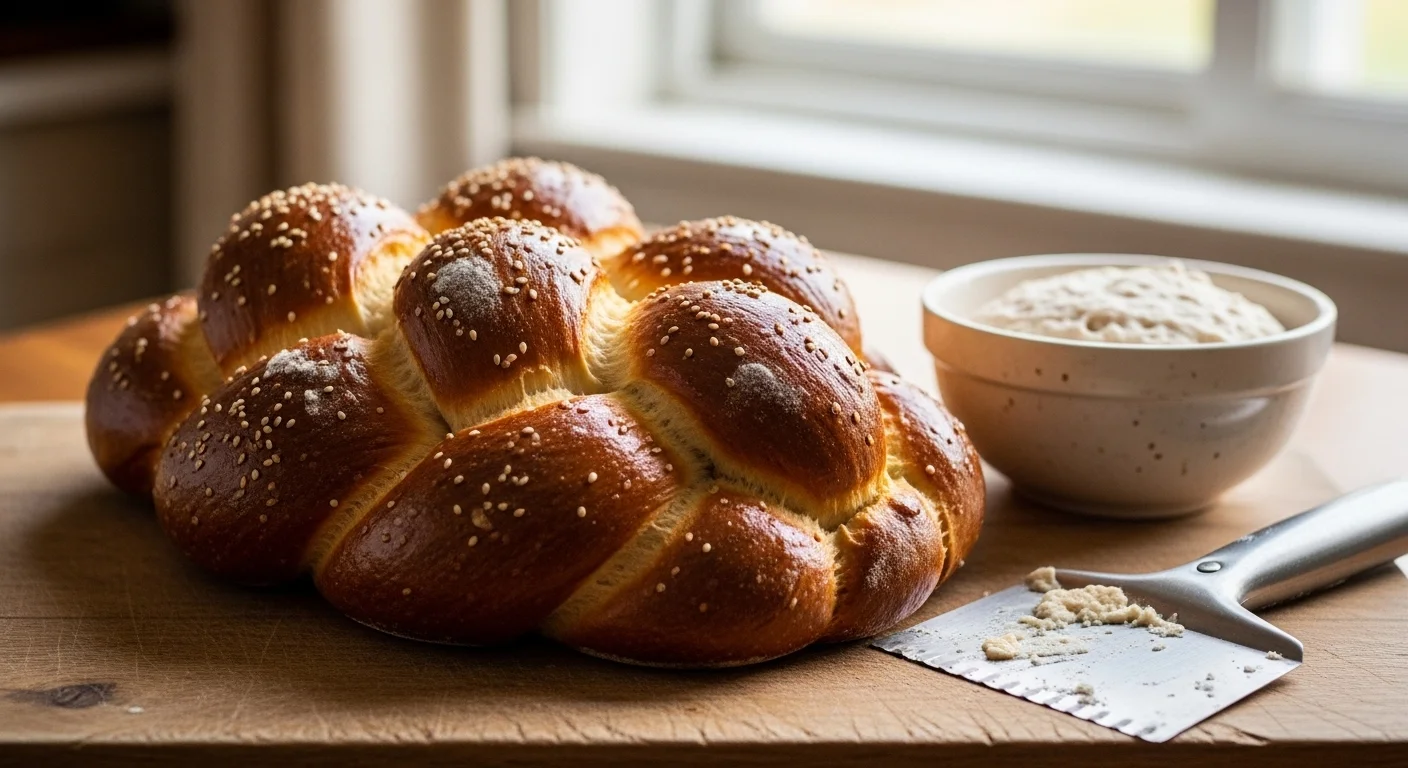
Understanding Sourdough and Challah
What is Sourdough?
Sourdough is a type of bread made through a natural fermentation process using wild yeast and lactic acid bacteria. Unlike breads made with commercial yeast, sourdough relies on a sourdough starter, a mixture of flour and water that captures wild yeasts from the environment. I’ve always been fascinated by this method because it allows me to connect with the age-old tradition of bread-making. When I first tried sourdough, I remember being amazed by the depth of flavor and the unique tang that comes from fermentation. Each loaf I make feels like a little piece of history. Read Interesting article: Easy Vegan French Toast (A Perfect Weekend Breakfast)
History of Challah
Challah has roots in Jewish tradition, typically braided and eaten during the Sabbath and holidays. The word “challah” itself refers to the portion of dough that is separated and given as an offering. I love how this bread carries such rich cultural significance. Growing up, I often watched my grandmother braid the dough, and she would share stories about her family’s traditions. It’s more than just a recipe; it’s a connection to my heritage and a way to carry on those cherished memories.
Differences Between Traditional Challah and Sourdough Challah
While traditional challah is usually made with commercial yeast, sourdough challah uses that magical sourdough starter. This gives it a unique flavor profile and a chewy texture that I find irresistible. I’ve noticed that sourdough challah often boasts a richer, more complex taste compared to its non-sourdough counterpart. The fermentation not only enhances the flavor but also improves the bread’s keeping quality. I remember my first attempt at sourdough challah; I was surprised at how much more satisfying it felt than the regular version. The process may take a bit longer, but the results are absolutely worth it.
Ingredients for Easy Sourdough Challah
The Essential Ingredients
To create a delightful sourdough challah, you need just a few essential ingredients: flour, water, salt, sugar, eggs, and, of course, your active sourdough starter. I find that simplicity is key; each ingredient plays a crucial role. For me, the eggs add richness, while the sugar helps in browning the crust. I love how these ingredients meld together to create something special.
Choosing the Right Flour
When it comes to flour, I recommend using bread flour for its higher protein content, which helps achieve that lovely chewy texture. I used to mix all-purpose flour with bread flour, but I’ve found that sticking with bread flour yields better results. If you’re feeling adventurous, you can experiment with whole wheat flour or spelt for a nuttier flavor. Each variation brings a different personality to the loaf, and it’s always exciting to see how slight changes can create a new experience.
Importance of Active Sourdough Starter
Your sourdough starter is the heart of this recipe. For the best results, it should be bubbly and active. I remember the first time I made a loaf with my starter; it was like watching a magic trick unfold. If you’re unsure about your starter’s readiness, a simple test is to drop a spoonful in water—if it floats, it’s good to go! Keeping your starter healthy is essential, and regular feedings will ensure you have a reliable companion for all your sourdough adventures.
Optional Add-Ins and Toppings
One of the joys of making sourdough challah is the opportunity to customize it. I often find myself adding sesame seeds or poppy seeds on top for that classic touch. You could also fold in chocolate chips, raisins, or even herbs for a savory twist. I particularly enjoy experimenting with flavors; once, I added a hint of orange zest, and it transformed the bread into a delightful treat. These little extras can make a big difference, and it’s fun to share these variations with family and friends. Read Interesting article: Overnight Bacon & Egg Brunch Bake: Prep Ahead, Enjoy More
Equipment Needed
Mixing Bowls and Utensils
When it comes to making sourdough challah, having the right equipment makes the process smoother and more enjoyable. I find that a large mixing bowl is essential; it gives me plenty of space to combine all the ingredients without making a mess. I prefer using glass or stainless steel bowls since they hold up well and are easy to clean. You’ll also need a sturdy wooden spoon or a dough whisk for mixing. I remember the first time I tried to mix dough with my hands—it was a sticky mess! Now, I use a sturdy spoon to bring the ingredients together before diving in with my hands.
Baking Tools and Accessories
For baking my sourdough challah, I rely on a few key tools. A good quality baking sheet or a half-sheet pan is a must-have. I often line it with parchment paper for easy cleanup. If you want that beautiful golden crust, investing in a baking stone or a Dutch oven can be beneficial. I’ve found that these tools help retain heat and create steam, resulting in a crust that’s crunchy on the outside yet soft on the inside. Whenever I bake a batch, the aroma that fills my kitchen is simply irresistible!
Proofing and Baking Pans
Proofing is a crucial step in the sourdough process, and having the right pans can make all the difference. I usually use a loaf pan or a round proofing basket (banneton) to shape my dough while it rises. The banneton gives the dough a lovely design when it’s finished, making it look professionally made. I remember the first time I used one; it felt like a little upgrade to my baking game! Just be sure to flour the banneton well to prevent sticking. After proofing, I transfer the dough to the baking sheet or Dutch oven for the final bake.
Step-by-Step Guide to Making Easy Sourdough Challah
Preparing the Sourdough Starter
Before diving into the dough-making process, I always ensure my sourdough starter is ready. I feed it about 4-6 hours before I plan to start baking, depending on the temperature of my kitchen. I remember the first time I was too eager to use it right after feeding; my bread didn’t rise as well as I hoped. Now, I’ve learned to be patient. A bubbly, active starter is key to a successful loaf, and I always do the float test to check. If it floats, I know we’re ready to roll!
Mixing the Dough
Once my starter is bubbly, I gather all my ingredients and start mixing. In my large mixing bowl, I combine the active starter with warm water and eggs. I whisk them together until well combined. Then, I add the flour, salt, and sugar. As I mix, I can feel the dough coming together, and it’s one of my favorite moments in this process. I often use my hands to mix it in the end, feeling the textures change as everything melds into a cohesive dough. It’s like sculpting a little masterpiece!
Kneading Techniques
Kneading is where the magic happens. I’ve learned that a good knead can make a significant difference in the dough’s texture. I usually turn the dough out onto a lightly floured surface and use the classic stretch and fold technique. I stretch the dough away from me and fold it over itself, repeating this for about 10 minutes. It’s a bit of a workout, but I enjoy the physicality of it. I can feel the dough becoming more elastic and smooth, and it’s satisfying to see it transform under my hands.
First Rise: Bulk Fermentation
After kneading, I place my dough in a lightly oiled bowl, cover it with a damp cloth, and let it rise in a warm spot. This is the bulk fermentation stage, and I usually let it rise for about 4-6 hours, depending on the temperature. I love peeking under the cloth to see how much it has grown. It’s always exciting to watch the dough expand, and I can’t help but feel a connection to the age-old tradition of sourdough baking. Sometimes, I’ll even set a timer to check on it every hour, feeling like a proud parent!
Shaping the Dough into Braids
Once the dough has risen, it’s time to shape it into braids. I gently punch down the dough to release some of the gas. I then divide it into three equal pieces for a classic braid. As I roll each piece into strands, I can’t help but think about the countless times I watched my grandmother braid challah. I love how each twist of the braid feels like a personal touch, and I try to make it look as beautiful as possible. It’s a moment of creativity that I truly cherish.
Second Rise: Proofing
After shaping, I place the braided dough onto my prepared baking sheet. I cover it again with a cloth and allow it to proof for another hour. This second rise is crucial for achieving that light and airy texture. I often take this time to prepare for baking, preheating my oven to the right temperature. I find myself feeling a mix of excitement and impatience—knowing that soon, I’ll have a delicious loaf to enjoy!
Baking the Challah
Finally, it’s time to bake! I brush the top of my challah with an egg wash for that beautiful golden color, sprinkle on some seeds if I’m using them, and then pop it into the oven. The smell that fills my kitchen during baking is heavenly; it’s like a warm hug. I usually bake it for about 30-35 minutes, and I always check for that perfect golden brown crust. When it comes out of the oven, I can hardly wait to let it cool before slicing, but the aroma makes it so tempting!
Tips for Perfecting Your Sourdough Challah
Getting the Right Texture
Finding the perfect texture for sourdough challah can be a bit of an art! I’ve experimented with hydration levels in my dough, and I’ve learned that the right balance can lead to a wonderfully chewy yet soft loaf. If you want that beautifully airy interior, I recommend a hydration level of around 65-70%. To achieve this, I often start with a slightly stickier dough and resist the urge to add too much flour while kneading. I remember the first time I made a loaf that was too dry; it was dense and not the airy experience I was hoping for. Now, I focus on keeping my dough moist and pliable, which makes all the difference in the final product.
Optimal Baking Temperature and Time
Setting the right temperature for baking is crucial. I usually preheat my oven to around 375°F (190°C). This temperature allows for a beautifully golden crust while ensuring the inside cooks through. I’ve learned that every oven is different, so I always keep an eye on the bread as it bakes. When I first started, I would set a timer and walk away, only to return to a loaf that was either underbaked or burnt. Now, I check the bread around the 25-minute mark and rotate the pan if needed. It’s amazing how the smell alone can guide me; when it starts to smell heavenly, I know I’m close to perfection!
How to Tell When It’s Done
Knowing when your challah is perfectly baked can be a bit tricky, but I’ve picked up a couple of reliable methods over time. The first is the classic ‘thump’ test. I gently tap the bottom of the loaf; if it sounds hollow, it’s usually a good sign that it’s done. I also use an instant-read thermometer; I take the internal temperature, and if it reads around 190°F (88°C), I know it’s ready. I remember feeling nervous the first time I used this method, but it’s such a confidence booster to know I’m baking with precision. After all that hard work, waiting to slice into the bread is the hardest part, but the anticipation makes it all the more rewarding!
Serving and Enjoying Sourdough Challah
Traditional Ways to Serve Challah
When it comes to serving my sourdough challah, there’s something magical about sticking to tradition. In my family, we often serve it during Shabbat and holidays, where it’s customary to bless the bread before breaking into it. This ritual adds a layer of meaning that I cherish deeply. I like to slice the bread thickly, allowing each piece to retain its beautiful shape. Sometimes, I’ll even warm it slightly in the oven before serving to bring out that lovely aroma. I’ve found that serving it with a bit of honey or homemade jam elevates the experience to new heights. Every bite feels like a celebration, and I love sharing it with family and friends.
Pairing Suggestions for Sourdough Challah
Pairing sourdough challah with the right accompaniments can truly enhance its flavor. I enjoy serving it with rich spreads like cream cheese or butter, especially if I’ve added herbs or spices to my dough. For a sweet twist, homemade fruit preserves or a drizzle of honey works wonders. I’ve also experimented with savory pairings, like a robust cheese platter or charcuterie board. The chewy texture of the bread complements the flavors beautifully. I remember hosting a brunch and serving slices of challah with an assortment of toppings; it was a hit! There’s something for everyone, and it sparks wonderful conversations around the table. Read Interesting article: Light and Fluffy French Toast Soufflé
Storing Leftovers and Reheating Tips
After all the effort put into making sourdough challah, I always want to ensure it stays fresh as long as possible. I typically store leftovers in a paper bag or wrapped in a clean kitchen towel. This keeps the crust nice and crisp while preventing it from getting too soft. I’ve found that slicing the bread before storing can lead to quicker staleness, so I try to keep it whole until I’m ready to enjoy another slice. If I have some left the next day, I love to reheat it in the oven at 350°F (175°C) for about 5-10 minutes. It brings back that fresh-baked warmth and taste, almost like enjoying it straight out of the oven again!
Common Challenges and Solutions
What to Do if the Dough Doesn’t Rise
If my dough doesn’t rise as expected, it can be a bit disheartening. I’ve learned that this can happen for several reasons, such as an inactive starter or not enough warmth during fermentation. If I notice it’s not rising after a few hours, I check the temperature of my kitchen—sometimes a warm spot can make all the difference. I’ve also had success gently kneading in a bit more active starter to give it a boost. Patience is key here; I remember one time I just left it longer, and it eventually rose beautifully!
Dealing with Dense Bread
A dense loaf can be frustrating, especially after all the love put into making it. In my experience, this often happens due to insufficient kneading or not enough fermentation time. I’ve found that sticking to the recommended times helps, but also listening to my dough is crucial. If it’s tough, I know I need to knead a bit longer. Another tip I’ve learned is to ensure my starter is bubbly and strong before I begin. If I notice my bread is dense, I make a mental note for next time to adjust my process accordingly.
Adjusting Flavor and Texture Issues
Sometimes, I find that adjusting flavor and texture requires a bit of experimentation. If my bread feels too dry, I’ve learned to add a little more water to the dough. If it’s lacking in flavor, I like to incorporate more salt or explore different add-ins during mixing. I remember my first attempt at adding herbs; it transformed my loaf! The key is to take notes on what works and what doesn’t so each bake is an improvement on the last. Baking sourdough challah is as much about learning and adjusting as it is about following a recipe.
Frequently Asked Questions
What is sourdough?
Sourdough is a type of bread made through a natural fermentation process using wild yeast and lactic acid bacteria. It relies on a sourdough starter, a mixture of flour and water that captures wild yeasts from the environment.
What is challah and what is its significance?
Challah has roots in Jewish tradition and is typically braided and eaten during the Sabbath and holidays. The word “challah” refers to the portion of dough that is separated and given as an offering, carrying rich cultural significance.
What are the main differences between traditional challah and sourdough challah?
Traditional challah is usually made with commercial yeast, while sourdough challah uses a sourdough starter, which gives it a unique flavor profile and a chewy texture, often resulting in a richer taste compared to its non-sourdough counterpart.
What ingredients are needed to make sourdough challah?
The essential ingredients for sourdough challah include flour, water, salt, sugar, eggs, and an active sourdough starter.
Which type of flour is recommended for making sourdough challah?
It is recommended to use bread flour for its higher protein content, which helps achieve a chewy texture. Whole wheat flour or spelt can also be experimented with for a nuttier flavor.
How can I tell if my sourdough starter is active and ready to use?
An active sourdough starter should be bubbly. A simple test to check its readiness is to drop a spoonful in water; if it floats, it is ready to use.
What is the process for shaping the dough into braids?
After the dough has risen, it is gently punched down to release some gas, then divided into three equal pieces to form a classic braid. Each piece is rolled into strands, creating a braided shape.
What temperature should I preheat my oven to when baking sourdough challah?
The oven should be preheated to around 375°F (190°C) for achieving a beautifully golden crust while ensuring the inside cooks through.
How can I store leftover sourdough challah to keep it fresh?
Leftovers should be stored in a paper bag or wrapped in a clean kitchen towel to keep the crust crisp. It is advisable to keep the bread whole until ready to enjoy another slice to prevent quicker staleness.
What should I do if my dough doesn’t rise as expected?
If the dough doesn’t rise, it could be due to an inactive starter or insufficient warmth. Checking the kitchen temperature and possibly kneading in a bit more active starter can help. Patience is essential, as sometimes the dough may rise beautifully if left longer.