
Have you ever found yourself with leftover sourdough starter and wondered what to do with it? I’m here to share an easy and delightful solution: sourdough discard bagels! They’re a quick morning bake that will elevate your breakfast game. If you’re curious about using sourdough discard in other recipes, check out this article on Can You Make Sourdough Bread With Only Sourdough Discard?.
What is Sourdough Discard?
Sourdough discard is the portion of your sourdough starter that you remove during the feeding process. When I started baking sourdough bread, I often felt bad throwing away this flavorful mix. Instead of tossing it, I learned how to use it creatively, and bagels quickly became one of my favorite ways to do just that. For those who are new to sourdough, you might want to read up on How To Make A Sourdough Starter From Scratch (7 Days).
Understanding Sourdough Starter
To appreciate sourdough discard, it’s essential to understand what a sourdough starter is. A sourdough starter is a mixture of flour and water that captures wild yeast and bacteria from the environment. This fermentation process gives sourdough its unique tangy flavor and airy texture. When you feed your starter, you add more flour and water, allowing it to grow. However, as it expands, you need to remove some of it to keep it manageable, and this is where the discard comes in.
Benefits of Using Sourdough Discard
Using sourdough discard opens up a world of possibilities in your kitchen. First, it reduces waste, which feels great for those of us trying to be more environmentally conscious. Second, it adds a slight tanginess to your baked goods, making them more flavorful than traditional recipes. I’ve found that using discard not only adds flavor but also contributes to a lovely texture in baked items like bagels, pancakes, and even cookies. Plus, it’s a fun way to experiment in the kitchen! If you’re looking for another delicious way to use sourdough discard, try this Crispy Sourdough Discard Cracker Recipe (So Addictive).
Ingredients for Easy Sourdough Discard Bagels
Now that we have a sense of what sourdough discard is, let’s talk about what you’ll need for these delicious bagels. The beauty of this recipe is that it’s simple and requires ingredients you likely already have in your pantry.
Essential Ingredients
- Sourdough Discard: This is the star of the show! Make sure it’s at least partially active for the best results.
- Flour: I usually opt for bread flour because its higher protein content helps create that perfect chewy bagel texture.
- Water: Just enough to bring the dough together. Warm water can help activate the yeast in the sourdough discard.
- Salt: Essential for flavor and strength in the dough.
- Yeast: While your discard has some yeast, adding a little more can help your bagels rise nicely.
Optional Ingredients for Flavor
If you want to get creative, there are several optional ingredients you can incorporate. I love adding honey or malt syrup for a hint of sweetness and a deeper flavor. You can also toss in spices like garlic powder or onion powder for extra punch, or throw in some seeds like sesame or poppy seeds for texture. Think of your favorite bagel shop and let that guide your flavor choices.
Equipment Needed for Baking Bagels
Before we dive into the baking process, let’s ensure you have all the necessary equipment. I’ve learned that having the right tools makes everything smoother and more enjoyable.
Baking Tools and Utensils
- Mixing Bowl: A large bowl to mix your dough is a must.
- Measuring Cups and Spoons: Precise measurements can make a big difference in baking!
- Wooden Spoon or Dough Scraper: Great for mixing and kneading.
- Baking Sheet: You’ll need a sturdy baking sheet lined with parchment paper for the bagels.
- Slotted Spoon: To transfer your bagels when boiling.
Choosing the Right Baking Surface
For the best results, I recommend using a baking stone or a regular baking sheet. If you have a pizza stone, it can help create a crispy bottom on your bagels, which I absolutely love. Just make sure to preheat it in the oven for optimal results. If you’re using a baking sheet, line it with parchment paper to prevent sticking and make cleanup a breeze.
Step-by-Step Guide to Making Bagels
Now, let’s get into the fun part: actually making the bagels! I promise this process is both enjoyable and rewarding. Plus, the smell of freshly baked bagels will fill your kitchen and make your morning feel extra special.
Preparing the Dough
Start by combining the sourdough discard, water, and yeast in a bowl. Mix until it’s well combined. Then, gradually add the flour and salt. I like to mix with a wooden spoon until the dough starts to come together, and then I switch to using my hands to knead it until smooth, which usually takes about 5-7 minutes. If the dough is too sticky, don’t hesitate to sprinkle in a little extra flour.
Shaping the Bagels
Once your dough is ready, divide it into equal pieces, around 8-10, depending on how big you want your bagels. I like to roll each piece into a ball and then poke a hole through the center with my finger, stretching it gently to create that classic bagel shape. Don’t worry if they are not perfect; they’ll still taste delicious!
Boiling the Bagels
Boiling is a crucial step that gives bagels their unique chewy texture. Bring a large pot of water to a gentle boil and add a pinch of salt. Carefully drop in a couple of bagels at a time, boiling them for about 30 seconds on each side. I always find this part fun because you can see the bagels puffing up!
Baking the Bagels
After boiling, place the bagels on the prepared baking sheet. If you want, you can sprinkle some toppings on them at this stage. Then, pop them into a preheated oven at 425°F (220°C) and bake for about 20-25 minutes until they’re golden brown. The aroma wafting through your home during this time is simply unbeatable!
Flavor Variations for Sourdough Discard Bagels
Now that we’ve covered the basics of making sourdough discard bagels, let’s explore some fun flavor variations. I love how versatile this recipe can be, and trying out different flavors has become one of my favorite parts of the baking process. Here are a few variations that we’ve experimented with in our kitchen, and I think you’ll enjoy them too!
Herb and Cheese Bagels
If you’re a fan of savory flavors, herb and cheese bagels are a fantastic choice. I often find myself adding dried herbs such as oregano, basil, or even a sprinkle of rosemary to the dough. The aroma that fills the kitchen while they bake is simply heavenly. For the cheese, I’ve had great success mixing in shredded mozzarella or sharp cheddar. Just fold the herbs and cheese into the dough after kneading but before shaping. You’ll end up with delicious bagels that are perfect on their own or paired with some cream cheese.
Everything Bagels
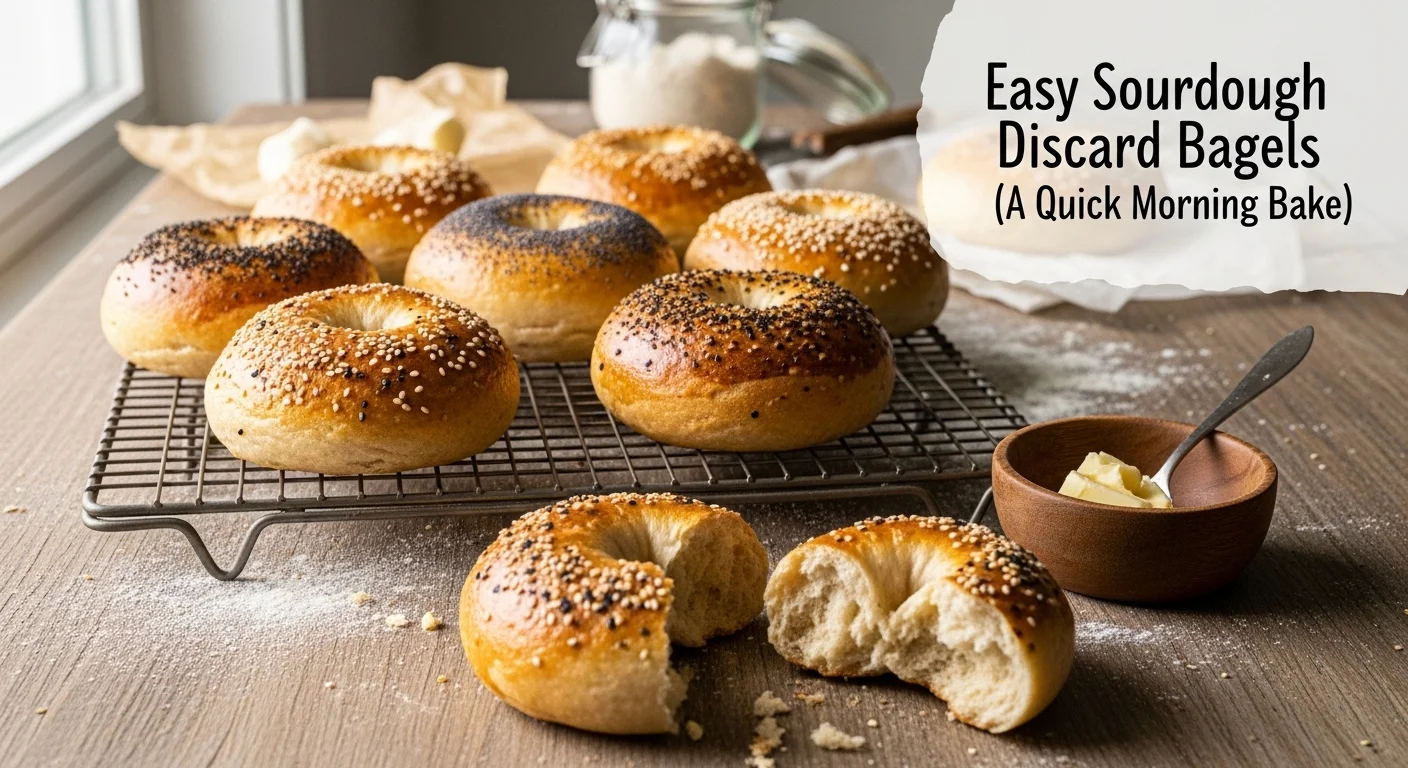
Everything bagels are a classic favorite in our household. It’s such a simple twist that adds a lot of flavor! After you’ve shaped your bagels, you can dip the tops in water and then into a mixture of sesame seeds, poppy seeds, garlic flakes, onion flakes, and coarse salt. I love the crunch and flavor that these toppings add. They’re particularly wonderful with a smear of cream cheese or as a base for a breakfast sandwich. Every bite feels like a little celebration of flavors!
Sweet Bagels: Cinnamon Raisin
If you’re in the mood for something sweeter, cinnamon raisin bagels are the way to go. I like to mix in a generous amount of ground cinnamon and a handful of raisins into the dough. Sometimes, I’ll even add a bit of brown sugar for extra sweetness. The result is a delightfully fragrant bagel that tastes amazing toasted, with a spread of butter or cream cheese. This flavor is particularly great for a cozy weekend breakfast or brunch with friends and family. Believe me, they disappear quickly!
Tips for Perfect Bagels Every Time
As I’ve been perfecting my bagel-making skills, I’ve learned a few tips that can help ensure you get the best results each time. Bagels can be a bit finicky, but with practice and patience, you’ll find that they become easier to make. Here are some insights from my own experience.
Common Mistakes to Avoid
One mistake I made early on was not letting the dough rest long enough after kneading. It’s important to give your dough some time to relax; this helps it become softer and easier to shape. Also, be mindful of the boiling process. If you boil your bagels for too long, they can become tough. Stick to around 30 seconds per side for that perfect chewy texture. Lastly, don’t skip the toppings! They’re what make bagels truly special, so have fun and be generous with them.
Storage Tips for Freshness
After spending the time to make your bagels, you’ll want to keep them fresh. I recommend storing them in a paper bag at room temperature for a day or two. If you have leftovers, they freeze beautifully! Just let them cool completely, then place them in a resealable plastic bag. They can last in the freezer for about a month. When you’re ready to enjoy one, simply pop it in the toaster or oven to reheat. Trust me, they taste just as good as the day you baked them!
Serving Suggestions and Pairings
Once your bagels are baked and cooled, it’s time to think about how to enjoy them. I’ve discovered that the right toppings and spreads can take your bagel experience to the next level.
Best Toppings for Bagels
For me, cream cheese is a classic choice and for good reason! There are so many flavors available now, from plain to chive, smoked salmon, or even sweet varieties like strawberry. I’ve also enjoyed spreading avocado on my bagels for a quick and healthy breakfast. If you want something a bit more indulgent, try slathering on some butter and a sprinkle of sea salt. The combinations are endless, and it’s fun to mix and match based on your mood.
Pairing Bagels with Spreads and Fillings
When it comes to fillings, think of breakfast sandwiches! A fried egg with avocado and a slice of cheese makes for an excellent start to the day. I’ve also loved making a bagel sandwich with slices of turkey, lettuce, and a smear of mustard for lunch. The versatility of bagels allows them to fit into any meal, and I encourage you to get creative with your pairings. You might just find a new favorite!
Frequently Asked Questions (FAQs)
As I’ve been sharing my passion for sourdough discard bagels, I’ve come across some common questions. Let’s tackle a few of them to help you on your bagel-making journey.
Can I use regular flour instead of bread flour?
Absolutely! While I prefer bread flour for its higher protein content, you can use all-purpose flour if that’s what you have on hand. Just keep in mind that the texture might be slightly different, but they’ll still be delicious.
How long can I store sourdough discard?
Sourdough discard can usually be stored in the refrigerator for about a week. I find it helpful to label my container with the date so I know when to use it. If you don’t plan on baking soon, you can also freeze it for longer storage.
What can I do with leftover bagel dough?
If you find yourself with extra bagel dough, don’t worry! You can roll it into small pieces and bake them as mini bagel bites or even shape them into breadsticks. They’re fun little snacks that still allow you to enjoy the flavors of your homemade bagels!
Enjoying Your Homemade Bagels
Once you’ve mastered the art of making sourdough discard bagels, you’ll want to savor every delicious bite. My favorite part is sharing them with family and friends and hearing how much they love the flavors and textures. It’s always a joy to watch someone take that first bite and see their eyes light up! Here are some ideas for enjoying your homemade bagels to the fullest.
Best Toppings for Bagels
The toppings you choose can transform a simple bagel into a gourmet experience. I often keep a variety of cream cheeses on hand because they pair so beautifully with bagels. Have you ever tried whipped chive cream cheese? It adds a refreshing kick. Another option I adore is a spread made with roasted red peppers and feta – it’s creamy and has a lovely tang that complements the bagel perfectly.
For something a bit more indulgent, I love slathering my bagels with a rich and buttery spread of garlic herb butter. It’s a treat that feels special, and I find myself making an extra batch just to share with friends. I also enjoy classic toppings like smoked salmon, capers, and fresh dill. This combination feels like a fancy brunch, even if it’s just me enjoying it at home!
Pairing Bagels with Spreads and Fillings
When it comes to fillings, I like to think about the different meals I can create with my bagels. One of my go-to breakfasts is a simple bagel sandwich with a fried egg, crispy bacon, and a slice of cheese. The flavors meld beautifully, and it’s a satisfying way to start the day. I’ve even been known to whip up a quick bagel pizza for lunch by adding some marinara sauce, cheese, and toppings of my choice before popping it in the oven. It’s a fun and easy way to use leftover bagels, and the kids love it!
Another delightful option is to create a Mediterranean-inspired bagel. Just add some hummus, sliced cucumbers, and a sprinkle of paprika or za’atar. This flavor combination is refreshing and light, making it perfect for a warm afternoon. I always encourage friends to get creative with their bagel pairings; the possibilities are endless, and there’s no wrong way to enjoy a bagel!
Frequently Asked Questions (FAQs)
As I’ve been sharing my passion for sourdough discard bagels, I’ve come across some common questions. Let’s tackle a few of them to help you on your bagel-making journey.
Can I use regular flour instead of bread flour?
Absolutely! While I prefer bread flour for its higher protein content, you can use all-purpose flour if that’s what you have on hand. Just keep in mind that the texture might be slightly different, but they’ll still be delicious. I’ve made bagels with all-purpose flour in a pinch, and they turned out great! It’s all about working with what you’ve got and finding what you enjoy most.
How long can I store sourdough discard?
Sourdough discard can usually be stored in the refrigerator for about a week. I find it helpful to label my container with the date so I know when to use it. If you don’t plan on baking soon, you can also freeze it for longer storage. I like to portion it out in small containers, making it easy to grab what I need when I’m ready to bake. Just remember to let it come to room temperature before using it in your recipes!
What can I do with leftover bagel dough?
If you find yourself with extra bagel dough, don’t worry! You can roll it into small pieces and bake them as mini bagel bites or even shape them into breadsticks. They’re fun little snacks that still allow you to enjoy the flavors of your homemade bagels! I’ve even experimented with making bagel dogs by wrapping the dough around hot dogs before baking. It’s a hit at gatherings!
Tips for Perfect Bagels Every Time
As I’ve been perfecting my bagel-making skills, I’ve learned a few tips that can help ensure you get the best results each time. Bagels can be a bit finicky, but with practice and patience, you’ll find that they become easier to make. Here are some insights from my own experience.
Common Mistakes to Avoid
One mistake I made early on was not letting the dough rest long enough after kneading. It’s important to give your dough some time to relax; this helps it become softer and easier to shape. Also, be mindful of the boiling process. If you boil your bagels for too long, they can become tough. Stick to around 30 seconds per side for that perfect chewy texture. Lastly, don’t skip the toppings! They’re what make bagels truly special, so have fun and be generous with them.
Storage Tips for Freshness
After spending the time to make your bagels, you’ll want to keep them fresh. I recommend storing them in a paper bag at room temperature for a day or two. If you have leftovers, they freeze beautifully! Just let them cool completely, then place them in a resealable plastic bag. They can last in the freezer for about a month. When you’re ready to enjoy one, simply pop it in the toaster or oven to reheat. Trust me, they taste just as good as the day you baked them!
Frequently Asked Questions
“`htmlWhat is sourdough discard?
Sourdough discard is the portion of your sourdough starter that you remove during the feeding process. It is often used creatively in recipes instead of being thrown away.
What ingredients do I need to make sourdough discard bagels?
You will need sourdough discard, flour (preferably bread flour), water, salt, and yeast. Optional ingredients for flavor include honey, malt syrup, garlic powder, onion powder, and seeds like sesame or poppy seeds.
How do I prepare the dough for bagels?
Combine the sourdough discard, water, and yeast in a bowl. Mix until well combined, then gradually add flour and salt. Knead the dough until smooth, which usually takes about 5-7 minutes.
Why is boiling bagels important?
Boiling bagels is crucial as it gives them their unique chewy texture. The boiling process helps them puff up and develop that characteristic bagel exterior.
What temperature should I bake the bagels at?
Bake the bagels in a preheated oven at 425°F (220°C) for about 20-25 minutes until they are golden brown.
How should I store leftover bagels?
Store bagels in a paper bag at room temperature for a day or two. If you have leftovers, they can be frozen in a resealable plastic bag for about a month.
Can I use all-purpose flour instead of bread flour?
Yes, you can use all-purpose flour instead of bread flour. While the texture may be slightly different, the bagels will still be delicious.
What can I do with leftover bagel dough?
Leftover bagel dough can be rolled into small pieces and baked as mini bagel bites or shaped into breadsticks. You can also wrap the dough around hot dogs to make bagel dogs.
How long can I store sourdough discard in the refrigerator?
Sourdough discard can typically be stored in the refrigerator for about a week. It is helpful to label the container with the date for easy reference.
What toppings work best for bagels?
Popular toppings for bagels include cream cheese, avocado, butter with sea salt, smoked salmon, and a variety of flavored cream cheeses. The combinations are endless and can be tailored to your preferences.
“`