
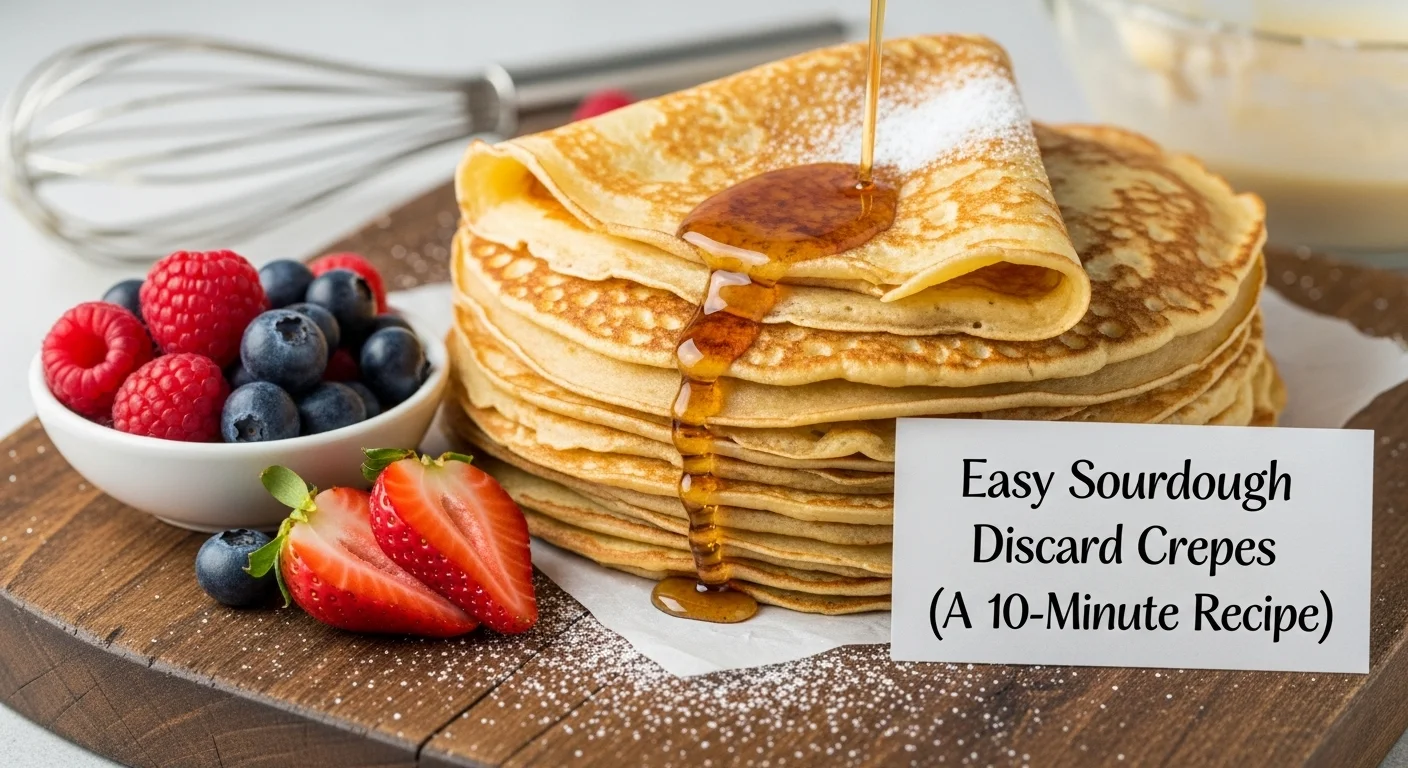
Have you ever found yourself with sourdough discard and wondered what to do with it? I’ve been there too! Let me introduce you to the delightful world of easy sourdough discard crepes, a recipe that takes just 10 minutes to whip up. You might also enjoy trying Fudgy Sourdough Discard Brownies (You Won’t Taste The Tang) for another delicious way to use your starter!
Understanding Sourdough Discard
What is Sourdough Discard?
Simply put, sourdough discard is the portion of your sourdough starter that you remove before feeding it. When you’re maintaining a sourdough starter, you need to regularly feed it with fresh flour and water to keep it active and bubbly. But instead of tossing that removed portion, you can use it in a variety of scrumptious recipes, including these delicious crepes! I remember the first time I learned about sourdough discard. I was shocked at how many creative options there were to avoid waste and enhance my meals.
Benefits of Using Sourdough Discard
Using sourdough discard comes with plenty of perks. For one, it helps reduce food waste—something I feel strongly about. Every little bit counts, right? Not only that, but sourdough discard can add a unique flavor and texture to your dishes. The natural fermentation process enhances the nutritional profile of the discard, making your recipes easier to digest while also adding a slight tanginess that can elevate your meals. Plus, it’s an excellent way to put leftover starter to good use, ensuring every bit of your baking efforts contributes to something delicious.
Common Uses for Sourdough Discard
There are countless ways to utilize sourdough discard, and crepes are just the tip of the iceberg! I’ve made pancakes, waffles, and even muffins using my leftover starter. You can incorporate it into bread, cookies, or savory dishes like pizza dough or crackers. The versatility of sourdough discard makes it a kitchen staple in my home. I love exploring different recipes, and I often find that the discard adds a depth of flavor that I didn’t expect. Whether you’re in the mood for something sweet or savory, the options are nearly endless. For a savory dish, check out This Shawarma Bowl Hack that has millions of views!
Ingredients for Easy Sourdough Discard Crepes
Essential Ingredients
Creating these crepes is a breeze, and it only requires a few simple ingredients. Here’s what you need:
- 1 cup sourdough discard (the thicker, the better)
- 1 cup milk (or a dairy-free alternative)
- 2 eggs
- 1 cup flour (all-purpose or whole wheat)
- 1 tablespoon melted butter (plus more for cooking)
- 1/4 teaspoon salt
These basic ingredients come together quickly. I often have everything on hand, which makes these crepes a fantastic last-minute meal option. If you’re like me and enjoy the simplicity of cooking, you’ll appreciate how straightforward this recipe is!
Optional Add-Ins and Variations
While the basic recipe is fantastic on its own, sometimes I like to tweak it a little. You can add herbs, spices, or even some vanilla extract for a sweet twist. If you want to enhance the flavor further, consider adding a pinch of cinnamon or nutmeg for sweet crepes, or fresh herbs like parsley or chives for savory ones. I have even played around with incorporating different types of flour, such as buckwheat or spelt, which can add interesting flavors and textures. The beauty of this recipe is that it encourages experimentation!
Choosing the Right Flour
The type of flour you use can greatly affect the texture and flavor of your crepes. I generally stick to all-purpose flour for a light and airy texture, but whole wheat flour can add a nutty flavor and a bit more heartiness. If you’re feeling adventurous, try a gluten-free blend if you or someone you know is avoiding gluten. I’ve found that using a combination of flours can yield some exciting results, so don’t be afraid to get creative!
Step-by-Step Instructions for Making Crepes
Preparing the Batter
Making the batter for these crepes is one of the simplest parts of the process. I start by grabbing a large mixing bowl and whisking together the sourdough discard, milk, and eggs until it’s well combined. I remember the first time I did this—I was surprised by how smooth and creamy the mixture looked, which gave me confidence that my crepes would turn out great. Next, I add the flour, melted butter, and salt. It’s important to whisk gently here; I usually start with a few quick strokes, then gradually mix until everything is incorporated. It’s okay if there are a few lumps—crepes are forgiving! I often let the batter rest for about 10 to 15 minutes, which allows the flour to hydrate and the gluten to relax, resulting in more tender crepes.
Cooking the Crepes
Once my batter is ready, it’s time to cook! I heat a non-stick skillet over medium heat and add a little melted butter or oil. I’ve found that just enough fat ensures the crepes won’t stick, which is crucial for that perfect flip. Using a ladle, I pour about 1/4 cup of batter into the center of the skillet, then quickly tilt and swirl the pan to spread the batter into a thin, even layer. It’s like a little dance! I usually let the crepe cook for about 1-2 minutes until the edges start to lift and the center looks set. Then, I carefully slide a spatula underneath to flip it. I like to cook the other side for another minute until it’s golden brown. The first crepe is often a test run, but I’ve learned that they get better with practice!
Tips for Flipping Crepes
Flipping crepes can be a bit intimidating at first, but I promise it gets easier! One trick that I find helpful is to gently shake the skillet after a minute of cooking—if the crepe moves freely, it’s ready to flip. I use a thin spatula to slide under the edge of the crepe, lifting it slightly before flipping it over. If you’re feeling adventurous, you can even try flipping it in the air! Just remember to keep it low to avoid a mess. If it does tear, don’t worry; it will still taste delicious! I often just fold them into quarters or roll them up if they don’t look perfect. Cooking crepes becomes a fun and rewarding part of my cooking routine!
Serving Suggestions for Sourdough Discard Crepes
Sweet Fillings and Toppings
When it comes to sweet crepes, the sky is the limit! One of my favorite combinations is to spread a thin layer of Nutella or almond butter and top it with sliced bananas or strawberries. Drizzling a little maple syrup over the top makes it even better! Another sweet option that I adore is mixing cream cheese with a bit of powdered sugar and vanilla extract, then spreading it in the middle before folding the crepe. I sometimes sprinkle a little cinnamon on top for an extra touch. These sweet variations are perfect for breakfast, dessert, or even a snack during the day!
Savory Fillings and Toppings
On the savory side, I enjoy filling my crepes with sautéed spinach and feta cheese, or even roasted vegetables with a sprinkle of parmesan. Sometimes I whip up a quick egg scramble and fill the crepes with that for a hearty breakfast option. A little avocado and salsa can add a delightful touch too! I often experiment with different combinations, and I’ve discovered that adding a hint of garlic or onion powder to the batter before cooking brings an extra layer of flavor to the crepes.
Pairing with Drinks
To complement these delicious crepes, I recommend serving them with a variety of drinks. For sweet crepes, a hot cup of coffee or a creamy latte is a perfect match. I also love pairing my savory crepes with a refreshing green tea or even a sparkling water with a splash of lemon. It’s all about balancing the flavors, and I enjoy finding combinations that work well together. In our house, it often turns into a little brunch party with friends, and I love sharing my favorite drink pairings with them!
Storage and Reheating Tips
How to Store Crepes
After making a batch of crepes, I often find myself with leftovers—and that’s a good thing! To store them, I stack the crepes with parchment paper in between each one to prevent them from sticking together. Then, I wrap them tightly in plastic wrap or place them in an airtight container. They usually keep well in the fridge for up to three days. If I want to keep them longer, I’ve started freezing them. Just make sure to separate each crepe with parchment, then place them in a freezer-safe bag. I’ve found that they can last up to a month in the freezer.
Reheating Crepes Properly
When it comes time to enjoy those leftover crepes, reheating them is simple. If they’re in the fridge, I usually just pop them in a non-stick skillet over low heat for a minute or two on each side until they’re warmed through. If they’re frozen, I take them out and let them thaw in the fridge overnight. Then, I follow the same skillet method. Alternatively, I’ve found that wrapping them in foil and placing them in a warm oven can also do the trick! Reheating these crepes is so satisfying; it feels like bringing a little bit of that fresh cooking experience back into my day.
Common Mistakes to Avoid
Overmixing the Batter
One mistake I’ve made more than once while making crepes is overmixing the batter. It’s so tempting to want everything perfectly smooth, but I’ve learned that a few lumps are actually okay! Overmixing can develop the gluten in the flour too much, leading to tougher crepes instead of the light, delicate texture we all love. Now, I mix just until everything is combined, and I embrace the little lumps. It feels much more forgiving this way, and my crepes turn out so much better!
Incorrect Cooking Temperature
Getting the cooking temperature right is crucial for perfect crepes. I remember the first time I got it wrong—either the pan was too hot, so the crepes burned quickly, or too cool, resulting in crepes that stuck and tore. After some trial and error, I found that medium heat usually works best. I also recommend preheating the pan well before pouring in the batter. If I notice the edges of the crepe cooking too quickly or browning too much, I adjust the heat accordingly. A little patience here goes a long way in achieving that perfect golden-brown color!
Using Too Much Oil or Butter
When I first started making crepes, I thought more oil or butter meant better results. I would slather the skillet with fat, which often led to greasy crepes. I’ve figured out that a light coating is all you need. A small amount of melted butter or oil does the job perfectly, allowing the crepes to cook evenly without becoming heavy. I usually wipe the pan with a paper towel after adding the fat to ensure I’m not overdoing it. Trust me; this little trick can save you from a greasy mess!
Frequently Asked Questions
Can I use store-bought sourdough starter?
Absolutely! I’ve used store-bought sourdough starters in my recipes, and they work just as well as homemade ones. The key is to make sure the starter is active and bubbly. If you’re using a store-bought starter, check the instructions to see if it needs feeding before using it in your crepe batter. I’ve found that the flavor might be a bit different, but it’s still delicious and a great way to utilize that sourdough discard!
How can I make gluten-free sourdough crepes?
Making gluten-free sourdough crepes is totally doable! I recommend using a gluten-free flour blend that you enjoy. In my experience, a combination of gluten-free all-purpose flour and a bit of cornstarch works well. Just make sure your sourdough discard is gluten-free, too. I’ve played around with different brands, and I’ve found that certain blends yield better results than others. It may take a bit of experimentation, but the end result can be just as satisfying as traditional crepes!
Can I freeze sourdough discard crepes?
Yes, you can definitely freeze sourdough discard crepes! I often make a larger batch and stash some away for later. To freeze them, I stack the crepes with parchment paper in between, just like I do for storage in the fridge, and place them in a freezer-safe bag. Whenever I’m craving crepes, I can pull them out and have a delicious meal ready in no time. Just remember to thaw them in the fridge before reheating, and you’ll be good to go!
Final Thoughts
Making sourdough discard crepes has transformed my kitchen routine, and I truly believe it can do the same for you. The process is straightforward, and the results are simply delicious. I’ve cherished the moments spent experimenting with different fillings and flavors, turning a simple crepe into a delightful meal or snack. Whether I’m serving them at a brunch with friends or enjoying a cozy breakfast at home, they never fail to impress.
The beauty of using sourdough discard is that it not only reduces waste but also adds a unique flair to my cooking. Each crepe reflects a bit of my personality, and I love that I can customize them based on what I have at home or what I’m craving. The versatility of this recipe means I can keep it fresh and exciting every time I whip them up.
Don’t hesitate to dive into your own sourdough journey if you haven’t already. Embrace the art of using your sourdough discard creatively; you might be surprised at how satisfying it is to see what delicious meals you can create. Each batch of crepes brings a sense of fulfillment, knowing that I’m making the most out of my starter and enjoying something homemade. So go ahead, gather your ingredients, and start making your own easy sourdough discard crepes. I promise, you won’t regret it!
Frequently Asked Questions
What is sourdough discard?
Sourdough discard is the portion of your sourdough starter that you remove before feeding it. It can be used in various recipes instead of being tossed away.
What are the benefits of using sourdough discard?
Using sourdough discard helps reduce food waste, adds unique flavor and texture to dishes, enhances the nutritional profile, and ensures that leftover starter is put to good use.
What ingredients are needed for easy sourdough discard crepes?
You need 1 cup sourdough discard, 1 cup milk (or a dairy-free alternative), 2 eggs, 1 cup flour (all-purpose or whole wheat), 1 tablespoon melted butter (plus more for cooking), and 1/4 teaspoon salt.
Can I add variations to the basic crepe recipe?
Yes! You can add herbs, spices, vanilla extract, cinnamon, nutmeg, or different types of flour like buckwheat or spelt to enhance the flavor and texture of the crepes.
How should I prepare the batter for the crepes?
Whisk together the sourdough discard, milk, and eggs in a large mixing bowl. Then, add the flour, melted butter, and salt, mixing gently until combined. Let the batter rest for 10 to 15 minutes before cooking.
What is the best way to cook the crepes?
Heat a non-stick skillet over medium heat, add a little melted butter or oil, pour in about 1/4 cup of batter, and swirl the pan to spread it into a thin layer. Cook for 1-2 minutes, then flip and cook for another minute until golden brown.
How can I store leftover crepes?
Stack the crepes with parchment paper in between, wrap them in plastic wrap or place them in an airtight container. They can be stored in the fridge for up to three days or frozen for up to a month.
How do I reheat leftover crepes?
Reheat crepes in a non-stick skillet over low heat for a minute or two on each side. For frozen crepes, thaw them in the fridge overnight before reheating. You can also wrap them in foil and place them in a warm oven.
What common mistakes should I avoid when making crepes?
Avoid overmixing the batter, cooking at an incorrect temperature, and using too much oil or butter, as these can lead to tougher, stickier, or greasy crepes.
Can I freeze sourdough discard crepes?
Yes, you can freeze them by stacking with parchment paper in between and placing them in a freezer-safe bag. Thaw in the fridge before reheating when ready to eat.