
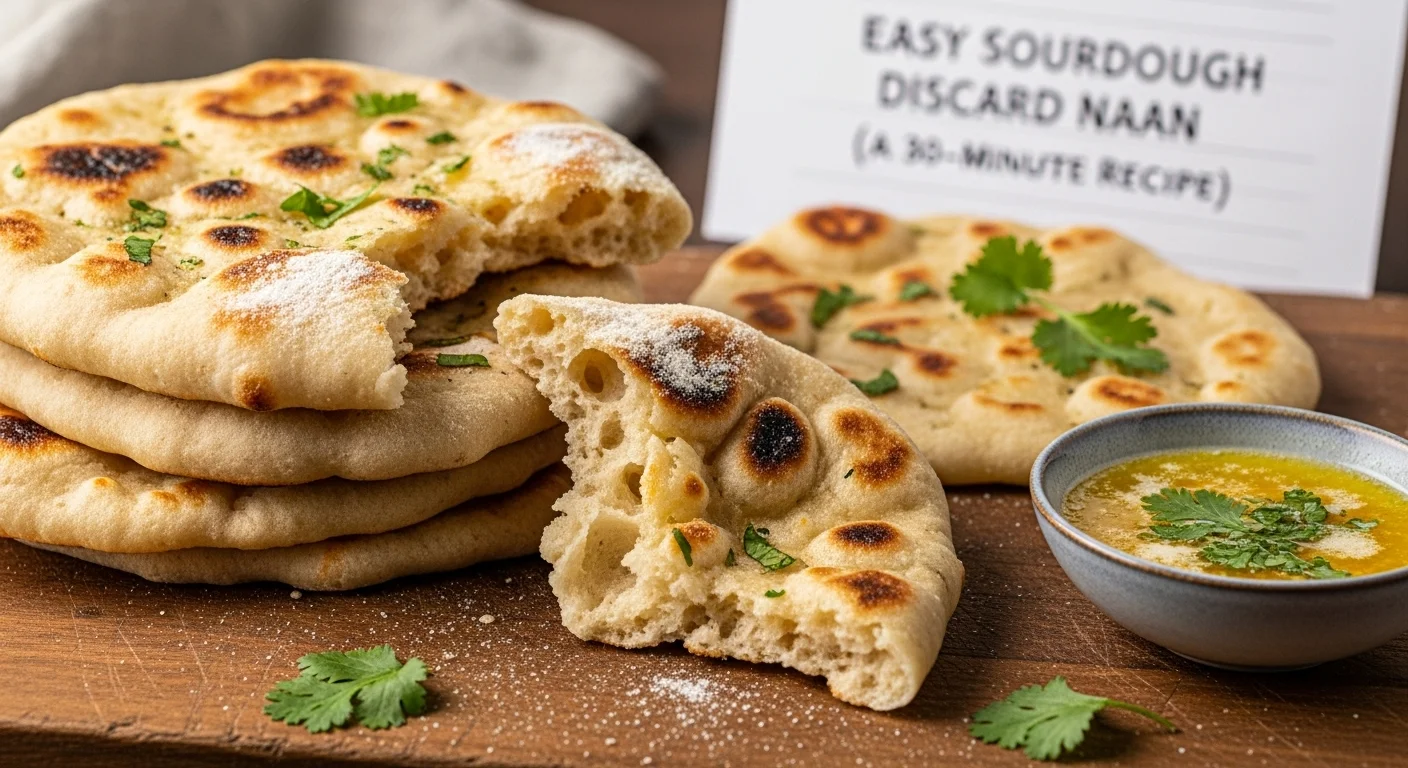
If you’re looking for a quick and delicious way to use up your sourdough discard, I’ve got just the recipe for you! This easy sourdough discard naan can be made in just 30 minutes and is perfect for any meal.
Understanding Sourdough Discard
What is Sourdough Discard?
Let’s start with the basics. Sourdough discard is simply the portion of your starter that you remove before feeding it. When you maintain a sourdough culture, you need to regularly discard some of it to keep the balance between the yeast and the food supply. I remember when I first started baking sourdough; I felt so guilty throwing it away! But then I discovered all the fun ways to use that discard, and everything changed. It’s not waste; it’s an opportunity to create something delicious.
Benefits of Using Sourdough Discard
Using sourdough discard in recipes like naan has a couple of key benefits. First, it reduces waste, which I think is really important. I’ve noticed that every little bit counts in the kitchen, and using discard is a great way to be resourceful. Secondly, it adds a unique flavor to your dishes. When I make naan with sourdough discard, I can really taste the depth that the fermentation process brings. It’s like a little secret ingredient that makes your food stand out.
How to Collect and Store Sourdough Discard
Collecting sourdough discard is easy. I usually keep a clean jar in my fridge where I pour my discard whenever I feed my starter. It’s important to remember to label the jar with the date, so you know how fresh it is. I’ve found that it can last about a week in the refrigerator. If you don’t plan on using it within that time frame, you can freeze it! Just make sure to thaw it out before using it in your recipes. I typically use my discard within a week, but I’ve had success with frozen discard months later, too. Just keep it organized, and you’ll always have some on hand for your next baking adventure.
Ingredients for Easy Sourdough Discard Naan
Essential Ingredients
Now that we’ve covered the basics, let’s dive into the ingredients for this naan. For the most basic version of the naan, you’ll need:
- 1 cup sourdough discard
- 1 cup all-purpose flour (or whole wheat flour)
- 1/2 teaspoon salt
- 1/2 teaspoon baking powder
- 1/4 cup yogurt or milk
- 1 tablespoon olive oil or melted butter
These ingredients come together to create a soft and chewy naan that pairs beautifully with any dish. I’ve tried various combinations, and these essentials have always delivered great results.
Optional Add-ins and Variations
If you want to spice things up a bit, you can add in some optional ingredients. For example, garlic naan is a favorite of mine! Just mix in a couple of minced garlic cloves into the dough. Fresh herbs like cilantro or parsley can also be a fantastic addition, giving your naan a fresh and vibrant flavor. You can even sprinkle some shredded cheese inside for a cheesy naan twist. I’ve played around with different flavors, and it’s always exciting to see what new combinations work!
Recommended Flour Types
While all-purpose flour is a staple, I’ve had great success using whole wheat flour, too. It adds a nuttier flavor, which I love. If you’re feeling adventurous, you can try using bread flour for a chewier texture. I often experiment with different flour types depending on what I have in my pantry. Each time I try a new flour, it brings a unique character to the naan, and I think that’s what makes cooking so enjoyable.
30-Minute Naan Recipe Overview
Preparation Time and Cooking Time
The beauty of this recipe is its simplicity and speed. From start to finish, you can have fresh naan ready in about 30 minutes. I typically spend about 10 minutes preparing the dough, and then let it rest for about 10 minutes while I gather my cooking tools. The cooking itself only takes about 2-3 minutes per naan. Trust me, once you see how quick and easy it is, you’ll want to make naan for every meal!
Serving Suggestions
When it comes to serving naan, the possibilities are endless! I love to serve it with rich curries, stews, or even just as a side to a fresh salad. It’s also fantastic for scooping hummus or any kind of dip. I often make a batch and keep it warm in a towel while I prepare the rest of the meal. My family loves when I make naan; it always disappears in a flash! Whether you’re having a formal dinner or a casual lunch, naan brings a warm, inviting touch to the table.
Step-by-Step Instructions
Step 1: Prepare the Dough
Let’s get our hands floury! To start, I like to combine all the dry ingredients in a mixing bowl: the sourdough discard, flour, salt, and baking powder. I find that mixing the dry ingredients first helps distribute everything evenly. Once they’re well combined, I create a small well in the center. Then I pour in the yogurt (or milk) and the olive oil or melted butter. At this moment, I usually feel like a kid again, mixing everything together with my hands. The dough will be a bit sticky, but that’s perfectly fine. If you find it too sticky, sprinkle a little more flour as needed. I believe this is the part where the magic starts to happen!
Step 2: Resting the Dough
After mixing, it’s important to let the dough rest. I typically cover the bowl with a clean kitchen towel and let it sit for about 10 minutes. This resting period allows the gluten to relax and makes the dough easier to roll out later. While I wait, I take this time to prepare my cooking space, gathering my skillet or tandoor, and any toppings I might want to use later. This small pause adds anticipation, and I often find myself daydreaming about how delicious the naan will taste!
Step 3: Shaping the Naan
Once the dough has rested, it’s time to shape the naan. I dust my work surface with flour to prevent sticking. Then, I divide the dough into equal portions. Personally, I like to make about four pieces, but you can make them smaller or larger depending on your preference. I roll each piece into a ball, and then, using a rolling pin (or my hands if I’m feeling adventurous), I flatten it out into an oval or circle, about 1/4 inch thick. I often enjoy this part; there’s something satisfying about shaping the dough, and I love seeing how each piece takes on its own unique shape.
Step 4: Cooking the Naan
Now for the best part—cooking! I heat my cast iron skillet over medium-high heat. When it’s hot enough, I gently place one naan on the skillet. You can hear that lovely sizzle, and my mouth starts to water! I let it cook for about 2-3 minutes until it starts to puff up and develop those beautiful golden-brown spots. Then, I flip it over and cook for another 1-2 minutes on the other side. If you’re feeling fancy, you can brush it with a bit of melted butter or ghee right after it comes off the skillet. The aroma that fills the kitchen is simply irresistible!
Step 5: Serving and Storing Naan
Once all the naans are cooked, I like to keep them warm by wrapping them in a clean kitchen towel. It’s a simple trick that keeps them soft and delicious. I often serve them straight away, but if I have leftovers (which is rare!), I store them in an airtight container in the fridge. They usually stay fresh for a couple of days. When I want to eat them again, I simply reheat them in a skillet or the microwave for a few seconds. I’ve also tried freezing them, and they hold up surprisingly well! Just make sure to separate them with parchment paper before freezing, so they don’t stick together.
Tips for Perfect Naan
Achieving the Right Texture
Getting the texture just right can be a bit of a journey, but I’ve learned a few tricks along the way. For me, the key is not to overwork the dough. Kneading it too much can make the naan tough instead of soft and chewy. I also like to make sure my skillet is hot enough before adding the naan; a properly heated skillet creates those lovely bubbles and spots that make naan so appealing. If I’m looking for a slightly charred flavor, I sometimes finish them off directly over an open flame on the stovetop. It adds a fantastic smoky taste that takes the naan to the next level!
Using a Cast Iron Skillet vs. Tandoor
While I often use my trusty cast iron skillet, I’ve also had the chance to try cooking naan in a tandoor oven. If you have one available, it’s definitely worth the experience! The high heat of the tandoor gives the naan that authentic texture and flavor that is hard to replicate. However, I’ve found that a hot skillet can yield amazing results, too. It’s all about what you have on hand and your comfort level in the kitchen!
Flavor Enhancements and Toppings
If you truly want to elevate your naan, consider adding some fun toppings before cooking. I’ve experimented with brushing the dough with garlic and herb butter, and it transforms the naan into something extraordinary. You can also sprinkle sesame seeds, poppy seeds, or even nigella seeds on top for added flavor and texture. For a more indulgent twist, I’ve tried stuffing the naan with cheese or spiced potatoes before cooking. It’s like a flavor surprise in every bite!
Common Questions About Sourdough Discard Naan
Can I Use Fresh Sourdough Starter Instead of Discard?
This is a question I’ve pondered myself. While fresh sourdough starter can be used in place of discard, it may change the texture and flavor of your naan. I’ve noticed that using discard tends to yield a softer naan due to its fermented nature. If you do choose to use fresh starter, I recommend reducing the amount of flour and liquid slightly to maintain the right consistency.
How to Make Naan Gluten-Free?
I have friends who are on gluten-free diets, and I’ve played around with gluten-free flours to create naan that everyone can enjoy. You can use a mix of gluten-free all-purpose flour and xanthan gum to mimic the elasticity of regular flour. Just keep in mind that the texture may differ slightly. I’ve had good results with almond flour, too, which adds a nutty taste. It’s all about experimenting until you find a combination that works for you!
What to Do with Leftover Naan?
While I rarely have leftover naan, there are plenty of ways to enjoy it if I do! One of my favorite things to do is to make naan pizzas. I spread a bit of tomato sauce, add some cheese, and top it with my favorite ingredients before popping it in the oven until bubbly. You can also use leftover naan to make sandwiches or wraps, or simply toast it and serve with dips. It’s amazing how versatile this simple bread can be!
Health Benefits of Sourdough Naan
Nutritional Value and Ingredients
Sourdough naan has its perks when it comes to nutrition. The use of sourdough discard not only reduces waste but also introduces beneficial probiotics to our bodies. I’ve found that incorporating whole wheat flour can add extra fiber, which is always a bonus. Plus, the yogurt or milk adds some protein and calcium, making it a wholesome addition to any meal.
Digestibility of Sourdough
One of the things I love most about sourdough is its digestibility. The fermentation process helps break down gluten, which can make it easier on the stomach. Many people who are sensitive to gluten find that they can tolerate sourdough better than other types of bread. I’ve noticed this firsthand with my own family; it’s not uncommon for us to enjoy sourdough dishes without the usual discomfort that comes from traditional bread.
Pairing Suggestions
Best Dishes to Serve with Naan
Naan is incredibly versatile, and I always find myself thinking about the different dishes it pairs well with. My personal favorite is a rich, creamy butter chicken. The tender pieces of chicken in that sauce are delightful to scoop up with warm naan. I’ve also enjoyed it with lentil curries and vegetable stews, where the naan acts as a perfect medium to soak up all the delicious flavors. I definitely recommend trying it with some spicy chickpea curry, as the combination is simply divine!
Recommended Sauces and Dips
On days when I’m feeling a bit lazy, I love to whip up some hummus or tzatziki to serve alongside my naan. The coolness of the yogurt in tzatziki complements the warmth of the naan beautifully. I’ve also experimented with different chutneys, like mango or mint, and they add a refreshing twist. I always encourage friends and family to get creative with their dips; there’s no wrong way to enjoy naan!
Frequently Asked Questions
What is sourdough discard?
Sourdough discard is the portion of your sourdough starter that you remove before feeding it. This step is necessary to maintain a healthy balance within your starter, allowing the yeast to thrive.
What are the benefits of using sourdough discard?
Using sourdough discard minimizes food waste and adds complex flavors to recipes due to the fermentation process, enhancing the overall taste of dishes.
How should I collect and store sourdough discard?
You can collect sourdough discard by pouring it into a clean jar in your refrigerator after feeding your starter. It typically lasts about a week in the fridge, and if not used, can be frozen for later use.
What ingredients do I need to make sourdough discard naan?
To make basic sourdough discard naan, you’ll need 1 cup of sourdough discard, 1 cup of flour (all-purpose or whole wheat), 1/2 teaspoon of salt, 1/2 teaspoon of baking powder, 1/4 cup of yogurt or milk, and 1 tablespoon of olive oil or melted butter.
How long does it take to make naan?
The entire process of making naan takes about 30 minutes, including 10 minutes for dough preparation, 10 minutes for resting, and a cooking time of about 2-3 minutes per naan.
Can I use fresh sourdough starter instead of discard?
Yes, you can use fresh sourdough starter, but it may alter the texture and flavor of the naan. Using discard tends to yield a softer naan due to its fermented nature.
How can I make naan gluten-free?
To make gluten-free naan, you can use a mix of gluten-free all-purpose flour and xanthan gum to mimic the elasticity of regular flour. Almond flour can also be used for a nutty flavor, though the texture may differ slightly.
What can I do with leftover naan?
If you have leftover naan, you can make naan pizzas by adding tomato sauce and cheese, use it for sandwiches or wraps, or simply toast it and serve with dips.
What are some recommended dishes to serve with naan?
Naan pairs well with dishes like creamy butter chicken, lentil curries, vegetable stews, and spicy chickpea curry, making it a versatile addition to any meal.
What health benefits does sourdough naan offer?
Sourdough naan can provide beneficial probiotics from the sourdough discard, and incorporating whole wheat flour adds extra fiber, while yogurt or milk contributes protein and calcium.
Read Interesting article: Rustic Gluten-Free Fruit Galette (An Easy, Impressive Dessert)
Read Interesting article: How to Eat Well on Just $50 a Week: A Complete Budget Meal Plan
Read Interesting article: Warm & Gooey: Easy 1-Hour Cinnamon Rolls (Your New Favorite!)