
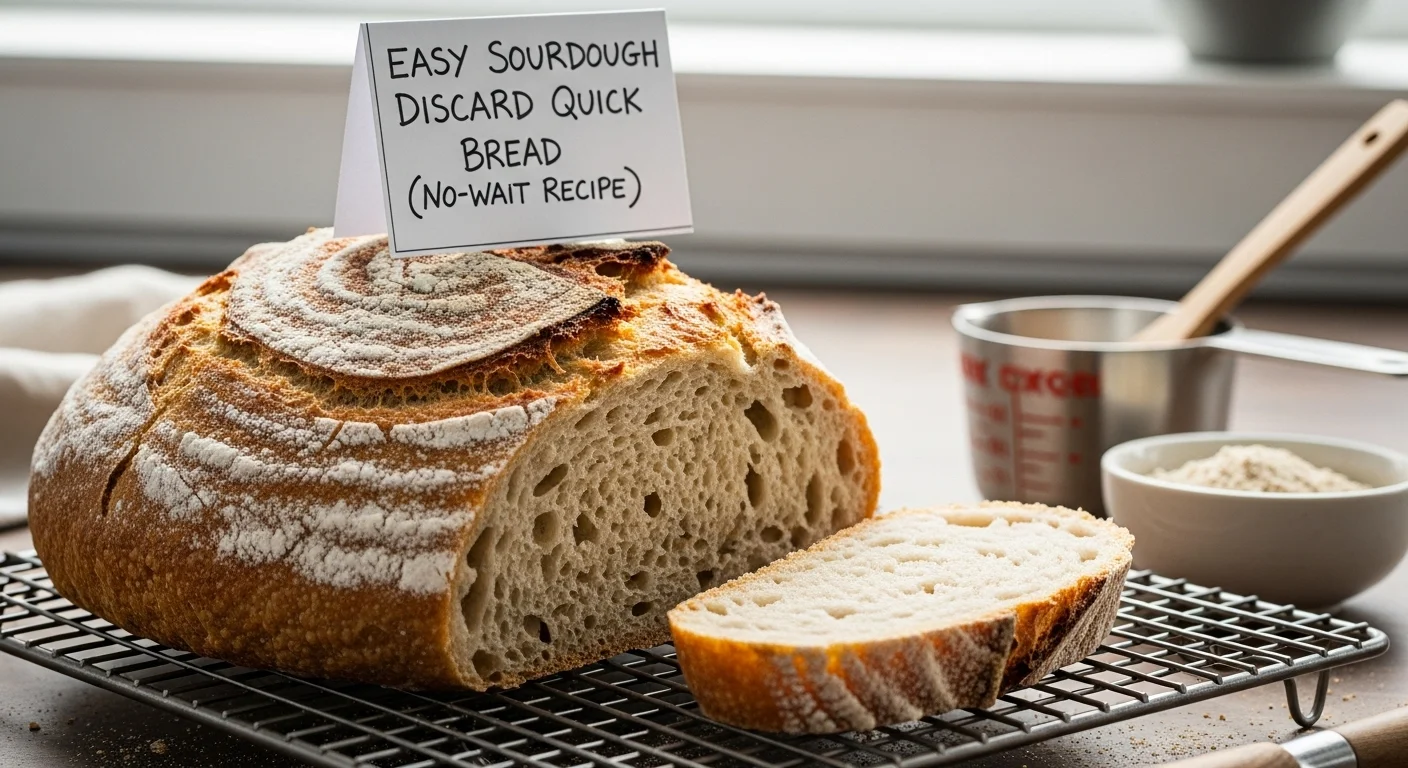
Have you ever wondered what to do with leftover sourdough starter? Let me introduce you to a delightful solution: easy sourdough discard quick bread! This no-wait recipe transforms your sourdough discard into a delicious treat that’s ready in no time. Read Interesting article: Can You Make Sourdough Bread With Only Sourdough Discard?
What is Sourdough Discard?
Understanding Sourdough Starter
To get a clear picture of sourdough discard, we first need to understand what sourdough starter is. A sourdough starter is a mixture of flour and water that captures wild yeast and beneficial bacteria from the environment. As it ferments, it becomes bubbly and tangy, perfect for making traditional sourdough bread. However, maintaining a sourdough starter requires regular feeding, which means discarding some of the starter periodically. This leftover portion is what we call sourdough discard.
I remember when I first started my sourdough journey. I was fascinated by the fermentation process but felt guilty every time I had to toss part of my starter. It seemed wasteful to throw away something that had the potential to be delicious! That’s when I discovered that this sourdough discard could be repurposed in a variety of ways, leading me to explore its culinary potential.
Benefits of Using Sourdough Discard
Using sourdough discard not only reduces waste but also adds a unique flavor and texture to baked goods. The natural fermentation process contributes a subtle tanginess that can enhance the taste of quick breads and pancakes. Additionally, sourdough discard is full of beneficial bacteria that can aid digestion and improve gut health. I’ve felt a noticeable difference in how I feel after enjoying recipes made with sourdough discard compared to conventional baked goods.
Another reason I love using sourdough discard is its versatility. Whether you’re making pancakes for breakfast, muffins for a snack, or quick bread for dinner, sourdough discard can elevate these dishes effortlessly. It’s like having a secret ingredient that not only boosts flavor but also adds nutritional value!
Common Uses for Sourdough Discard
The beauty of sourdough discard is its adaptability. I’ve experimented with it in various recipes, and I’ve found that it works wonderfully in:
- Quick breads: A fantastic way to use up your discard while enjoying a delicious loaf.
- Pancakes and waffles: They become fluffy and flavorful with just a bit of sourdough discard mixed in.
- Muffins: Sweet or savory, muffins made with sourdough discard are always a hit in my house.
- Crackers: A crunchy snack that’s simple to make and perfect for enjoying with cheese or dips.
By utilizing sourdough discard in these recipes, I’ve not only reduced waste but also added variety to my kitchen adventures!
Quick Bread: An Overview
What is Quick Bread?
Quick bread is a type of bread that leavens without yeast, using baking powder or baking soda instead. This means it doesn’t require long rising times, which is why it’s called “quick.” When I first baked quick bread, I was amazed at how easy it was to prepare and how quickly it came together. It’s perfect for those moments when you want fresh bread but don’t have hours to wait for dough to rise.
Difference Between Quick Bread and Yeast Bread
The main difference between quick bread and yeast bread lies in their leavening agents. Yeast bread relies on yeast fermentation, which creates gas bubbles that make the dough rise over time. In contrast, quick bread uses chemical leaveners that activate immediately when mixed with wet ingredients. This instant reaction means quick bread comes out of the oven light and airy without the wait. I love both types of bread, but quick bread is my go-to when I’m short on time!
Benefits of Quick Bread Recipes
One of the greatest advantages of quick bread recipes is their simplicity. The ingredients are usually pantry staples, and you don’t need any special equipment—just a bowl, a whisk, and a baking pan. I’ve enjoyed whipping up quick breads on lazy weekends or when I have unexpected guests. They’re also incredibly forgiving; even if you mix the batter a little too much or add an extra ingredient, it usually turns out deliciously!
Another benefit is their versatility. You can create sweet or savory versions with endless flavor combinations. I often find myself experimenting with spices, fruits, and nuts to customize each loaf. There’s something satisfying about baking a fresh loaf of quick bread and knowing it can be enjoyed in countless ways—from breakfast toast to an afternoon snack paired with jam.
Essential Ingredients for Easy Sourdough Discard Quick Bread
Sourdough Discard
The star of our quick bread recipe is, of course, the sourdough discard. I like to think of it as the backbone of the bread, providing that signature tangy flavor and moist texture. Whether your discard has been sitting in the fridge for a day or a week, it’s generally good to use as long as it has a pleasant smell and isn’t showing any signs of spoilage. I’ve found that even older discard can still contribute beautifully to quick bread, so don’t hesitate to put it to good use! Just remember to give it a good stir before you use it, as the separation of liquid is completely normal.
Flour Types: All-Purpose vs. Whole Wheat
When it comes to flour, the choice between all-purpose and whole wheat can be a personal one. I often use all-purpose flour for its lightness and fluffiness, which helps my quick bread rise beautifully. However, I also enjoy using whole wheat flour for its nutty flavor and added fiber. In my experience, blending the two can yield the best of both worlds—lightness with a bit of heartiness. If you’re experimenting, you might start with a 1:1 ratio of all-purpose to whole wheat flour and adjust based on your preference. You might be surprised at how much you like the added texture!
Leavening Agents: Baking Powder and Baking Soda
Understanding leavening agents is crucial for the success of your quick bread. I’ve learned that both baking powder and baking soda serve as the main leavening agents, and they work in slightly different ways. Baking soda needs an acid to activate, which is where the tanginess of sourdough discard comes into play. On the other hand, baking powder contains both an acid and a base, making it a bit more versatile. I usually use a combination of both in my recipes to achieve the perfect rise. It’s fascinating to see how these simple ingredients work together, creating that delightful texture we all love in quick bread!
Additional Flavorings and Mix-ins
This is where the fun really begins! I’ve experimented with countless flavorings and mix-ins, and I can confidently say that the possibilities are endless. Whether it’s a handful of chocolate chips for a sweet bread or some chopped herbs for a savory twist, these additions can elevate your quick bread to new heights. I often find myself reaching for fruits like blueberries or bananas, which not only add sweetness but also moisture. Nuts, seeds, and even spices like cinnamon or nutmeg can enhance the flavor profile dramatically. I encourage you to get creative! Think about what flavors you enjoy and don’t be afraid to mix them in. Each loaf can be a new adventure in taste. Read Interesting article: The Best Sourdough Discard Zucchini Bread (Incredibly Moist)
Step-by-Step Recipe for Easy Sourdough Discard Quick Bread
Preparation: Tools and Equipment Needed
Before diving into the recipe, let’s gather the essentials. From my experience, having the right tools makes all the difference. You’ll need a mixing bowl, a whisk for combining your ingredients, a rubber spatula for folding in those last bits, and a loaf pan for baking. I also recommend parchment paper to line the pan, which helps with easy removal. If you have a kitchen scale, it’s handy for measuring your flour accurately, but measuring cups will work just fine too. With everything in place, you’re ready to start baking!
Mixing Ingredients
Now comes the fun part—mixing! Start by combining your sourdough discard with the other wet ingredients in a bowl. This usually includes eggs and any milk or yogurt you choose to use. I find that whisking these together results in a nice, smooth batter. In another bowl, mix your dry ingredients, including flour, baking powder, baking soda, and any spices. When I mix the dry ingredients, I like to use a whisk as well; it helps to aerate the flour and evenly distribute the leavening agents. Next, you’ll want to gently fold the dry mixture into the wet ingredients. Be careful not to overmix; a few lumps are perfectly fine! This step is crucial—overmixing can lead to a dense loaf, which is definitely not what we’re aiming for.
Baking Instructions
Once your batter is ready, pour it into your prepared loaf pan. I usually smooth the top with my spatula to make it look nice and even. Place it in a preheated oven, typically around 350°F (175°C), and let it bake for about 45-55 minutes. The aroma that fills your kitchen during this time is simply heavenly! To check if your bread is done, I like to use the toothpick test: simply insert a toothpick into the center, and if it comes out clean, your bread is ready to come out of the oven.
Cooling and Serving Suggestions
After baking, let the quick bread cool in the pan for about 10-15 minutes before transferring it to a wire rack. This step is essential to prevent sogginess. Once it’s cool enough to handle, slice into your homemade bread and enjoy it warm. I love adding a pat of butter or a drizzle of honey on top! Whether you enjoy it for breakfast, as a snack, or alongside a meal, this quick bread is bound to impress and satisfy. I can’t wait for you to try this recipe and make it your own! Read Interesting article: Quick Sourdough Discard Flatbread (No Yeast Needed)
Variations of Sourdough Discard Quick Bread
Sweet Variations: Banana, Chocolate Chip, and More
One of the most exciting aspects of baking with sourdough discard is how easily you can customize your quick bread to suit your preferences. I often find myself leaning towards sweet variations because they make for a delightful breakfast or snack. For instance, adding mashed bananas to your batter not only adds natural sweetness but also keeps the bread wonderfully moist. I remember the first time I tried banana sourdough discard bread; the combination of flavors was heavenly, and it quickly became a family favorite!
Chocolate chip quick bread is another crowd-pleaser in my home. I simply fold in a generous handful of chocolate chips into the batter right before baking. The melted chocolate creates gooey pockets throughout the bread, which makes each slice a treat. If you’re feeling adventurous, you can also mix in nuts or dried fruits like cranberries or raisins for added texture and flavor. Every time I experiment, I end up with a new favorite, and I encourage you to explore different combinations that excite your taste buds!
Savory Variations: Cheese, Herbs, and Vegetables
If your palate leans more towards savory flavors, you’re in for a treat! Savory sourdough discard quick bread can be just as delightful as the sweet versions. I’ve had great success incorporating shredded cheese into the batter. Cheddar is my go-to choice, but I’ve also enjoyed using feta or gouda for a distinct flavor. The melted cheese creates a rich texture that elevates the bread to new heights.
Herbs are another fantastic addition. I often toss in fresh chopped herbs like rosemary or thyme, which lend a fragrant aroma and a burst of flavor. Not only does this quick bread pair beautifully with soups and salads, but it can also stand alone as a savory snack. If you want to sneak in some veggies, grated zucchini or carrots work wonders. They add moisture and nutrition without overwhelming the bread’s flavor. Each slice becomes a little adventure with every bite! I find that experimenting with these savory ingredients can lead to surprising and delightful results, making each loaf unique.
Common Mistakes to Avoid
Overmixing the Batter
This is one mistake I’ve made more often than I’d like to admit! When you mix your batter, it’s important to remember that a few lumps are okay. Overmixing can lead to a dense and tough loaf, which is not what we want. I’ve learned that gently folding the dry ingredients into the wet ones until just combined gives the best results. This way, my quick bread comes out tender and fluffy, which is exactly how I like it!
Incorrect Baking Times and Temperatures
Getting the baking time and temperature just right is crucial for achieving that perfect quick bread. I’ve had my fair share of underbaked or overbaked loaves, and it can be quite disappointing. I recommend keeping an eye on the clock but also trusting your instincts. Ovens can vary, so checking the bread a few minutes before the suggested baking time can save you from a dry loaf. Remember to use the toothpick test I mentioned earlier; it’s a reliable way to ensure your bread is baked to perfection!
Storage Mistakes After Baking
Once you’ve baked a beautiful loaf of sourdough discard quick bread, how you store it can make a big difference in its freshness. I’ve learned the hard way that leaving it out on the counter uncovered can lead to a dry loaf by the next day. Wrapping it in plastic wrap or placing it in an airtight container helps retain moisture. If you want to keep it for longer, I suggest slicing the bread and freezing portions. This way, you can enjoy a slice of homemade goodness whenever the craving strikes, without worrying about spoilage.
Frequently Asked Questions (FAQs)
Can I use any type of sourdough discard?
Yes, you can generally use any type of sourdough discard as long as it smells pleasant and has no signs of spoilage. I’ve used both white and whole wheat sourdough discard, and both work beautifully in quick bread recipes. The flavor profile might change slightly, but that can lead to exciting new variations!
How long can I store sourdough discard?
In my experience, sourdough discard can be stored in the refrigerator for up to two weeks. If you notice any funny smells or mold, it’s best to discard it. However, if you’re not using it regularly, you can also freeze it. Just make sure to label it with the date to keep track of its freshness!
Can I freeze the quick bread?
Absolutely! Freezing quick bread is a great way to enjoy it later. I recommend waiting until the bread is completely cooled, then slicing it and wrapping individual slices in plastic wrap or foil before placing them in a freezer bag. This makes it super easy to grab a slice whenever the mood strikes—just pop it in the toaster or microwave to warm it up!
What can I do with leftover sourdough discard?
There are so many creative uses for leftover sourdough discard! Beyond quick bread, you can make pancakes, waffles, muffins, and even crackers. I’ve also enjoyed using it in pizza dough for a unique twist on a classic favorite. The possibilities are endless, and I love finding new ways to incorporate it into my meals. Each time I experiment, I feel like I’m discovering a new culinary gem!
Frequently Asked Questions
What is sourdough discard?
Sourdough discard is the leftover portion of a sourdough starter that is periodically discarded during the feeding process. It can be repurposed in various recipes, adding flavor and nutrition to baked goods.
What are the benefits of using sourdough discard?
Using sourdough discard reduces waste and enhances baked goods with a unique flavor and texture. It contains beneficial bacteria that aid digestion and improve gut health.
What types of recipes can I make with sourdough discard?
Sourdough discard can be used in a variety of recipes, including quick breads, pancakes, waffles, muffins, and crackers. It adds flavor and nutritional value to these dishes.
What is quick bread?
Quick bread is a type of bread that leavens without yeast, using baking powder or baking soda instead. It doesn’t require long rising times, making it quick and easy to prepare.
How do quick bread and yeast bread differ?
The main difference between quick bread and yeast bread lies in their leavening agents. Yeast bread relies on yeast fermentation for rising, while quick bread uses chemical leaveners that activate immediately.
What are the essential ingredients for easy sourdough discard quick bread?
The essential ingredients include sourdough discard, flour (either all-purpose or whole wheat), baking powder, baking soda, and any additional flavorings or mix-ins you desire.
How should I store sourdough discard?
Sourdough discard can be stored in the refrigerator for up to two weeks. If not used regularly, it can also be frozen, just make sure to label it with the date for freshness tracking.
Can I freeze sourdough discard quick bread?
Yes, you can freeze sourdough discard quick bread. It’s best to wait until the bread is completely cooled, then slice and wrap individual portions before placing them in a freezer bag.
What are some common mistakes to avoid when making quick bread?
Common mistakes include overmixing the batter, which can lead to a dense loaf, and incorrect baking times or temperatures, which can result in underbaked or overbaked bread.
Can I use any type of sourdough discard in quick bread recipes?
Yes, you can use any type of sourdough discard as long as it smells pleasant and shows no signs of spoilage. Both white and whole wheat sourdough discard work well in quick bread recipes.