
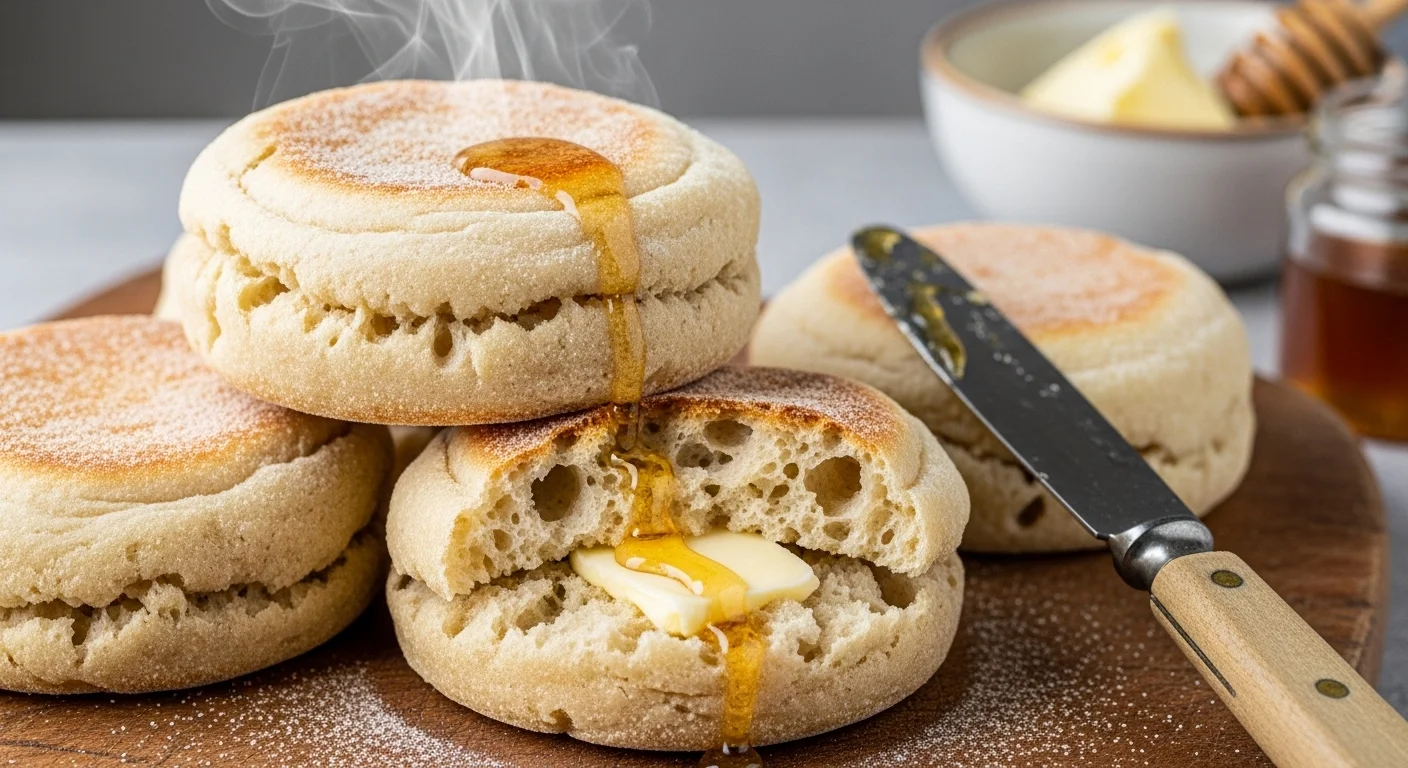
Imagine waking up to the smell of freshly baked sourdough English muffins, with their signature nooks and crannies just waiting to be filled with butter or jam. It’s a delightful experience that’s easier to achieve than you might think!
Understanding Sourdough English Muffins
What are Sourdough English Muffins?
Sourdough English muffins are a unique type of bread that’s not quite like regular muffins. They are round, flat, and have a chewy texture, with those famous nooks and crannies that make them perfect for toasting. What sets sourdough English muffins apart is the use of a sourdough starter, which gives them a tangy flavor and helps create that lovely texture. These muffins are typically cooked on a griddle or skillet, giving them a delightful golden-brown crust while keeping the inside soft and airy. Read Interesting article: 6 Delicious Berry Desserts to Make This Summer
History of English Muffins
The history of English muffins is as rich as their flavor. Many people believe they originated in the United Kingdom, where they were traditionally served as breakfast bread. They were brought to America in the late 19th century, gaining popularity thanks to the invention of the English muffin toaster by George Schneider in the 1970s. I remember the first time I toasted one—it was magical! The way the heat made the nooks and crannies come alive with melted butter was an experience I cherish. Today, they are a breakfast staple in many households, known for their versatility and ease of preparation.
Benefits of Using Sourdough
Using sourdough in your English muffins comes with several benefits. First, the fermentation process involved in making sourdough breaks down gluten and makes it easier to digest. I’ve noticed that sourdough products tend to be more satisfying, keeping me fuller longer. Additionally, the natural fermentation boosts the flavor, giving your muffins a depth that you just won’t find in store-bought versions. I often find that the tanginess of sourdough complements sweet toppings like jam or honey beautifully.
Another perk of sourdough is its health benefits. The probiotics formed during fermentation can aid digestion and improve gut health. I’ve done some reading on it, and I feel great knowing that I’m not just enjoying a delicious treat, but also something that can be good for my body! Plus, making your own sourdough starter can be a rewarding experience, connecting you to the age-old tradition of bread making. Read Interesting article: Fluffy Gluten-Free Hot Cross Buns (Easter Must-Have)
Key Ingredients for Perfect Sourdough English Muffins
Sourdough Starter
Your sourdough starter is the heart of these muffins. I’ve learned that a strong, bubbly starter is essential for achieving the right rise and flavor. Keeping it active and healthy is a part of the process that I genuinely enjoy. If you’re new to sourdough, nurturing your starter can feel like having a little pet in the kitchen. The joy of seeing it double in size after feeding is something that never gets old for me!
Flour Types: All-Purpose vs. Bread Flour
The type of flour you use can significantly affect the texture of your muffins. All-purpose flour is a good option for a softer texture, while bread flour contains more protein and will give you a chewier muffin. I’ve experimented with both, and I find that using a mix of the two often yields the best results. It gives me the tender crumb I love while still maintaining a bit of that chewiness. For me, it’s all about striking the right balance!
Yeast: Active Dry vs. Instant Yeast
When it comes to yeast, I’ve tried both active dry and instant yeast. Active dry yeast needs to be rehydrated before use, while instant yeast can be mixed directly into the flour. I usually opt for instant yeast for convenience, but I’ve noticed that active dry yeast can provide a slightly different flavor profile, which is worth considering if you have the time to activate it. Whichever you choose, make sure it’s fresh for the best results!
Additional Ingredients: Sugar, Salt, and Milk
In addition to the main ingredients, a little sugar can enhance the flavor and help with browning, while salt is crucial for balancing the flavors. I’ve learned that a pinch of sugar also feeds the yeast, giving my muffins a better rise. Milk—or even water—can be used to hydrate the dough, but I prefer milk for that extra richness. It adds a creaminess that makes my English muffins even more delightful. Don’t skip these ingredients; they play an essential role in the final product!
Essential Equipment for Baking
Mixing Bowls
Having the right mixing bowls is key to the baking process. I’ve found that a sturdy, large bowl makes it easier to mix and knead my dough. When I’m preparing my sourdough English muffins, I often use a glass or stainless steel bowl. These materials are easy to clean and don’t retain odors. Plus, they’re great for keeping an eye on the fermentation process, as I can see the dough rise. I always have a couple of different sizes on hand so I can separate my ingredients and keep everything organized. It really simplifies the process!
Measuring Tools
Accurate measurements can make all the difference when it comes to baking. I’ve learned the importance of using a reliable kitchen scale, especially for flour. Weighing my ingredients gives me consistent results, and I appreciate how precise it allows me to be. I also have a set of measuring cups and spoons for liquids and smaller amounts, which come in handy for things like sugar and salt. I recommend investing in a good set of measuring tools; it’s a small step that takes my baking from good to great!
Griddle vs. Oven Baking
When it comes to cooking my sourdough English muffins, I have a preference for using a griddle. There’s something magical about the way a griddle gives the muffins that perfect golden-brown crust while keeping them soft inside. I’ve experimented with baking them in the oven, but I find that the stovetop method allows for more control over the cooking process, which is crucial for getting those delightful nooks and crannies. The low and slow heat helps develop the texture I love. However, if you’re short on time, baking in the oven is definitely a viable option, and I’ll share how to do that later!
English Muffin Rings
While not absolutely necessary, English muffin rings can be a game changer. I decided to try them after seeing how they help maintain the shape of the muffins while they cook. They keep the dough from spreading out too much, which can lead to those ideal, round forms that I always aim for. I noticed that using these rings gives me a more uniform size, which is great for toasting. They’re often made of metal, which helps conduct heat evenly, and they’re super easy to clean. If you’re serious about making English muffins, I think it’s worth adding a pair to your kitchen arsenal!
Step-by-Step Recipe for Easy Sourdough English Muffins
Preparing the Sourdough Starter
Getting my sourdough starter ready is always the first step in my muffin-making journey. I usually feed my starter the night before I plan to bake. It’s exciting to watch it bubble and grow; it feels like I’m nurturing a living thing. I make sure to use a 1:1:1 ratio of starter, flour, and water, letting it sit at room temperature overnight. By morning, it’s usually bubbly and active, which is exactly what I want for my muffins!
Mixing the Dough
Next up is mixing the dough. I combine my bubbly starter with flour, sugar, salt, and milk in my mixing bowl. I remember the first time I did this—the smell of the starter mingling with the flour was intoxicating! I use a wooden spoon to mix until everything is combined. It’s a bit sticky at first, but I embrace the mess because I know it’ll be worth it. I like to let the dough rest for about 20 minutes after mixing; this is called autolyse and helps the gluten develop without over-kneading later.
Kneading Techniques for Nooks & Crannies
Kneading is where the magic truly happens. I’ve found that gentle kneading, rather than going all out, helps create those beloved nooks and crannies. I usually sprinkle a bit of flour on my work surface and turn the dough out. I fold it over itself and gently press down with the heel of my hand, then rotate it a quarter turn and repeat. I do this for about 5-10 minutes until the dough is smooth and elastic. I remember the first time I felt the dough transform from a sticky mass into something soft and pliable—it’s such a satisfying experience.
First Rise: Fermentation Process
After kneading, I place my dough in a lightly greased bowl and cover it with a damp cloth to rise. This is where the fermentation magic happens! I usually let it sit for about 1-2 hours, or until it has doubled in size. I love checking on it every so often, seeing how it grows, and feeling the excitement build as the time passes. This is also a great time to clean up the kitchen and prepare for the shaping process!
Shaping the Muffins
Once the dough has risen, it’s time to shape my muffins. I turn the dough out onto a floured surface again and gently flatten it out to about an inch thick. Using a round cutter or even a glass, I cut out circles and place them onto a floured baking sheet. I always try to handle the dough gently to preserve the bubbles we’ve worked so hard to create. I usually end up with a few extra scraps, which I shape into smaller muffins for fun!
Second Rise: Proofing the Muffins
After shaping, I cover the muffins lightly with a cloth and let them proof for another hour. This step is crucial for developing that airy texture. It’s also a good moment to catch my breath and enjoy a cup of coffee while waiting! I’ve learned that a warm environment helps them rise better, so sometimes I turn on the oven for a few minutes and then turn it off, placing the muffins inside to proof. This little trick helps create the perfect cozy spot for them to grow!
Cooking Methods: Stovetop vs. Oven
Finally, it’s time to cook my muffins. If I’m using a griddle, I heat it to medium-low and carefully place the muffins on it. I’ve found that cooking them low and slow is key to achieving that perfect golden crust while keeping the inside soft. I cook each side for about 8-10 minutes, flipping them carefully so they don’t deflate. If I decide to bake them in the oven, I usually set it to 350°F and bake for about 20-25 minutes. Regardless of the method, the aroma wafting through my kitchen is absolutely heavenly!
Tips for Achieving Perfect Nooks & Crannies
The Role of Hydration in the Dough
Hydration plays a crucial role in creating those desirable nooks and crannies in sourdough English muffins. I’ve discovered that the amount of water you add to your dough can really affect the final texture. A higher hydration dough tends to create more open crumb structures, which is what we’re aiming for. I usually start with a recipe that suggests a hydration level of around 70%. This means that for every 100 grams of flour, I would use about 70 grams of water. I’ve found that adjusting the water slightly can help me achieve the texture I want. If my dough feels too dry, I add a bit more water, but if it’s too sticky, I’ll sprinkle in a bit more flour. It’s a balancing act, but one that’s worth mastering!
Shaping Techniques for Best Texture
When it comes to shaping my muffins, I’ve learned that being gentle is key. I usually avoid pressing down too hard on the dough, as this can deflate the air bubbles that give us those wonderful nooks and crannies. Instead, I gently flatten the dough with my hands, using just enough pressure to create an even thickness. I remember the first time I made sourdough English muffins and accidentally squished the dough too much, resulting in flat, sad muffins. Since then, I’ve been much more mindful of how I handle the dough. Using a light touch and letting the dough do its thing is the way to go!
Cooking Temperature and Time
Cooking temperature and time are critical to ensuring that I achieve the perfect golden crust and fluffy interior. I’ve found that cooking my muffins on medium-low heat allows them to develop that beautiful crust while ensuring the inside cooks through without burning. It can be tempting to crank up the heat for a quicker cook, but I’ve learned that patience pays off here. I usually give them about 8-10 minutes per side, flipping them carefully so they don’t lose their shape. The aroma that fills my kitchen during this time is simply divine! If I’m baking in the oven, I set it to 350°F and keep an eye on them until they’re golden brown. Timing is everything, and I find that checking on them a couple of times helps me achieve the perfect muffins.
Common Troubleshooting Tips
Dough Too Sticky? Solutions
We’ve all had those moments when the dough turns out stickier than we expected. I know I have! If my dough is overly sticky, I usually take a deep breath and remind myself that it happens to the best of us. One of the first things I try is dusting my work surface and hands with a bit of flour to make it more manageable. I also remember that adding too much flour can lead to dense muffins, so I try to make small adjustments. If it’s still too sticky, I sometimes let it rest for a bit, as the gluten will relax and make it easier to handle. With a little patience, I’ve found that I can usually salvage sticky dough!
Flat Muffins: Causes and Fixes
Flat muffins can be disheartening, especially after all the hard work that goes into making them. In my experience, there are a couple of common culprits. One reason could be that the dough didn’t rise enough during fermentation or proofing. If I suspect this is the issue, I make it a point to check my starter’s activity before I even begin. Another reason could be that I handled the dough too roughly during shaping, deflating the precious air bubbles. To fix flat muffins, I’ve learned to be more gentle and ensure that my dough has plenty of time to rise. If they come out flat, I try to embrace them as mini bagels instead!
Overly Dense Muffins: What Went Wrong?
There’s nothing quite like the disappointment of biting into a dense muffin when you were expecting light and airy! I’ve found that overly dense muffins can result from a few causes, such as insufficient hydration or not kneading the dough enough. When I’ve made muffins that turned out dense, I’ve taken a step back to evaluate my process. Did I let the dough rest long enough? Did I use the right flour? Ensuring that I have enough hydration and properly kneading the dough has significantly improved my results. I’ve also noticed that allowing my muffins to proof for the right amount of time makes a huge difference. It’s all about giving the dough the love and time it needs!
Serving Suggestions for Sourdough English Muffins
Classic Toppings: Butter and Jam
Let’s talk about the best part: serving these beautiful muffins! I believe that classic toppings like butter and jam never go out of style. There’s something so comforting about spreading a generous pat of butter onto a warm muffin, watching it melt into those nooks and crannies. My favorite jam is raspberry, but I’ve also enjoyed experimenting with different flavors. Once, I paired my muffins with homemade strawberry jam, and it was a match made in heaven! The combination of the tangy sourdough with the sweetness of the jam is simply delightful. Read Interesting article: The Easiest, Tangiest Homemade Lemon Curd Recipe
Savory Options: Eggs Benedict and Avocado Toast
If you’re in the mood for something savory, I highly recommend trying Eggs Benedict. The English muffin serves as the perfect base for a poached egg, Canadian bacon, and hollandaise sauce. It’s a brunch classic that I can’t resist. I also love using my sourdough muffins for avocado toast. Simply mash up some ripe avocado, add a sprinkle of salt, and maybe a dash of chili flakes for a bit of heat. It’s a quick and satisfying meal that’s always a hit!
Storage Tips for Freshness
After all that hard work, you’ll want to make sure your muffins stay fresh! I usually let them cool completely before storing them. Once cooled, I place them in a paper bag or an airtight container. If I’ve made a big batch, I often freeze some for later. I wrap them individually in plastic wrap and then place them in a freezer-safe bag. That way, I can pull one out whenever I have a craving for fresh muffins, and they toast up beautifully!
Frequently Asked Questions
What are sourdough English muffins?
Sourdough English muffins are round, flat breads with a chewy texture and signature nooks and crannies, perfect for toasting. They are made using a sourdough starter, which gives them a tangy flavor and unique texture, typically cooked on a griddle or skillet.
What is the history of English muffins?
English muffins are believed to have originated in the United Kingdom and were brought to America in the late 19th century. They gained popularity due to the invention of the English muffin toaster in the 1970s, becoming a breakfast staple known for their versatility.
What are the benefits of using sourdough?
Using sourdough in English muffins aids digestion due to the fermentation process, which breaks down gluten. Sourdough also enhances flavor and offers health benefits from probiotics. Making your own sourdough starter connects you to the tradition of bread making.
What types of flour can I use for sourdough English muffins?
All-purpose flour can create a softer texture, while bread flour, which contains more protein, results in a chewier muffin. A mix of both is often recommended to achieve a balance of tenderness and chewiness.
What is the role of yeast in sourdough English muffins?
Yeast is essential for the rising process. Active dry yeast needs to be rehydrated before use, while instant yeast can be mixed directly into the flour. The choice of yeast can affect the flavor, and freshness is crucial for the best results.
What equipment is essential for baking sourdough English muffins?
Essential equipment includes mixing bowls (preferably glass or stainless steel), measuring tools for accurate ingredient measurement, a griddle or oven for cooking, and optional English muffin rings to help maintain muffin shape.
What is the fermentation process for sourdough muffins?
After kneading, the dough is placed in a greased bowl and covered to rise for about 1-2 hours until it doubles in size. This fermentation is crucial for developing flavor and texture.
How can I achieve perfect nooks and crannies in my muffins?
To achieve nooks and crannies, it’s important to maintain hydration in the dough, handle the dough gently during shaping to preserve air bubbles, and cook at the right temperature and time for a golden crust and fluffy interior.
What should I do if my dough is too sticky?
If the dough is too sticky, dusting with flour can help manage it. It’s important to avoid adding too much flour, as this can lead to dense muffins. Letting the dough rest can also help relax the gluten, making it easier to handle.
What are some serving suggestions for sourdough English muffins?
Classic toppings include butter and jam, while savory options like Eggs Benedict and avocado toast are also popular. Muffins can be stored in a paper bag or airtight container, and freezing them individually allows for later enjoyment.