
Have you ever craved a warm, flaky scone but worried about the ingredients? Let me introduce you to the world of tapioca flour scones—deliciously simple and surprisingly easy to make!
What is Tapioca Flour?
Definition and Properties
Tapioca flour, often called tapioca starch, is derived from the cassava root, a starchy tuber native to South America. The process involves extracting the starch from the cassava, washing it, and then drying it out to create a fine, white powder. I remember the first time I used tapioca flour; I was amazed at how light and airy it felt in my hands. It’s gluten-free, which makes it an excellent alternative for those who are sensitive to gluten or have celiac disease. The properties of tapioca flour contribute to a chewy texture and can help create a crisp crust when baked. I’ve found that it’s a versatile ingredient that can be used in various recipes, from thickening sauces to baking goods like our lovely scones. Read Interesting article: Simple Gluten-Free Shortbread Cookies (Buttery & Crumbly)
Health Benefits of Tapioca Flour
Beyond its unique texture, tapioca flour comes with some health benefits that are worth noting. It’s naturally gluten-free, making it suitable for a gluten-free diet. I’ve seen many people switch to tapioca flour for recipes to avoid gluten while still craving their favorite baked goods. Additionally, tapioca flour is low in calories and contains a small amount of protein. It’s also rich in carbohydrates, which can provide a quick energy boost. For those of us who enjoy experimenting with different flours, tapioca flour is a great option to incorporate into our diet without sacrificing flavor or texture.
Understanding Scones
History of Scones
Scones have a rich history that dates back to the early 16th century in Scotland. They were originally made with oats and baked on griddles. I find it fascinating how scones have evolved over the years. By the 19th century, they became popular throughout the United Kingdom, especially during tea time. The classic scone has become a staple, often served with clotted cream and jam. I remember my first experience with a traditional scone during a trip to England. The flavors and textures were unlike anything I had ever tasted before, and I knew I wanted to recreate that experience at home.
Traditional Ingredients in Scone Recipes
Traditional scone recipes typically call for flour, sugar, baking powder, butter, and milk or cream. The combination of these ingredients results in a tender, crumbly texture that melts in your mouth. I’ve experimented with various recipes, and I’ve come to appreciate how each ingredient plays a crucial role in the final product. For instance, using cold butter helps create those flaky layers that we all love. In my opinion, a good scone balances sweetness with richness, making it a delightful treat for breakfast or afternoon tea.
Why Choose Tapioca Flour for Scones?
Gluten-Free Benefits
Choosing tapioca flour for scones opens up a world of possibilities for those who are gluten-sensitive. It allows us to indulge in these delightful baked goods without the worry of gluten-related issues. When I first made tapioca flour scones, I was pleasantly surprised by how similar they were to traditional scones in taste and texture. They are moist on the inside with a nice crust on the outside, making them perfect for slathering with butter or jam. Read Interesting article: I Tried the TikTok Zucchini Fritters and Now I’m Hooked
Texture and Flavor Comparisons
Using tapioca flour in scones affects the texture and flavor in wonderful ways. I found that the scones are slightly denser but have a delightful chewiness that complements the crumbly nature we expect from scones. While they may not taste exactly like their traditional counterparts, they hold their own with a subtle nutty flavor that I enjoy. If you’re looking to switch things up in your baking, tapioca flour can be a game changer! I’ve started to experiment by mixing it with almond flour or coconut flour for additional flavor profiles.
Ingredients for Easy Tapioca Flour Scones
Main Ingredients
When it comes to making tapioca flour scones, keeping the ingredient list simple is key. I’ve found that the beauty of these scones lies in their minimalism. The essential ingredients include:
- Tapioca flour: As the star of the show, it provides the unique texture.
- Baking powder: This helps the scones rise, giving them that lovely lift.
- Butter: I prefer using cold, unsalted butter, which is crucial for achieving those flaky layers. I always cut it into small cubes before mixing.
- Milk or a milk alternative: This is what binds everything together. I sometimes opt for almond milk or oat milk for a dairy-free option.
- Sugar: Just a touch to balance the flavors; I usually go for granulated sugar, but brown sugar can add a caramel note.
- Salt: A pinch enhances the overall flavor.
With these ingredients on hand, you can whip up a batch of scones that are as delightful as they are simple to make. I remember the first time I gathered these items; I was pleasantly surprised at how accessible everything was, and it made the process feel even more rewarding.
Optional Add-Ins (Fruits, Nuts, etc.)
What I love most about making scones is the ability to customize them to suit my taste. While the basic recipe is fantastic on its own, adding fruits, nuts, or other flavors can take them to the next level. Here are some of my favorite add-ins:
- Fruits: Dried cranberries, blueberries, or chopped apples can bring a burst of sweetness and moisture to the scones. I’ve even used mashed bananas for a more unique twist.
- Nuts: Chopped walnuts or pecans add a delightful crunch. When I include nuts, I often toast them lightly beforehand to enhance their flavor.
- Spices: A sprinkle of cinnamon or nutmeg can warm up the flavor profile. I like to add a dash of cinnamon for that cozy feel.
- Chocolate chips: For a sweet treat, chocolate chips are an easy addition that makes the scones feel indulgent.
Feel free to experiment! I remember one weekend, I mixed in some chocolate chips and chopped hazelnuts—what a hit that batch was! The possibilities are endless, which keeps me coming back to this recipe time and again.
Step-by-Step Recipe for Tapioca Flour Scones
Preparation Time and Equipment Needed
Before diving into the scone-making process, let’s talk about how much time you’ll need and what equipment is essential. I usually set aside about 30 minutes for preparation and around 15-20 minutes for baking. Here’s what you need:
- A mixing bowl
- A pastry cutter or two forks (or even my hands!) for cutting the butter
- A baking sheet lined with parchment paper
- A measuring cup and spoons
- A rolling pin (optional)
- A sharp knife or a pizza cutter for cutting the scones
Having everything organized makes the process much smoother. I always feel accomplished when I see all my tools ready to go!
Mixing the Ingredients
Now comes the fun part! Start by preheating your oven to 400°F (200°C). Then, in a mixing bowl, combine the tapioca flour, baking powder, sugar, and salt. I like to whisk them together to make sure they’re evenly distributed. Next, add in your cold butter. Using a pastry cutter or your fingers, work the butter into the flour until the mixture resembles coarse crumbs. This step is crucial for that flaky texture we all love.
Once that’s done, pour in the milk slowly while mixing until a soft dough forms. I always take my time here, ensuring everything is combined without overworking the dough. If you’re adding fruits or nuts, now is the time to fold those in gently.
Shaping and Cutting the Scones
After your dough is ready, turn it out onto a lightly floured surface. If you prefer a more rustic look, you can simply pat the dough into a disc about 1 inch thick. For a more uniform shape, I typically roll it out gently to that thickness before cutting. Using a sharp knife or a pizza cutter, I cut the dough into triangles or squares—whatever feels right that day! I always place them on the prepared baking sheet, leaving a little space between each scone for expansion.
Baking Instructions
Once your scones are arranged on the baking sheet, I like to brush the tops with a little extra milk or an egg wash to give them a golden finish. Then, pop them in the preheated oven for about 15-20 minutes or until they’re lightly golden. The aroma that fills the kitchen during this time is heavenly! I always take a peek around the 15-minute mark—there’s nothing like the excitement of seeing them rise and turn golden brown.
Tips for Perfect Scones
Common Mistakes to Avoid
As I’ve ventured into the world of baking scones, I’ve learned a few key lessons that can make or break your batch. One common mistake is overmixing the dough. I remember the first time I did this; I ended up with tough, dense scones instead of the light, flaky texture I was hoping for. It’s crucial to mix just until the ingredients come together. Also, make sure your butter is cold when you start. I’ve found that using room temperature butter leads to a less flaky scone, so I always keep my butter in the fridge until I’m ready to use it.
Another tip is to not skip the resting time after mixing the dough. Letting the dough rest for about 10 minutes can help hydrate the flour and improve the texture. I know it feels tempting to rush through the process, but this short break can make a significant difference. Lastly, always check the expiration date on your baking powder. Trust me, I’ve learned this the hard way when my scones didn’t rise properly.
How to Achieve the Right Texture
Getting that perfect scone texture comes down to a few important details. First, the ratio of dry ingredients to wet ingredients is vital. I’ve found that sticking closely to the recipe really pays off. If you experiment with add-ins or changes, keep the balance in mind. The dough should be soft but not sticky—if it’s too sticky, I recommend adding a touch more tapioca flour until it’s manageable.
Another trick I like to use is to gently toss in any mix-ins, such as fruits or nuts, at the very end of the mixing process. This helps prevent them from breaking apart and ensures they’re evenly distributed throughout the dough. Finally, when shaping the scones, try to handle the dough as little as possible to maintain its fluffiness. I often remind myself that less is more when it comes to working with the dough.
Serving Suggestions
Best Pairings (Jams, Creams, etc.)
Once you’ve baked your tapioca flour scones to golden perfection, it’s time to think about how to serve them. I absolutely love pairing my warm scones with a generous dollop of clotted cream and a spoonful of jam. Strawberry and raspberry jams are my favorites, but I also enjoy trying seasonal flavors. There’s something so delightful about the sweet-tartness of jam against the buttery richness of the scone.
If you’re feeling a little adventurous, why not whip up some homemade lemon curd? I’ve tried this before, and the zesty flavor pairs beautifully with the nuttiness of the tapioca flour. And let’s not forget about a good drizzle of honey or maple syrup for a touch of sweetness. I’ve found that these toppings elevate the scone experience to a whole new level, making it a treat worth savoring. Read Interesting article: 7 Homemade Ice Cream Recipes You Need to Try
Serving Temperature and Presentation
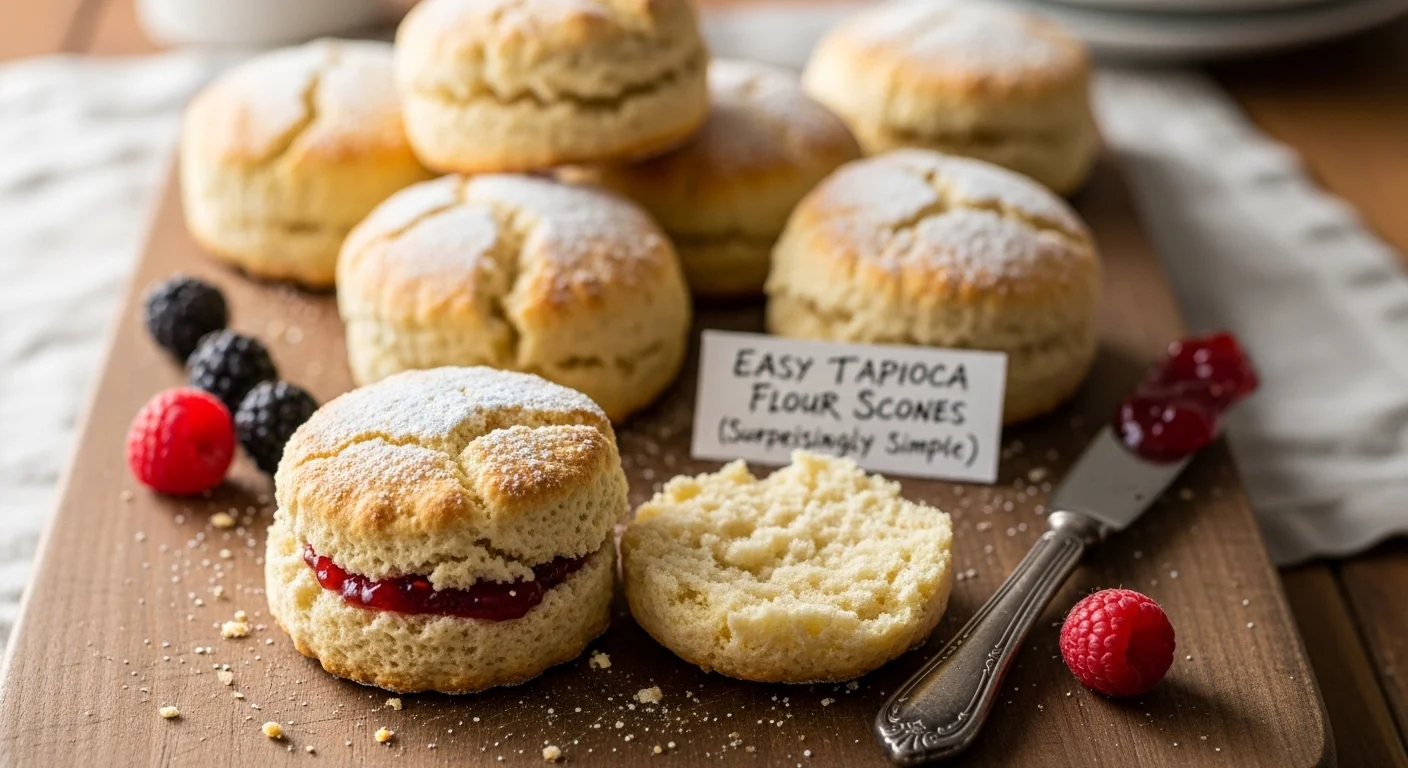
For me, scones are best served warm, straight from the oven. However, if you’re not eating them right away, you can let them cool and store them for later. I like to serve them on a beautiful platter, perhaps lined with a nice cloth for an added touch of elegance. Sometimes, I’ll even sprinkle a little powdered sugar on top for a festive look. It’s amazing how a little presentation can make a simple scone feel like an extravagant treat.
Don’t forget to provide a selection of toppings for your guests! Having a variety of jams, creams, and even fresh fruits allows everyone to customize their scone to their liking. I remember hosting a brunch once, and it was such a hit! Everyone loved mixing and matching their favorite flavors, and it added an interactive element to the meal.
Storage and Reheating Tips
How to Store Leftover Scones
If you find yourself with leftover scones (which is rare in my experience!), here are some tips for storing them. I usually let them cool completely before placing them in an airtight container. Storing them at room temperature is fine for a day or two, but if I want them to last longer, I move them to the fridge. I’ve found that they maintain their texture better this way. Just remember to bring them back to room temperature before serving again.
If you want to keep them for an extended period, freezing is also an excellent option. I wrap them tightly in plastic wrap and then place them in a freezer-safe bag. When I’m ready to enjoy them again, I just pull out a couple of scones and let them thaw at room temperature. They taste just as good as the day I baked them!
Reheating Methods
When it comes to reheating scones, my go-to method is the oven. I preheat it to 350°F (175°C) and place the scones on a baking sheet for about 5-10 minutes. This way, they get warm and a little crispy again, which I love. Alternatively, I’ve also used the microwave when I’m in a hurry, but I always wrap them in a damp paper towel to prevent them from getting too dry. It’s a quick solution, but I recommend the oven for the best results.
Variations of Tapioca Flour Scones
Sweet vs. Savory Scone Options
As I’ve explored the versatility of tapioca flour scones, I’ve discovered that they can be made in both sweet and savory varieties. Sweet scones, like the ones I’ve talked about, are perfect for breakfast or tea time. However, savory scones are equally delightful! I’ve made batches with cheese, herbs, and spices that make for a fantastic appetizer or side dish. For example, adding sharp cheddar cheese and chives creates a delicious flavor combination that pairs wonderfully with soups.
If you’re looking for something different, try incorporating sun-dried tomatoes and feta for a Mediterranean twist. These savory options have become favorites in my household, especially when served warm with a drizzle of olive oil or balsamic glaze.
Flavor Combinations to Try
The flavor possibilities with tapioca flour scones are nearly endless. I’ve experimented with various combinations and found that mixing sweet and savory elements can be exciting! One of my recent favorites was a cranberry-orange scone, where I added orange zest and dried cranberries. The citrus zing paired beautifully with the sweetness of the cranberries, and it made for a refreshing treat.
Another combo I enjoy is coconut and lime. The tropical flavors transport me to a beachy paradise with every bite! I’ve also found that spices like cardamom or ginger can add warmth and depth to the flavor profile. It’s all about having fun and discovering what delights your taste buds.
Frequently Asked Questions
What is tapioca flour?
Tapioca flour, also known as tapioca starch, is derived from the cassava root, a starchy tuber native to South America. It is a gluten-free ingredient that contributes to a chewy texture and helps create a crisp crust when baked.
What are the health benefits of tapioca flour?
Tapioca flour is naturally gluten-free, making it suitable for those with gluten sensitivities. It is low in calories, contains a small amount of protein, and is rich in carbohydrates, providing a quick energy boost.
What are the traditional ingredients in scone recipes?
Traditional scone recipes typically include flour, sugar, baking powder, butter, and milk or cream, which together create a tender, crumbly texture.
Why should I choose tapioca flour for making scones?
Choosing tapioca flour allows those who are gluten-sensitive to enjoy scones without gluten-related issues. Tapioca flour scones are moist inside with a nice crust, and while they may differ slightly in taste from traditional scones, they have a delightful chewiness and nutty flavor.
What are the main ingredients for easy tapioca flour scones?
The essential ingredients for making tapioca flour scones include tapioca flour, baking powder, cold unsalted butter, milk or a milk alternative, sugar, and salt.
What optional add-ins can I use for tapioca flour scones?
Optional add-ins for tapioca flour scones include fruits like dried cranberries or chopped apples, nuts such as walnuts or pecans, spices like cinnamon or nutmeg, and chocolate chips for a sweet treat.
What equipment is needed to make tapioca flour scones?
You will need a mixing bowl, a pastry cutter or two forks, a baking sheet lined with parchment paper, measuring cups and spoons, and optionally a rolling pin and a sharp knife or pizza cutter for shaping the scones.
How do I achieve the right texture for scones?
To achieve the right texture, ensure you’re using the correct ratios of dry to wet ingredients, avoid overmixing the dough, and handle the dough as little as possible when shaping it.
What are the best pairings for tapioca flour scones?
Best pairings for tapioca flour scones include clotted cream and jam, homemade lemon curd, honey, or maple syrup. These toppings enhance the scone experience and can vary based on personal preference.
How should I store leftover scones?
Leftover scones should be stored in an airtight container at room temperature for a day or two, or in the fridge for longer. For extended storage, they can be wrapped tightly and frozen. When ready to eat, allow them to thaw at room temperature.