
There’s something magical about the aroma of freshly baked bread swirling with rich chocolate. Making a sourdough babka is not just baking; it’s an experience that fills your home with warmth and joy. If you’re looking for more delightful recipes, you might want to try Classic Vegan Snickerdoodles Recipe (Soft & Chewy).
Understanding Sourdough Babka
What is Babka?
Babka is a sweet, braided bread filled with chocolate, cinnamon, or fruit, and it has its roots in Eastern European Jewish traditions. The name “babka” comes from the Polish word for “grandmother,” and it’s often associated with family gatherings and celebrations. The bread’s rich filling and fluffy texture make it a beloved treat across the globe, and I can certainly see why! Every bite is a delightful combination of soft dough and luscious filling, making it perfect for breakfast or as a dessert. It’s a treat that brings back fond memories for many, including myself, as I recall lazy Sunday mornings spent savoring a warm slice with a cup of coffee.
The Origin of Sourdough Babka
The origins of babka can be traced back to the Jewish communities of Eastern Europe. Traditionally, babka was made from leftover dough used for challah and filled with whatever sweet ingredients were on hand. Over the years, it has evolved into the delicious treat we know today. The sourdough version adds a unique twist to the classic recipe, incorporating the tangy flavor of sourdough starter. This not only enhances the taste but also gives the babka a wonderful texture. I remember the first time I tasted a sourdough babka; the rich layers of chocolate intertwined with the slight sourness created a flavor explosion that was simply unforgettable.
Why Choose Sourdough Over Traditional Babka?
Choosing sourdough for your babka can elevate the baking experience. The use of a sourdough starter introduces natural yeast and beneficial bacteria, which enhance the flavor and texture of the bread. I’ve found that sourdough babka tends to be more flavorful than its traditional counterpart, thanks to the fermentation process. The dough becomes light and airy, while still having a slight chewiness that makes each bite satisfying. Plus, sourdough is known for its health benefits, including improved digestibility and a lower glycemic index. Personally, I enjoy the balance it creates between sweetness and tanginess, which complements the chocolate filling perfectly. For a healthy twist, check out This Salad Jar Trend Makes Eating Healthy Stupid Easy.
Essential Ingredients for Sourdough Babka
Sourdough Starter
The heart of any sourdough recipe is the sourdough starter. It’s a mixture of flour and water fermented over time to cultivate wild yeast and bacteria. If you don’t have a starter, don’t worry! You can easily create one at home using just flour and water. I remember the pride I felt when my first starter bubbled to life. It’s a living ingredient that lends depth and character to your babka.
Flour Types: All-Purpose vs. Bread Flour
When it comes to flour, both all-purpose and bread flour can work, but I prefer using bread flour for its higher protein content. This gives the dough more structure and strength, resulting in a chewier texture. I’ve experimented with both types, and the difference is noticeable in the final product. If you want a soft, light crumb, bread flour is the way to go.
Yeast: Active Dry vs. Instant Yeast
Although sourdough starter provides natural leavening, adding a little commercial yeast can help the dough rise faster, especially if you’re short on time. I’ve used both active dry and instant yeast, and both work well. However, instant yeast is my go-to because it doesn’t require proofing and can be mixed directly into the dry ingredients. It makes the process smoother and less time-consuming.
Sweeteners: Sugar vs. Honey
For sweetening the dough, you can use granulated sugar or honey. I lean towards honey for its unique flavor and moisture retention properties. Honey adds a subtle sweetness that pairs beautifully with the chocolate filling. If you prefer a more traditional approach, granulated sugar will work just as well. It all comes down to personal preference!
Butter and Eggs
These ingredients are crucial for richness and flavor. I always use unsalted butter to control the salt levels in my dough. Eggs, on the other hand, contribute to the dough’s structure and color. I’ve found that using room temperature eggs helps in incorporating them more easily into the dough.
Chocolate Filling Options
Ah, the filling! This is where the magic happens. You can use chocolate chips, cocoa powder mixed with sugar, or even a chocolate spread like Nutella. I often opt for dark chocolate, as it balances the sweetness of the dough beautifully. Whatever your choice, make sure it’s something you love because it’s the star of the show!
Tools and Equipment Needed
Baking Equipment: Mixing Bowls, Measuring Cups, and Spoons
Before diving into the baking process, it’s important to have the right tools handy. I’ve found that having a set of reliable mixing bowls is essential. I usually go for glass or stainless steel bowls since they are easy to clean and don’t retain odors. Measuring cups and spoons are also crucial for accuracy in your ingredients. I remember when I first started baking, I didn’t realize how a simple miscalculation could affect the outcome of my babka. Using a digital kitchen scale can also make a big difference, especially for precision with the flour and sugar. It’s one of those little things that I’ve learned makes a huge impact on the final product.
Tools for Shaping and Baking Babka
Shaping the babka is where the fun really begins. A rolling pin is essential for rolling out the dough evenly. I prefer using a silicone mat underneath, which helps avoid sticking and makes for easy cleanup. A bench scraper is another handy tool I often use to cut and manage the dough. It’s so satisfying to see the dough transform as you shape it! Once it’s all ready, I recommend having a good-quality loaf pan on hand. I’ve tried different sizes, but a standard 9×5-inch pan usually works best for a perfect rise and bake.
Recommended Bakeware: Loaf Pans and Parchment Paper
When it comes to bakeware, I can’t stress enough how much I love using a non-stick loaf pan. It helps the babka release easily without sticking, which can be a lifesaver after all the hard work you put into making it! I also suggest lining the pan with parchment paper. This not only prevents sticking but also makes transferring the babka onto a cooling rack much easier. I remember the first time I omitted this step; it turned into a bit of a disaster! Now, I always keep parchment paper on hand for all my baking adventures.
Step-by-Step Guide to Making Sourdough Babka
Preparing the Sourdough Starter
Starting with the sourdough starter is crucial for a successful babka. If you’re using a mature starter, make sure to feed it a few hours before you begin baking to ensure it’s active and bubbly. I usually take mine out of the fridge, mix in equal parts of flour and water, and let it sit at room temperature. The excitement builds as I watch it rise! If you’re new to sourdough, don’t fret. Even if it’s your first time, just follow the basic feeding guidelines and you’ll be set!
Making the Dough
Once your starter is ready, it’s time to make the dough. In a large mixing bowl, combine your flour, sugar, and salt first. I always mix the dry ingredients before adding the wet ones to ensure even distribution. Then, I mix in the sourdough starter, eggs, and melted butter. I love the rich aroma that fills the kitchen at this stage! As I mix, I can feel the dough starting to come together. It should look slightly shaggy at first, but don’t worry; it will smooth out as it kneads. Kneading by hand is my preferred method because it gives me a chance to connect with the dough, but a stand mixer works just as well.
First Rise: Bulk Fermentation
After kneading, the dough needs to rise. I usually place it in a lightly greased bowl, cover it with a clean kitchen towel, and let it rise in a warm spot. This first rise typically takes about 2 to 3 hours, depending on the temperature of your kitchen. I often find myself peeking at it every so often, just to witness the magic of fermentation. It’s always a thrill to see how much the dough expands!
Shaping the Babka
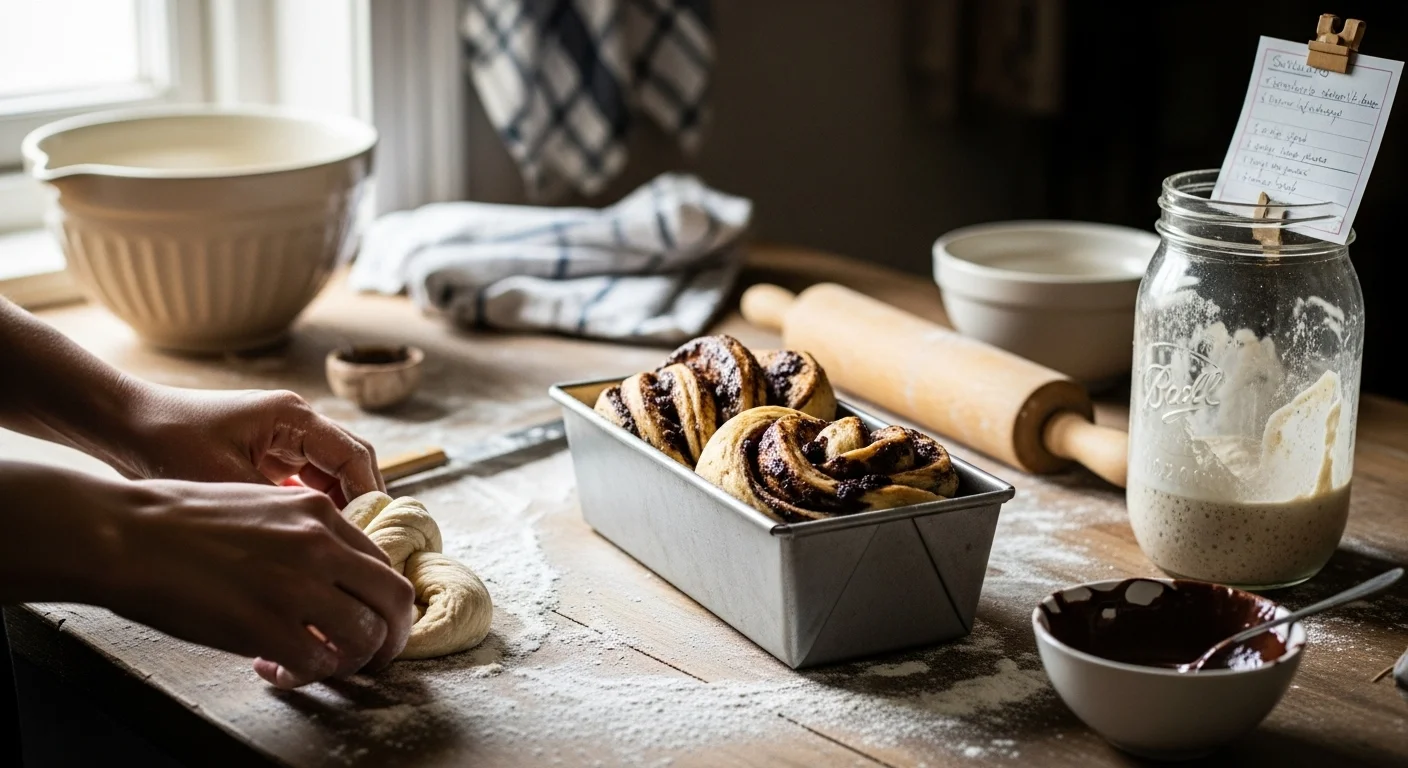
Once the dough has risen, it’s time to shape it. I start by gently deflating the dough and turning it out onto a floured surface. Rolling it out into a rectangle is the key step here. I aim for about 1/4 inch thick. Then comes the fun part: spreading the chocolate filling evenly over the dough! After that, I roll it up tightly from one end to the other. When I cut it in half lengthwise, exposing the layers, I feel like an artist unveiling a masterpiece. I then twist the two halves together to create the signature babka shape.
Second Rise: Proofing the Shaped Dough
After shaping, the dough needs another rise, known as proofing. I place the shaped babka in the prepared loaf pan and cover it again with a towel. This second rise usually takes about an hour, or until the dough has noticeably puffed up. I’ve learned that this step is crucial for achieving that light and airy texture. It’s tempting to rush it, but patience pays off in the end!
Baking the Babka
With the dough properly proofed, it’s time to bake! I preheat my oven to 350°F (175°C) and pop the babka in. The smell that wafts through the kitchen is truly heavenly. I usually bake it for about 30 to 35 minutes, watching closely until it reaches that golden-brown perfection. To check if it’s done, I use a toothpick inserted into the center – if it comes out clean, I know it’s ready!
Cooling and Serving Suggestions
Once baked, I let the babka cool in the pan for about 10 minutes before transferring it to a wire rack. This step is essential to avoid sogginess at the bottom. As it cools, I can hardly wait to slice into it! I enjoy serving it warm, sometimes with a light dusting of powdered sugar or a drizzle of icing for an extra touch. It’s a delightful treat that never fails to impress my family and friends. Whether enjoyed as a breakfast delight or a decadent dessert, each slice is truly a celebration of flavors and textures.
Variations and Flavor Combinations
Nutella Swirl Babka
One of my absolute favorite variations is the Nutella swirl babka. The rich, creamy chocolate-hazelnut spread creates a delightful twist on the traditional chocolate filling. I like to spread a generous layer of Nutella over the rolled-out dough, and it adds an extra layer of indulgence that’s hard to resist. After rolling and twisting the dough, the chocolate swirls create a beautiful pattern once baked. It’s a hit at gatherings, and I love watching people’s faces light up when they take that first bite. It’s a comforting treat that feels like a warm hug!
Cinnamon Sugar Babka
If you’re in the mood for something different, cinnamon sugar babka is a fantastic option. The combination of warm cinnamon and sugar creates a cozy flavor that’s perfect for any time of year, but especially in the fall. I usually mix brown sugar, cinnamon, and a bit of nutmeg for that extra warmth. Spreading this mixture over the dough before rolling it up gives the babka a sweet, aromatic filling. I can’t help but think of crisp autumn days every time I enjoy a slice. It’s perfect with a cup of tea or coffee, making it an ideal breakfast treat or afternoon snack.
Fruit Fillings: Jam and Preserves
For those who prefer fruity flavors, using jam or preserves as a filling can be a refreshing twist. I’ve tried raspberry and apricot preserves, and both bring a wonderful sweetness that contrasts beautifully with the tang of the sourdough. The key is to avoid overly runny jams, as they can make the dough soggy. I recommend spreading a thin layer of fruit preserves over the rolled-out dough and then adding a sprinkle of cinnamon or chopped nuts for extra texture. Each bite bursts with fruity flavor, and it feels like a delightful departure from the more traditional chocolate varieties. I love how versatile babka can be—I feel like there’s a flavor combination for everyone! For another fun trend, check out This Low-Cal Veg Bowl Trend Is Worth Every Hype Post.
Common Mistakes to Avoid
Overproofing the Dough
One mistake I’ve made in the past is overproofing the dough. It can be tempting to let it rise for too long, especially when you’re excited to see it double in size. However, overproofed dough can lead to a dense texture and a babka that doesn’t hold its shape well. I’ve learned to keep an eye on the dough and perform the “poke test”—if it springs back slowly, it’s ready. This way, I can ensure my babka has that beautiful, airy structure.
Inadequate Shaping Techniques
Shaping the babka properly is crucial for achieving those stunning layers. I’ve encountered my fair share of mishaps when it comes to shaping. If the dough isn’t rolled tightly enough or if it’s cut unevenly, the layers can become misaligned, and the final product may not rise as beautifully as it should. I recommend taking your time during this step and practicing the rolling and twisting techniques. It’s well worth the effort, and with a bit of patience, you’ll be rewarded with a gorgeous babka!
Using the Wrong Flour Type
Choosing the right flour is essential for getting the texture just right. I’ve tried making babka with all-purpose flour, and while it works, I found that the chewiness of bread flour gives a more satisfying bite. Using the wrong type can lead to a babka that’s either too dense or falls flat. I suggest sticking with bread flour for the best results, as it provides the necessary strength to hold up the rich fillings while still remaining tender. It’s one of those small details that can make a significant difference in the final product.
Storage and Reheating Tips
How to Store Sourdough Babka
After baking, you might be wondering how to keep your sourdough babka fresh. I’ve found that wrapping it in plastic wrap or aluminum foil works wonders for preserving moisture. Storing it at room temperature in an airtight container keeps it soft for a few days. If you want to keep it for longer, it’s best to freeze it. I usually slice the babka before freezing, so I can easily grab a piece whenever I have a craving. Just make sure to wrap each slice individually for the best results!
Best Ways to Reheat for Freshness
When it’s time to enjoy a slice of leftover babka, reheating it correctly is key to reviving that fresh-baked flavor. I prefer using the oven, as it warms the babka evenly and helps restore that delightful texture. I preheat my oven to 350°F (175°C) and wrap the babka in foil to prevent it from drying out. After about 10-15 minutes, it comes out warm and soft, just like when it was freshly baked. A quick dusting of powdered sugar or a dollop of whipped cream on top makes it feel special again. Trust me, your taste buds will thank you!
Frequently Asked Questions
What is babka?
Babka is a sweet, braided bread filled with chocolate, cinnamon, or fruit, originating from Eastern European Jewish traditions. The name “babka” comes from the Polish word for “grandmother” and is often associated with family gatherings and celebrations.
What makes sourdough babka different from traditional babka?
Sourdough babka incorporates a sourdough starter, which adds natural yeast and beneficial bacteria, enhancing the flavor and texture of the bread. It tends to be more flavorful and has a unique balance of sweetness and tanginess compared to traditional babka.
What are the essential ingredients for making sourdough babka?
The essential ingredients for sourdough babka include sourdough starter, flour (preferably bread flour), yeast (active dry or instant), sweeteners (sugar or honey), butter, eggs, and chocolate filling options such as chocolate chips or cocoa powder.
What type of flour is recommended for sourdough babka?
While both all-purpose and bread flour can be used, bread flour is preferred due to its higher protein content, which provides more structure and strength for a chewier texture.
How should I prepare the sourdough starter before baking?
If using a mature sourdough starter, it should be fed a few hours before baking to ensure it is active and bubbly. This involves mixing equal parts of flour and water and letting it sit at room temperature.
What is the process for shaping the babka?
To shape the babka, the dough is rolled out into a rectangle, spread with the filling, rolled tightly, and then cut in half lengthwise. The two halves are twisted together to create the signature babka shape.
How long should the babka be allowed to rise?
The babka should undergo two rises: the first rise (bulk fermentation) lasts about 2 to 3 hours, while the second rise (proofing) typically takes about 1 hour, or until the dough has noticeably puffed up.
What are some common mistakes to avoid when making babka?
Common mistakes include overproofing the dough, inadequate shaping techniques, and using the wrong type of flour, which can affect the texture and overall quality of the babka.
How should I store leftover sourdough babka?
Leftover sourdough babka should be wrapped in plastic wrap or aluminum foil and stored at room temperature in an airtight container to keep it soft. For longer storage, it can be frozen, preferably sliced for convenience.
What is the best way to reheat leftover babka?
The best way to reheat leftover babka is to wrap it in foil and place it in a preheated oven at 350°F (175°C) for about 10-15 minutes. This helps restore the fresh-baked flavor and texture.