
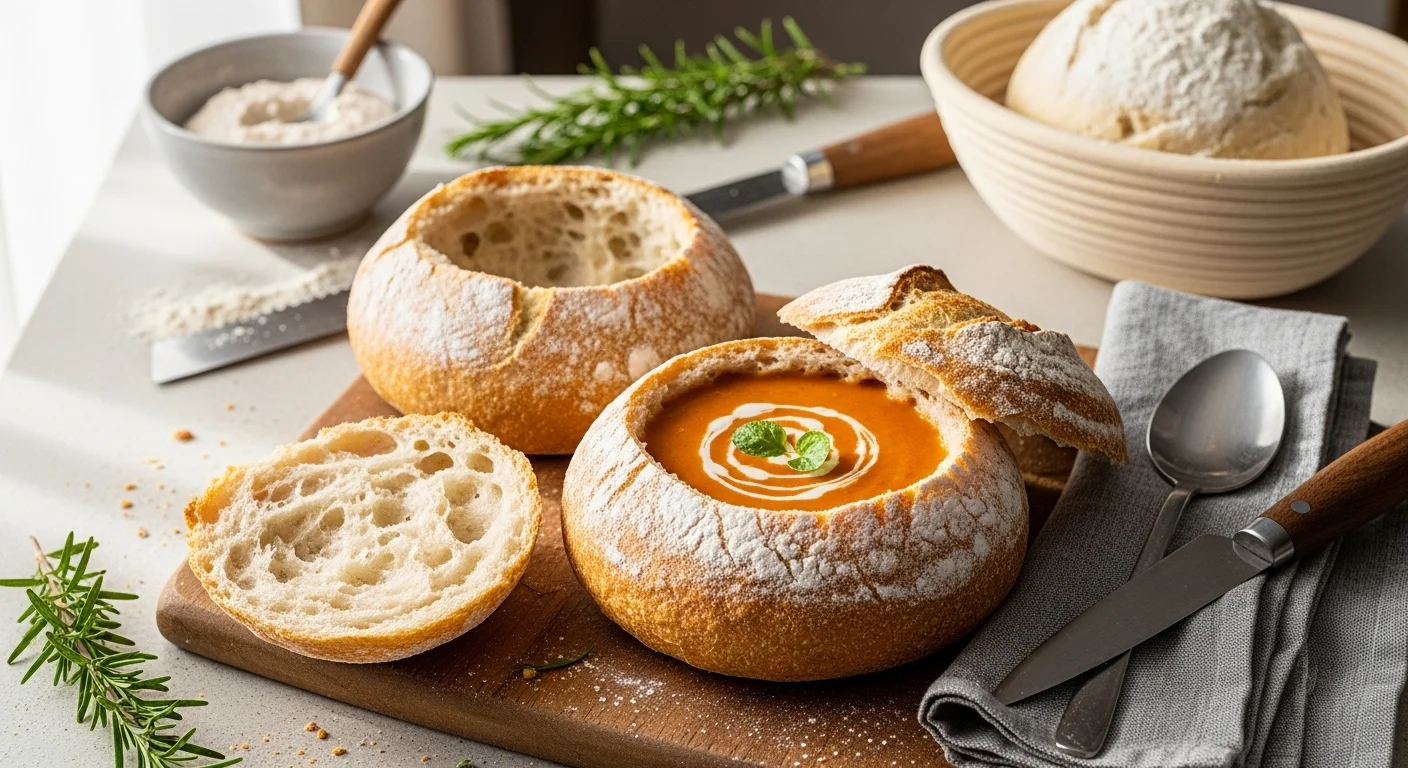
There’s something magical about sourdough bread bowls, especially when they’re filled with a warm, comforting soup. Making them from scratch not only elevates your meal but also brings joy to the kitchen. Let’s dive into the world of sourdough and discover how to create these delightful vessels. Read Interesting article: Easy Overnight Sourdough Bread (Bake In The Morning)
Understanding Sourdough Bread
What is Sourdough Bread?
Sourdough bread is a unique type of bread made through a process of fermentation, which gives it a distinct flavor and texture. I remember the first time I took a bite of a freshly baked sourdough loaf; the tangy, slightly sour taste was unlike anything I had experienced before. This bread uses wild yeast and bacteria naturally present in the environment, combined with water and flour, to create a starter. The starter is what makes sourdough stand out from other breads, as it contributes to its characteristic chewiness and complex flavor profile.
Key Ingredients in Sourdough Bread
When making sourdough bread, the ingredients are simple yet impactful. The main components are flour, water, salt, and the sourdough starter. I’ve learned that the type of flour you choose plays a significant role in the final product. For instance, using a mix of bread flour and whole wheat flour can enhance the flavor and structure of the bread. Here’s a breakdown of each ingredient:
- Flour: Bread flour is high in protein, which helps give the bread structure. Whole wheat flour adds flavor and nutrients.
- Water: Hydration is crucial for the dough. The quality of water can also affect the fermentation process.
- Salt: Salt enhances the flavor and controls the fermentation process. It also strengthens the dough’s structure.
- Sourdough Starter: This is the heart of your sourdough bread. It’s a living culture that ferments the dough, creating its signature taste and texture.
The Role of Fermentation
Fermentation is where the magic happens in sourdough bread. I find it fascinating how this process transforms simple ingredients into something extraordinary. During fermentation, wild yeast and lactic acid bacteria work together to develop flavor and leaven the dough. This slow process not only enhances the taste but also improves the bread’s digestibility. I often let my dough ferment for several hours or even overnight, which allows the flavors to deepen. The longer the fermentation, the more complex the flavor profile becomes, making it truly worth the wait.
Essential Tools for Making Sourdough Bread Bowls
Baking Equipment
Having the right tools makes a world of difference when baking sourdough bread bowls. I’ve gathered a few essential pieces of equipment that I recommend:
- Mixing Bowl: A large, sturdy bowl is necessary for mixing and kneading the dough.
- Dutch Oven or Baking Stone: These help create steam in the oven, which is crucial for a good crust.
- Bench Scraper: This handy tool helps in handling the dough and keeping your work surface tidy.
- Proofing Basket: Also known as a banneton, it supports the dough as it rises and helps create a beautiful shape.
Measuring Tools
Precise measurements are key in baking, especially with sourdough. Here are some measuring tools that I find invaluable:
- Kitchen Scale: Weighing ingredients ensures accuracy, which is particularly important for flour and water ratios.
- Measuring Cups and Spoons: Use these for smaller quantities or when you just need to measure salt or other ingredients.
Recommended Bakeware for Bowls
To shape your sourdough into perfect bowls, having the right bakeware is essential. I suggest using:
- Oven-Safe Bowls: Look for bowls that can withstand high temperatures if you want to bake directly in them.
- Round Baking Pans: These can be a great alternative if you don’t have bowls; just make sure there’s enough room for the dough to rise.
Basic Sourdough Bread Recipe
Ingredients List
Creating the perfect sourdough bread bowl starts with a solid recipe. I’ve tried various combinations, and I’ve found that sticking to a basic recipe while tweaking it as per my preference works best. Here’s what you’ll need:
- 500g bread flour: This gives your bread the structure it needs.
- 350g water: Ideally, use room temperature or slightly warm water.
- 100g sourdough starter: This should be active and bubbly for the best results.
- 10g salt: Enhances flavor and controls fermentation.
With these ingredients, you’re ready to embark on your sourdough journey. I often keep a jar of my sourdough starter handy in the fridge, feeding it regularly to keep it lively. It’s like having a pet that rewards you with delicious bread! Read Interesting article: The Best Sourdough Stollen (A German Holiday Bread)
Step-by-Step Instructions
Now comes the fun part—actually making the dough! I remember feeling a mix of excitement and nervousness the first time I made sourdough. Here’s a straightforward method you can follow:
- Mix the Dough: In a large mixing bowl, combine the bread flour and water. Stir until there are no dry bits left. Let this mixture rest for about 30 minutes; this is called the autolyse phase, and it helps improve the dough’s texture.
- Add Starter and Salt: After the rest, add the sourdough starter and salt. Mix it into the dough until fully incorporated. It might feel a little sticky at first, but that’s perfectly normal.
- Kneading: Knead the dough on a clean surface for about 10-15 minutes. I like to stretch and fold the dough, which helps develop gluten. You can also use the slap and fold method if you’re feeling adventurous!
- First Rise: Place the kneaded dough in a lightly oiled bowl, cover it with a damp towel, and let it rise for about 4-6 hours at room temperature, or until doubled in size.
- Pre-shape: Once it has risen, gently turn the dough out onto a floured surface and pre-shape it into a round. Let it rest for about 30 minutes.
- Final Shape: Shape it into a tight ball (or a bowl shape if you’re feeling up to it), and place it in your proofing basket. Cover it and let it rise again for about 2-3 hours.
- Bake: Preheat your oven and baking vessel about 30 minutes before you’re ready to bake. Once ready, carefully flip the dough into the pot and bake for 30-40 minutes, adding water to create steam if using a Dutch oven.
Common Mistakes to Avoid
As I’ve learned through trial and error, making sourdough can come with its challenges. Here are some mistakes I recommend avoiding:
- Skipping the Autolyse: This step is crucial for the dough’s texture and flavor. Don’t rush it!
- Not Watching the Starter: Make sure your sourdough starter is active before using it. An inactive starter leads to dense bread.
- Over or Under-Kneading: Finding the right balance is key. Too much kneading can lead to a tough texture, while too little will make it hard for the dough to rise.
- Ignoring Temperature: Temperature affects fermentation. If it’s too cold, your dough may not rise properly. If it’s too warm, it can over-ferment. I try to keep my dough in a warm, draft-free area.
By avoiding these pitfalls, you’ll be well on your way to baking beautiful sourdough bread bowls!
Shaping Sourdough Bread Bowls
Techniques for Shaping Dough
Shaping your sourdough into bowls is where creativity comes into play. I’ve experimented with several techniques, and I believe the key is to be gentle but firm. Start with a well-floured work surface, and here’s how I usually go about it:
- Turn Out the Dough: Once your dough has completed its final rise, gently turn it out onto your floured surface. Be careful not to deflate it too much.
- Pre-shape: Lightly dust the top of the dough with flour, and then fold the edges toward the center, creating a loose ball.
- Bench Rest: Let the dough rest for about 20 minutes. This relaxes the gluten, making it easier to shape.
- Final Shape: Gently stretch the dough out into a flat circle. Then, fold the edges inwards, just like you did before, but this time aim for a tighter ball.
- Forming the Bowl: To create the bowl shape, gently press your hands into the center of the dough while pulling the sides up and molding them together. It may take a few tries to get it just right!
How to Create the Bowl Shape
Creating a bowl shape can be tricky, but once you’ve got it down, it’s quite satisfying. I recommend using your hands to press down gently in the center of the shaped dough, while cupping the sides to form a lip. The depth of the bowl can be adjusted by how much you press down. Remember, practice makes perfect! I remember the first couple of attempts weren’t quite what I envisioned, but with each batch, I got better.
Once your bowl shapes are ready, you’ll set them aside to rise for another hour or so before baking. The anticipation of seeing them puff up and transform in the oven is such a rewarding experience!
Baking Sourdough Bread Bowls
Oven Preparation
Baking sourdough bread bowls is one of the most exciting parts of the process. I remember the first time I prepped my oven; it felt like preparing for a big event! Preheating your oven properly is crucial for achieving that perfect crust. I recommend placing your Dutch oven inside the oven as it heats up. This helps create the right environment for baking, allowing steam to form, which is essential for a nice rise and crust. I usually set my oven to around 450°F (232°C) and give it a good 30 minutes to heat up, ensuring everything is sizzling hot when it’s time to bake.
Temperature and Timing
The temperature and timing of baking can make or break your sourdough bread bowls. I’ve learned that a hotter oven not only helps with the initial rise but also contributes to a beautiful color on the crust. Once my oven is preheated, I carefully lift the lid of the Dutch oven, gently place the shaped dough inside, and cover it again. I bake it covered for the first 20-25 minutes to trap the steam, which helps develop a nice crust. After that, I remove the lid to let the bread brown for an additional 15-20 minutes. The aroma that fills my kitchen is heavenly during this time, and it’s always a challenge to resist peeking in too often!
How to Achieve a Crispy Crust
A crispy crust is one of the hallmarks of a great sourdough bread bowl. To achieve this, I’ve found that hydration plays a significant role. A wetter dough tends to yield a more open crumb and a crust that’s crispy on the outside yet soft on the inside. Another tip is to create steam in the oven. If I’m not using a Dutch oven, I sometimes place a shallow pan filled with water at the bottom of the oven. This helps create steam during the first part of the bake, which is vital for that crust development. Additionally, I always keep an eye on the color of the crust. Once it turns a beautiful golden brown, I know it’s time to take it out!
Serving Suggestions for Sourdough Bread Bowls
Best Soups for Sourdough Bowls
Now that we have our sourdough bread bowls baked to perfection, the real fun begins: choosing what to fill them with! I’ve experimented with various soups, and I can confidently say that some are just perfect for these bowls. My personal favorite is a rich and creamy chowder. The way the flavors meld with the tangy bread is simply divine. But there’s also something about a classic tomato basil soup that pairs beautifully with the sourdough’s flavor. Other great options include hearty vegetable soups or a robust chili. The best part? You can scoop out the soft bread at the bottom as you enjoy the soup, making it a delightful meal that keeps on giving. Read Interesting article: Crunchy Sourdough Discard Granola (A Healthy Breakfast)
Garnishing Ideas
To elevate the experience, I love adding a few garnishes to my soups before serving them in the sourdough bowls. Fresh herbs like parsley or chives can brighten up the dish, while a sprinkle of grated cheese adds a touch of richness. If I’m feeling a bit indulgent, a drizzle of olive oil or a dollop of sour cream can take it all to the next level. A few croutons on top also add a nice crunch. I always encourage friends to get creative; there are no wrong answers when it comes to garnishing!
Storing and Reheating Sourdough Bread Bowls
How to Store Leftover Bowls
If, by some miracle, there are leftovers, storing them properly is key to maintaining their freshness. I’ve learned that the best way to store sourdough bread bowls is to wrap them in plastic wrap or aluminum foil and place them in a zip-top bag. This helps keep them from drying out. However, I prefer using them within a day or two to enjoy them at their best. If I know I won’t use them right away, I sometimes freeze the bowls instead. Just make sure they are completely cooled before freezing!
Reheating Tips for Optimal Freshness
When it comes to reheating sourdough bread bowls, I like to avoid using the microwave, as it can make the bread chewy. Instead, I recommend reheating them in the oven. Just preheat your oven to around 350°F (175°C), then place the bowls on a baking sheet and warm them for about 10-15 minutes. This way, the crust gets a chance to crisp back up, making them just as delightful as when they were fresh out of the oven. I often take a moment to enjoy the smell wafting through my kitchen during this time—it’s pure bliss!
Frequently Asked Questions (FAQs)
Can I Use Store-Bought Sourdough for Bowls?
While I absolutely love homemade sourdough, I understand that time can be a constraint. Using store-bought sourdough is perfectly fine! It might not have the same depth of flavor as your homemade version, but it can still make for a delicious bread bowl. Just look for a brand that has a good crust and texture.
How Long Do Sourdough Bowls Last?
When stored properly, sourdough bread bowls can last about 2-3 days at room temperature. If you freeze them, they can last for up to a month. Just keep in mind that the longer they sit, the less crispy they’ll become, so it’s best to enjoy them fresh!
Can I Freeze Sourdough Bread Bowls?
Absolutely! Freezing sourdough bread bowls is a great way to preserve them. I often freeze them after baking, making sure they are completely cooled. Just wrap them tightly and store them in a freezer-safe bag. When you’re ready to use them, let them thaw in the fridge overnight before reheating.
Final Thoughts
Making sourdough bread bowls has become one of my favorite kitchen adventures. There’s just something about the process—from nurturing the starter to shaping the dough—that feels incredibly rewarding. I think it’s the combination of science and artistry that keeps me coming back for more. Each time I bake, I learn something new, whether it’s experimenting with different flours or adjusting the fermentation time to achieve that perfect crust and texture.
What I appreciate most is that sourdough is not just a loaf of bread; it’s a journey. The longer I’ve engaged with it, the more I understand the nuances that come into play. I’ve found that patience is key. In our fast-paced world, taking the time to nurture something as simple as a loaf of bread can be therapeutic. It’s a reminder that good things take time, and often, the best flavors are born from a little patience and care.
As I fill those freshly baked bowls with steaming soup, there’s a sense of accomplishment that washes over me. I remember the first time I served them to friends; their smiles and satisfied sighs were worth every minute spent in the kitchen. It’s not just about the food; it’s about sharing a piece of my heart and hard work with those I care about.
Whether you’re a seasoned baker or just starting, I encourage you to dive into making sourdough bread bowls. Don’t be afraid to make mistakes; each one is a stepping stone to better bread. Feel free to experiment with flavors, shapes, and fillings. The world of sourdough is vast and full of possibilities, and I’m excited for you to discover your own journey in this delightful craft. Happy baking!
Frequently Asked Questions
What is sourdough bread?
Sourdough bread is a unique type of bread made through a process of fermentation, which gives it a distinct flavor and texture. It uses wild yeast and bacteria naturally present in the environment, combined with water and flour, to create a starter that ferments the dough.
What are the key ingredients in sourdough bread?
The main ingredients in sourdough bread are flour, water, salt, and the sourdough starter. The type of flour chosen can significantly affect the bread’s flavor and structure.
Why is fermentation important in sourdough bread making?
Fermentation is crucial as it develops flavor and leavens the dough. It transforms simple ingredients into something extraordinary, enhancing the bread’s taste and improving its digestibility.
What essential tools are needed for making sourdough bread bowls?
Essential tools include a mixing bowl, Dutch oven or baking stone, bench scraper, proofing basket, kitchen scale, and measuring cups and spoons.
What does a basic sourdough bread recipe consist of?
A basic sourdough bread recipe consists of 500g bread flour, 350g water, 100g sourdough starter, and 10g salt.
How can I avoid common mistakes when making sourdough bread?
To avoid common mistakes, do not skip the autolyse phase, ensure your sourdough starter is active, find the right balance in kneading, and pay attention to the fermentation temperature.
What techniques can be used for shaping sourdough bread bowls?
Techniques for shaping include turning out the dough gently, pre-shaping into a loose ball, allowing for a bench rest, and then forming a tighter ball before creating the bowl shape by pressing down in the center.
How should I prepare my oven for baking sourdough bread bowls?
Preheat your oven to around 450°F (232°C) with the Dutch oven inside for about 30 minutes to create the right environment for baking, allowing steam to form for a good rise and crust.
What are the best soups to fill sourdough bread bowls?
Some great soups for sourdough bowls include rich and creamy chowder, classic tomato basil soup, hearty vegetable soups, and robust chili.
How should I store and reheat leftover sourdough bread bowls?
Store leftover sourdough bread bowls wrapped in plastic wrap or aluminum foil in a zip-top bag to maintain freshness. To reheat, preheat your oven to around 350°F (175°C) and warm the bowls for about 10-15 minutes to restore their crispiness.