
Making the best sourdough croissants can feel like a daunting task, but trust me, it’s a rewarding weekend project that fills your kitchen with delightful aromas and results in incredibly flaky pastries. If you’re looking for more delicious brunch ideas, check out the Overnight Bacon & Egg Brunch Bake: Prep Ahead, Enjoy More.
Understanding Sourdough Croissants
What Are Sourdough Croissants?
Sourdough croissants are a delicious twist on the classic French pastry. They combine the flaky, buttery goodness of traditional croissants with the tangy flavor profile of sourdough. The magic happens because we use a sourdough starter, which not only leavens the dough but also adds a depth of flavor that makes these croissants unique. I first tasted a sourdough croissant at a local bakery, and I was amazed by how the tanginess complemented the buttery layers. It was a game-changer for me.
Difference Between Traditional Croissants and Sourdough Croissants
Traditional croissants are made with commercial yeast, which provides a quick rise and a mild flavor. On the other hand, sourdough croissants rely on a naturally fermented sourdough starter. This difference leads to a slower fermentation process, which enhances the flavor and texture of the dough. I’ve noticed that sourdough croissants tend to be a bit chewier and have a more complex taste compared to their traditional counterparts. If you’re familiar with sourdough bread, you’ll notice similar tangy notes in these pastries—making every bite a delightful experience.
The Benefits of Using Sourdough Starter
Using sourdough starter in croissants comes with a range of benefits. Firstly, the natural fermentation process helps develop gluten in the dough, resulting in a better structure and texture. I remember the first time I made sourdough croissants; the layers were incredibly airy, and the taste was superb. Secondly, sourdough starter extends the shelf life of baked goods, which means you can enjoy these croissants for a day longer than you would with traditional recipes. Finally, the health benefits of sourdough fermentation, such as improved digestibility and enhanced nutritional content, make sourdough croissants a more wholesome option.
Essential Ingredients for Sourdough Croissants
Flour Types: Bread Flour vs. All-Purpose Flour
The type of flour you use can make a significant difference in your sourdough croissants. I personally prefer bread flour because it has a higher protein content, which helps create a strong gluten structure. The strong gluten is essential for trapping air during the lamination process, leading to those wonderful flaky layers we all crave. All-purpose flour can work in a pinch, but I find that it doesn’t yield the same level of flakiness and chewiness. If you’re serious about your croissants, I recommend sticking with bread flour.
Choosing the Right Butter
Butter is a crucial ingredient in croissants, and not all butter is created equal. I’ve experimented with various brands, and I’ve found that European-style butter, which typically has a higher fat content, gives the best results. This higher fat content helps create a richer flavor and contributes to a flakier texture. When you’re laminating the dough, using cold butter is essential. I like to take my butter out of the fridge just before starting the dough, allowing it to soften slightly while keeping it firm enough to work with.
Sourdough Starter: Active vs. Dormant
Your sourdough starter is the heart of this recipe, and it’s important to use it at the right stage. An active starter that has been recently fed will give you the best rise and flavor. I make sure to feed my starter the night before I plan to bake, so it’s bubbly and lively when I mix it into the dough. If you’re using a dormant starter, it’s crucial to revive it first by feeding it over a couple of days. Trust me, using an active starter makes all the difference.
Other Key Ingredients: Water, Sugar, Salt
While flour, butter, and starter are the stars of the show, don’t forget about water, sugar, and salt. Water helps hydrate the flour and activate the gluten, while sugar adds a slight sweetness and helps with browning during baking. Salt, on the other hand, not only enhances flavor but also strengthens the dough by controlling yeast activity. I’m careful to measure these ingredients accurately; even small variations can impact the final product.
Equipment Needed for Making Sourdough Croissants
Baking Tools: Rolling Pin, Bench Scraper, etc.
Having the right tools makes a world of difference when you’re making sourdough croissants. I remember my first attempt; I didn’t have a proper rolling pin, and it was such a struggle! A good rolling pin is essential for rolling out the dough evenly. I recommend using a French-style rolling pin, which I find easier to maneuver. A bench scraper is another must-have. It helps in handling the dough and cutting it into the desired shapes without sticking. I also love using a pastry brush for applying egg wash; it gives the croissants that beautiful golden finish. If you can, invest in a dough thermometer too. You want to keep an eye on the temperature of your butter and dough, as it can affect the lamination process significantly.
Oven Requirements: Convection vs. Conventional
When it comes to baking sourdough croissants, the type of oven you use can impact your results. I’ve experimented with both convection and conventional ovens, and I’ve found that convection ovens tend to circulate heat more evenly. This results in a more uniform bake and can help achieve that perfect flaky texture. If you’re using a conventional oven, just be sure to rotate your tray halfway through the baking process to avoid uneven browning. Regardless of the type of oven, I always preheat mine for at least 30 minutes before baking. This ensures that your croissants start baking in a hot environment, which helps with the rise and flakiness.
Proving Baskets and Baking Sheets
Proving baskets, or banneton, are great for shaping and supporting your croissants while they proof. I’ve used all kinds of bowls, but a good proving basket lets the dough breathe and holds its shape better. If you don’t have one, a regular bowl will do, but I highly recommend investing in a banneton for that extra touch of authenticity. For baking, make sure to have a heavy-duty baking sheet. I like using a half-sheet tray lined with parchment paper, which keeps the bottoms from getting too dark. If you’re feeling fancy, you can use a baking stone, which helps retain heat and can give your croissants a professional touch.
Step-by-Step Guide to Making Sourdough Croissants
Preparing the Sourdough Starter
Before diving into the croissant-making process, I find it’s crucial to prepare your sourdough starter properly. I usually feed mine the night before, ensuring it’s bubbly and ready to go. If you’re using a dormant starter, remember to give it a couple of days to come back to life. Mix equal parts of water and flour to the starter, then let it sit at room temperature until it becomes active and bubbly. The key here is to use a starter that’s at its peak for the best flavor and rise.
Making the Dough: Mixing and Kneading
Once your starter is ready, it’s time to mix up the dough. I usually combine the flour, water, sugar, salt, and the active sourdough starter in a large bowl. Using my hands, I mix everything until it forms a shaggy dough. At this point, I like to let it rest for about 30 minutes. This step is known as autolyse, and it helps the flour absorb water, which ultimately leads to better gluten development. After the rest, I knead the dough for about 10 minutes until it becomes smooth and elastic. Getting a feel for the dough is essential; it should be tacky but not overly sticky.
Incorporating Butter: The Lamination Process
Laminating the dough is where the magic happens. I take my cold butter—preferably European-style—and shape it into a thin rectangle. I find that a cold butter block works best. After rolling out the dough into a larger rectangle, I place the butter in the center, fold the dough over it, and seal the edges tightly. This process is all about creating layers, so I roll it out gently without applying too much pressure. I usually do a series of folds—known as turns—where I fold the dough into thirds and roll it out again. Each turn is crucial for that flaky texture we all love. I always make sure to chill the dough in the fridge for at least 30 minutes between turns to keep the butter cold and firm.
Shaping the Croissants
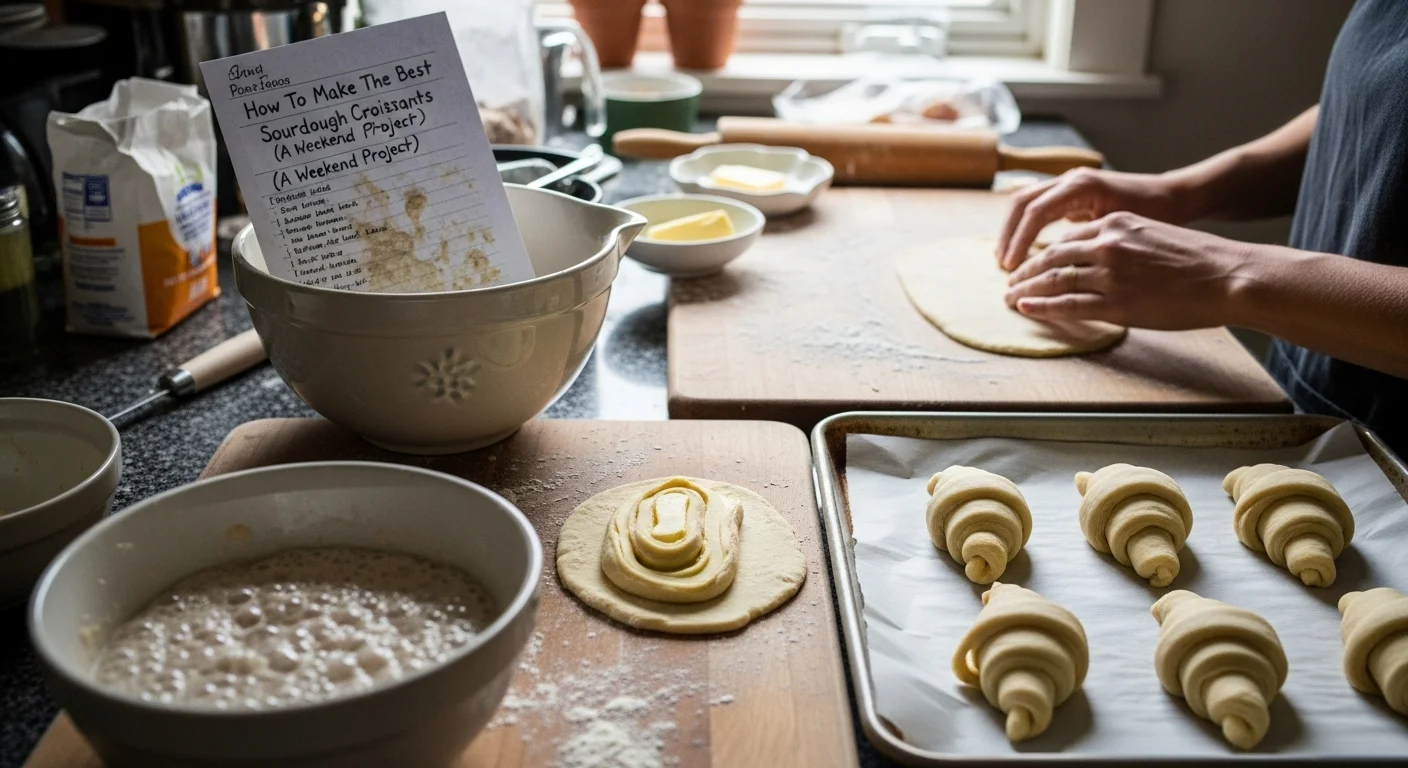
Once I’ve completed the lamination, it’s time to shape the croissants. I roll out the dough into a large rectangle and then cut it into triangles. I like to start from the wide end and roll them up tightly towards the point. This part is so satisfying! I always make sure to tuck the tip underneath to prevent them from unrolling during baking. It’s important to keep the triangles evenly sized so they bake uniformly. After shaping, I place them on a parchment-lined baking sheet, giving them space to rise.
Proofing the Croissants: Time and Temperature
Proofing is a crucial step that can’t be rushed. I let my shaped croissants rise at room temperature until they double in size, which usually takes about 1 to 2 hours, depending on the temperature. I find that a warm, draft-free spot works best for this. I always keep an eye on them; they should look puffy and airy. If you’re not baking them right away, you can pop them in the fridge for an overnight proof, which also enhances the flavor.
Baking the Croissants: Temperature and Timing
When it’s finally time to bake, I preheat my oven to 400°F (204°C). Before they go in, I brush the croissants with an egg wash for that golden hue. I bake them for about 15-20 minutes, watching closely for that perfect golden-brown color. The aroma wafting through the kitchen is simply irresistible! Once they’re out of the oven, I let them cool on a wire rack, if I can resist the urge to dig in right away. The first bite is always the most rewarding, and I can’t wait to share them with friends and family. If you’re interested, you might also enjoy a Light and Fluffy French Toast Soufflé for breakfast!
Tips for Perfecting Your Sourdough Croissants
Common Mistakes to Avoid
As someone who has stumbled through the process of making sourdough croissants, I’ve learned that there are several common pitfalls that can derail your efforts. One major mistake is not allowing the dough to rest enough during the lamination process. I’ve rushed through this step, thinking it wouldn’t matter, but trust me, it does. Allowing the dough to rest between folds is crucial to keep the butter firm and maintain those delicate layers. If the butter gets too warm, it can melt into the dough, resulting in a less flaky croissant.
Another mistake I’ve made is skipping the proofing stage or not being patient enough during it. Proofing is where the croissants develop their airy structure, and if you don’t let them rise properly, you’ll end up with dense pastries. I always remind myself to trust the process and wait until they’ve puffed up significantly. Lastly, be careful with your oven temperature. An oven that’s too hot can brown the croissants too quickly on the outside while leaving them undercooked inside. I always double-check that my oven is calibrated correctly to avoid any surprises.
How to Achieve the Perfect Flakiness
Achieving that sought-after flakiness in sourdough croissants is a combination of technique and timing. I found that using cold butter is essential for successful lamination. When you fold the cold butter into the dough, it creates layers that expand and puff up in the oven, leading to that flaky texture. Additionally, I’ve learned that rolling out the dough to the right thickness makes a difference. Aim for about 1/8 inch thickness when rolling out the dough during the final lamination. This allows for just the right amount of thickness without being too dense.
Another trick I’ve picked up is to be generous with the butter during the lamination process. Ensuring that each layer has enough butter means more moisture and steam in the oven, which translates into flakiness. I also recommend letting the croissants cool completely on a wire rack after baking. This allows steam to escape, helping maintain that delightful crispiness. Each bite should be a balance of airy lightness and satisfying crunch.
Storing and Reheating Croissants
After all the hard work of making sourdough croissants, you’ll want to enjoy them at their best. If you have leftovers (which is rare, but it happens!), I’ve found that proper storage is key to preserving their freshness. I usually wrap them in parchment paper first and then place them in a paper bag. This helps maintain the crispy exterior while keeping the insides soft. I steer clear of plastic wrap, as it can trap moisture and make the croissants soggy.
When it comes to reheating, I prefer using the oven to bring back that fresh-baked goodness. Preheat your oven to about 350°F (175°C) and place the croissants directly on the rack for about 5-10 minutes. This method revitalizes their flakiness and warms them through without losing that lovely texture. If I’m really pressed for time, a quick blast in the microwave can work, but I make sure to use a paper towel to prevent them from becoming too chewy. However, I find that the oven method is always worth the extra few minutes!
Creative Variations and Add-Ins
Sweet Additions: Chocolate, Almonds, and More
Once you’ve mastered the basic sourdough croissant, you might feel inspired to get a little creative. I love experimenting with sweet fillings, and chocolate is an obvious favorite. Adding a piece of good quality chocolate to the center of each croissant before rolling them up creates a melty, indulgent treat. I’ve also tried almond paste, which adds a nutty richness that pairs beautifully with the buttery pastry. Just spread a thin layer on the triangle before rolling it up, and you’ll be in pastry heaven.
If you’re feeling adventurous, consider adding fruit preserves or fresh berries as a filling. I once made raspberry-filled croissants, and they turned out to be a hit! Just be cautious with the amount you use; too much filling can lead to a soggy croissant. I find that a thin layer is perfect for adding sweetness without overwhelming the pastry.
Savory Options: Cheese, Ham, and Herbs
If sweet treats aren’t your thing, there are plenty of savory options to explore. One of my go-to savory variations includes cheese and ham. I like to sprinkle grated cheese, like Gruyère or cheddar, along with thin slices of ham. The combination of gooey cheese and salty ham wrapped in flaky pastry is simply irresistible. Sometimes I add fresh herbs like rosemary or thyme for an extra flavor boost; it really elevates the croissant to a whole new level.
I’ve also experimented with a spinach and feta filling, which is a deliciously savory option for brunch or a light lunch. Just sauté some spinach with garlic, let it cool, mix it with crumbled feta, and spread it on the dough before shaping. Baking these variations has opened up a whole new world of possibilities for sourdough croissants, and I can’t recommend trying them enough! You might also enjoy Hearty Oat Muffins with a Crunchy Pecan Streusel as a great addition to your brunch table.
Frequently Asked Questions
What are sourdough croissants?
Sourdough croissants are a delicious twist on the classic French pastry that combines flaky, buttery layers with the tangy flavor of sourdough, thanks to the use of a sourdough starter which enhances the taste and texture.
How do sourdough croissants differ from traditional croissants?
Traditional croissants use commercial yeast for a quick rise and mild flavor, while sourdough croissants rely on a naturally fermented sourdough starter, resulting in a slower fermentation process that enhances flavor and texture, making them chewier with a more complex taste.
What are the benefits of using a sourdough starter in croissants?
Using a sourdough starter helps develop gluten for better structure and texture, extends the shelf life of baked goods, and offers health benefits like improved digestibility and enhanced nutritional content.
What type of flour is best for making sourdough croissants?
Bread flour is preferred because of its higher protein content, which creates a stronger gluten structure essential for flaky layers. All-purpose flour can be used but may not achieve the same level of flakiness and chewiness.
What kind of butter should be used for sourdough croissants?
European-style butter is recommended due to its higher fat content, which results in richer flavor and a flakier texture. It’s important to use cold butter during the lamination process.
What is the ideal stage for using sourdough starter in the recipe?
An active sourdough starter that has been recently fed is best for achieving optimal rise and flavor. A dormant starter should be revived by feeding it for a couple of days before use.
What temperature should the oven be preheated to for baking sourdough croissants?
The oven should be preheated to 400°F (204°C) for baking sourdough croissants, and it’s important to watch for a golden-brown color during baking.
How long should the croissants proof before baking?
Shaped croissants should proof at room temperature until they double in size, typically taking about 1 to 2 hours, but they can also be refrigerated for an overnight proof for enhanced flavor.
What are some common mistakes to avoid when making sourdough croissants?
Common mistakes include not allowing the dough to rest enough during lamination, skipping the proofing stage, and not monitoring the oven temperature, which can lead to uneven baking and dense pastries.
What are some creative filling options for sourdough croissants?
Sweet fillings can include chocolate, almond paste, or fruit preserves, while savory options may consist of cheese and ham, or spinach and feta, providing a variety of delicious flavors to explore.