
I recently dove into the world of Lebanese chicken shawarma, and let me tell you, it was a culinary adventure like no other! The flavors, the spices, and the tender meat—each bite was a revelation that took me to the streets of Lebanon. Read Interesting article: Taste of Spain: Your Beginner’s Guide to the BEST Simple Paella
Discovering the Art of Shawarma
Shawarma has always intrigued me, but I never really understood its magic until I decided to make it at home. I remember scrolling through social media and seeing countless videos of chefs effortlessly slicing meat and layering it with fresh vegetables and sauces. It looked so inviting! I wanted to recreate that experience, so I dove right in. I began with some research and discovered that shawarma is not just a dish; it’s a cultural phenomenon. It’s a street food staple in many Middle Eastern countries, and each region has its own twist on the classic recipe.
To kick things off, I needed the right ingredients. I headed to my local grocery store, and as I walked through the aisles, I realized how essential fresh ingredients are for making authentic shawarma. I carefully picked out juicy chicken thighs, spices like cumin and coriander, and fresh vegetables like tomatoes, cucumbers, and onions. I also grabbed some garlic and yogurt to whip up a flavorful sauce. This sauce would become a crucial element in my shawarma experience.
The Marinade Magic
Once I returned home, I was excited to start marinating the chicken. I found a marinating recipe that included a blend of spices that promised to elevate the flavors. I mixed olive oil, garlic, lemon juice, and a handful of spices, and then I let the chicken soak in that mixture for a few hours. As the chicken marinated, my kitchen filled with an aromatic blend that made my stomach rumble. I felt like I was doing something special, something that connected me to a rich culinary heritage.
While waiting, I took some time to learn about the history of shawarma. I discovered that it originated in the Ottoman Empire and was influenced by various cultures over the centuries. I felt a sense of connection to this dish—it was amazing to think that people had been enjoying shawarma for generations! This inspired me even more to make my version as authentic as possible.
Grilling the Chicken
After a few hours, it was finally time to cook the chicken. I decided to use my indoor grill pan, which I thought would give me a nice char without having to fire up the outdoor grill. As I placed the marinated chicken on the hot pan, I was greeted with that satisfying sizzle. I flipped it every few minutes, watching as it developed a beautiful golden-brown color. The smell was intoxicating! I found myself dreaming about how I would assemble my shawarma wrap.
Once the chicken was fully cooked, I let it rest for a few minutes. This was a crucial step, as resting allows the juices to redistribute, making the meat more tender. I could hardly wait to slice it! I remember taking my sharp knife and cutting the chicken into thin strips, just like the street vendors do. The texture was perfect, and the flavor was unbelievable. At that moment, I knew that I had taken my first step into shawarma mastery.
Building the Perfect Wrap
As I gathered the rest of my ingredients, I realized that the chicken was just one part of the equation. A shawarma wrap wouldn’t be complete without fresh veggies and that creamy garlic sauce. I sliced up some tomatoes, cucumbers, and red onions, and I prepared my sauce by mixing garlic, yogurt, lemon juice, and a pinch of salt. This creamy dressing would add a delightful tang to my wrap.
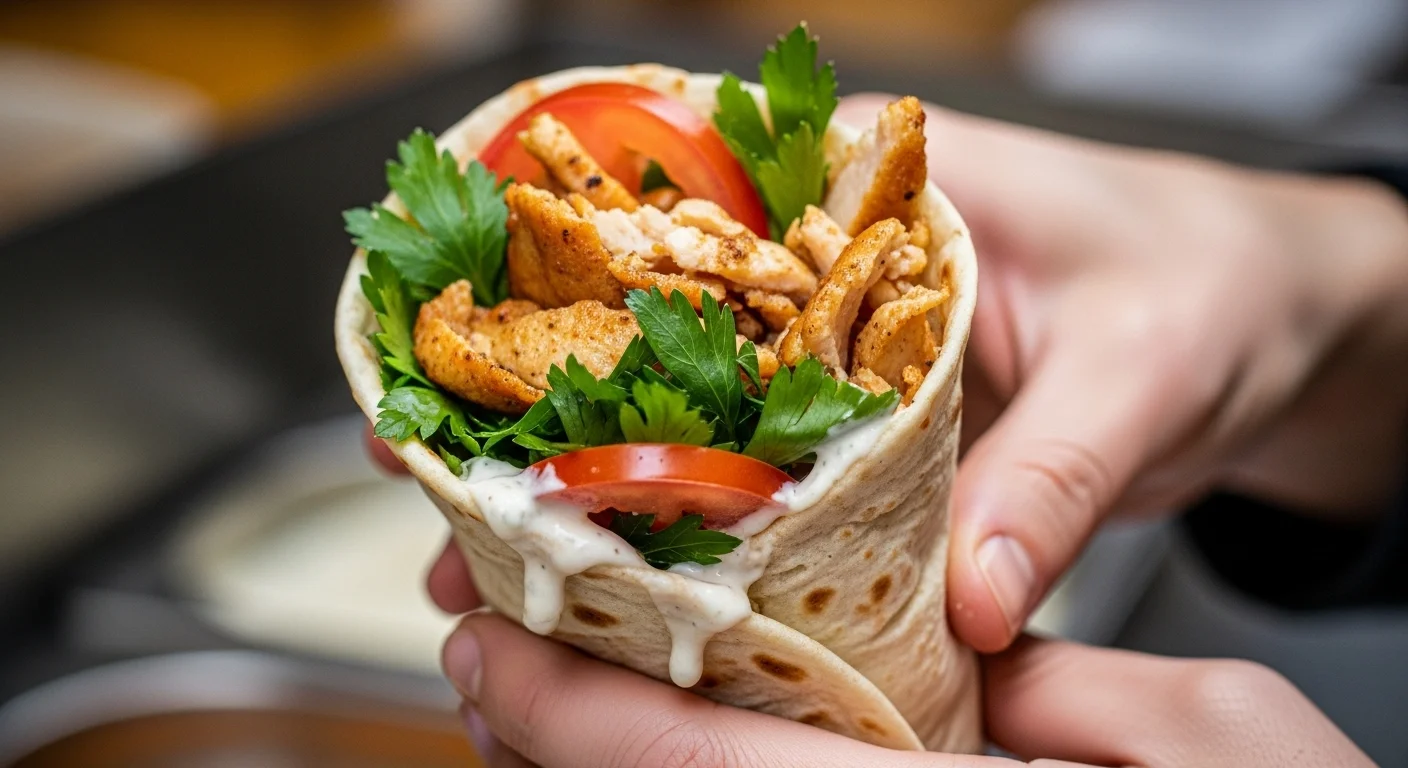
Now came the fun part—assembling my shawarma! I took a warm pita bread and laid it flat on my cutting board. First, I added a generous layer of the sliced chicken, followed by the fresh veggies. I drizzled my garlic sauce over everything, feeling quite proud of my work. I folded the pita over the filling and wrapped it tightly. It was time to indulge in my creation!
Taking the First Bite
As I took my first bite, a wave of flavors hit me. The tender chicken, the crunch of the vegetables, and the creaminess of the garlic sauce all came together in perfect harmony. I was transported. The shawarma I made felt like a celebration of flavors, and I could hardly believe that I had crafted it in my own kitchen. I was filled with a sense of accomplishment and joy. This experience wasn’t just about eating; it was about creating something with my own hands.
After that first bite, I couldn’t help but share my delicious creation with my family. I remember watching their faces light up as they tasted my homemade shawarma. It felt great to know that I could bring a little piece of Lebanese culture into our home. We all agreed that this was a dish we’d want to recreate again and again.
Exploring Variations and Side Dishes
After the success of my first shawarma, I couldn’t help but think about all the different ways I could tweak the dish. I began to explore various shawarma styles and toppings. Each variation seemed to tell a different story, reflecting the unique tastes and traditions of the regions they came from. I wanted to create a little adventure on my plate, so I set out to experiment. Read Interesting article: The Moroccan Chickpea Stew Trend Tastes Expensive
Vegetarian Shawarma
One evening, I decided to try my hand at a vegetarian shawarma, as I had friends who were not meat-eaters. I learned that chickpeas make an excellent substitute. I seasoned them with similar spices I had used for my chicken shawarma—cumin, paprika, and garlic powder—and roasted them until they were crispy. The aroma wafting through my kitchen was simply irresistible!
I wrapped the roasted chickpeas in the same warm pita, adding the same fresh vegetables and garlic sauce. The first bite was a delightful surprise. The chickpeas had a satisfying crunch and absorbed the spices beautifully. I felt a sense of pride in showing my friends that shawarma could be just as delicious without the meat. It’s moments like these that remind me of how food can bridge gaps between different diets and preferences.
Experimenting with Sauces
While I loved my garlic sauce, I felt inspired to try different sauces to see how they would change the flavor profile of the shawarma. One afternoon, I whipped up a tahini sauce. I combined tahini, lemon juice, garlic, and a bit of water to achieve a creamy consistency. Drizzling this over my shawarma was a game changer! The nutty flavor of the tahini blended seamlessly with the other ingredients, creating a new dimension of taste. I couldn’t believe I hadn’t tried this sooner!
I also played around with a spicy sauce by mixing harissa paste with yogurt. This added a fantastic kick to my wraps! I discovered that having a variety of sauces on hand not only made my shawarma experience more exciting but also allowed my family and friends to customize their own wraps. It became a fun little shawarma bar at home!
Side Dishes to Complement Shawarma
As I became more comfortable with making shawarma, I realized that it’s not just about the wrap. I started to think about side dishes that would complement it. One of my favorites became tabbouleh, a refreshing parsley salad with tomatoes, bulgur, and a tangy lemon dressing. I found that the lightness of tabbouleh contrasted beautifully with the rich flavors of shawarma.
Another side I tried was roasted vegetables. I tossed zucchini, bell peppers, and eggplant in olive oil and spices, then roasted them in the oven. The caramelized edges added a depth of flavor that paired perfectly with the shawarma. Whenever I served this combo, my family would rave about how the sides elevated the meal. It really felt like a feast!
Hosting a Shawarma Night
With my newfound confidence in making shawarma and sides, I finally decided to host a shawarma night for my friends. I wanted them to experience the joy I had found in crafting these delicious wraps. I set up a table with everything—grilled chicken, roasted chickpeas, fresh veggies, warm pita, and an array of sauces.
As everyone arrived, I felt a surge of excitement. I remember watching them assemble their own wraps, mixing and matching ingredients. Some went for the spicy harissa sauce, while others opted for the creamy tahini. The laughter and chatter filled the room as we shared stories and enjoyed our creations. It was more than just a meal; it was an experience that brought us all together.
Learning from Mistakes
Of course, not every attempt at shawarma was perfect. I can recall a time when I accidentally over-marinated the chicken, leaving it a bit too salty. I learned quickly that balance is key. Each cooking experience taught me something new, and I appreciated the journey more with each trial and error. I realized that cooking, much like life, is about learning and evolving.
I often remind myself that even when things don’t turn out as expected, it’s still a chance to experiment and grow. The next time I made chicken shawarma, I adjusted the marinade recipe to ensure the flavors were balanced. This time, everyone raved about how perfectly seasoned it was!
These experiences not only improved my cooking skills but also deepened my appreciation for the dish. It’s fascinating how one meal could lead to so many variations and moments of connection. I can’t wait to continue exploring and sharing my shawarma journey with others! Each wrap tells a story, and I’m eager to see where the next one takes me. Read Interesting article: This Cottage Cheese Ice Cream Trend Should Not Be This Good
Shawarma Around the World
As my shawarma journey unfolded, I became curious about how this beloved dish is enjoyed in different parts of the world. I wanted to understand its cultural significance and the variations that exist. It was fascinating to learn that shawarma has made its way beyond the streets of Lebanon and into various corners of the globe, each place adding its own unique spin. I felt inspired to explore these different styles and, of course, try to replicate them in my kitchen!
Shawarma in the Middle East
In the Middle East, shawarma is a beloved street food. Each country boasts its own signature style. For instance, I discovered that in Turkey, they have something known as döner kebab, which is quite similar but often made with lamb or beef. The meat is cooked on a vertical rotisserie, creating that iconic thinly sliced texture. I remember watching videos of street vendors expertly carving the meat and serving it on a warm flatbread with fresh vegetables. I was determined to recreate that experience at home!
Next, I found out that in Israel, shawarma is often served with a variety of pickled vegetables. I decided to make my own pickled turnips and cucumbers to mimic that delightful crunch and tang. The process was surprisingly simple! I sliced the vegetables and mixed them with vinegar, sugar, and salt, letting them sit overnight in the fridge. The next day, I added them to my shawarma wraps, and wow, the addition transformed the flavors completely. I felt like I was truly capturing the essence of shawarma as I tasted it in different cultures.
Western Influences
As shawarma made its way to the West, I noticed how it adapted to meet local tastes. In the United States, for example, I discovered that shawarma is often served in a more casual, fast-food style, sometimes in a bowl with rice instead of wrapped in pita. This gave me an idea to create a shawarma bowl for a quick weeknight dinner. I marinated the chicken as usual, then served it over a bed of rice with all the toppings—fresh veggies, garlic sauce, and a sprinkle of herbs. The bowl was colorful and hearty, and it made for a satisfying meal that was easy to prepare. My family loved it!
Exploring Global Flavors
Traveling through the world of shawarma, I came across some unexpected variations that piqued my interest. For instance, in South America, there is a dish called “shawarma de pollo,” where the chicken is marinated in a blend of spices unique to the region. I was intrigued and wanted to try infusing my shawarma with Latin flavors. I marinated the chicken in a mix of lime juice, cumin, and chili powder, giving it a vibrant twist. The result was a zesty and flavorful shawarma that took my taste buds on a delightful journey.
Next, I learned about shawarma-inspired tacos from the fusion food scene. I couldn’t resist trying this idea! I seasoned the chicken as usual but served it in soft corn tortillas with slaw and a drizzle of spicy chipotle sauce. This fusion was a hit! The combination of the traditional shawarma flavors with the texture of tacos created a fun and tasty experience. I felt a sense of pride in my culinary creativity as I introduced my family and friends to this unique twist.
Shawarma and Family Traditions
As I delved deeper into shawarma, I realized that it’s not just about the food itself but also the memories and traditions that come with it. I started talking to my family about their experiences with shawarma. My grandmother shared stories of how she used to make it for special occasions when she lived in the Middle East. She would gather family members around the grill, and they’d enjoy the delicious food together. Hearing these stories made me appreciate my own shawarma nights even more. I felt a connection to my roots and a desire to pass down these traditions to the next generation.
Inspired by my grandmother’s stories, I decided to host a shawarma night dedicated to family. I invited relatives, and we all participated in preparing the meal together. Everyone brought their own twist to the wraps, and it was heartwarming to see how each person added a personal touch. From homemade sauces to unique toppings, it was a beautiful blend of flavors and stories. That night, I realized that shawarma is more than just food; it’s a way to bond, share, and create lasting memories.
Future Shawarma Endeavors
Looking ahead, I feel excited about continuing my shawarma exploration. I want to delve into making homemade pita bread next. I’ve heard that the fresh, warm bread can elevate the entire shawarma experience. I’ve watched videos of people making it from scratch, and I can’t wait to try my hand at it. The thought of pulling a warm, fluffy pita right out of the oven to wrap around my juicy shawarma fills me with anticipation!
I also want to experiment with different proteins, like lamb or even fish. Each new ingredient will bring its own flavor profile, expanding the versatility of this fantastic dish. As I keep learning about shawarma, I know that each wrap will tell a story—whether it’s a memory from my childhood or a new twist inspired by global influences. I’m eager to see where my shawarma adventures take me next!
Frequently Asked Questions
What is shawarma?
Shawarma is a popular street food staple in many Middle Eastern countries, known for its blend of flavors, spices, and tender meat. It has cultural significance and varies by region, with each area adding its unique twist to the classic recipe.
What ingredients are essential for making authentic shawarma?
Essential ingredients for authentic shawarma include juicy chicken thighs, spices like cumin and coriander, fresh vegetables such as tomatoes, cucumbers, and onions, garlic, and yogurt for a flavorful sauce.
How should the chicken be prepared for shawarma?
The chicken should be marinated in a mixture of olive oil, garlic, lemon juice, and various spices for a few hours to elevate the flavors before cooking.
What are some popular sauces to serve with shawarma?
Popular sauces to serve with shawarma include garlic sauce, tahini sauce, and spicy sauces made with harissa paste mixed with yogurt, which enhance the flavor profile of the dish.
What side dishes complement shawarma?
Side dishes that complement shawarma include tabbouleh, a refreshing parsley salad, and roasted vegetables like zucchini, bell peppers, and eggplant, which add depth to the meal.
Can shawarma be made vegetarian?
Yes, shawarma can be made vegetarian by using chickpeas as a substitute for meat. Seasoned and roasted chickpeas can be wrapped in pita with fresh vegetables and sauces for a delicious alternative.
How is shawarma served differently in various cultures?
In the Middle East, shawarma is often served with pickled vegetables. In the West, it may be served in a fast-food style, sometimes in a bowl with rice instead of wrapped in pita.
What personal experiences did the author share about making shawarma?
The author shared their journey of making shawarma at home, the joy of assembling their wraps, hosting a shawarma night for friends, and the importance of family traditions related to the dish.
What future plans does the author have for their shawarma journey?
The author plans to continue exploring shawarma by making homemade pita bread, experimenting with different proteins like lamb or fish, and learning from various global influences.
What mistakes did the author encounter while making shawarma?
The author experienced some mistakes, such as over-marinating the chicken, which led to overly salty results. These experiences taught them the importance of balance in cooking and the value of learning through trial and error.