
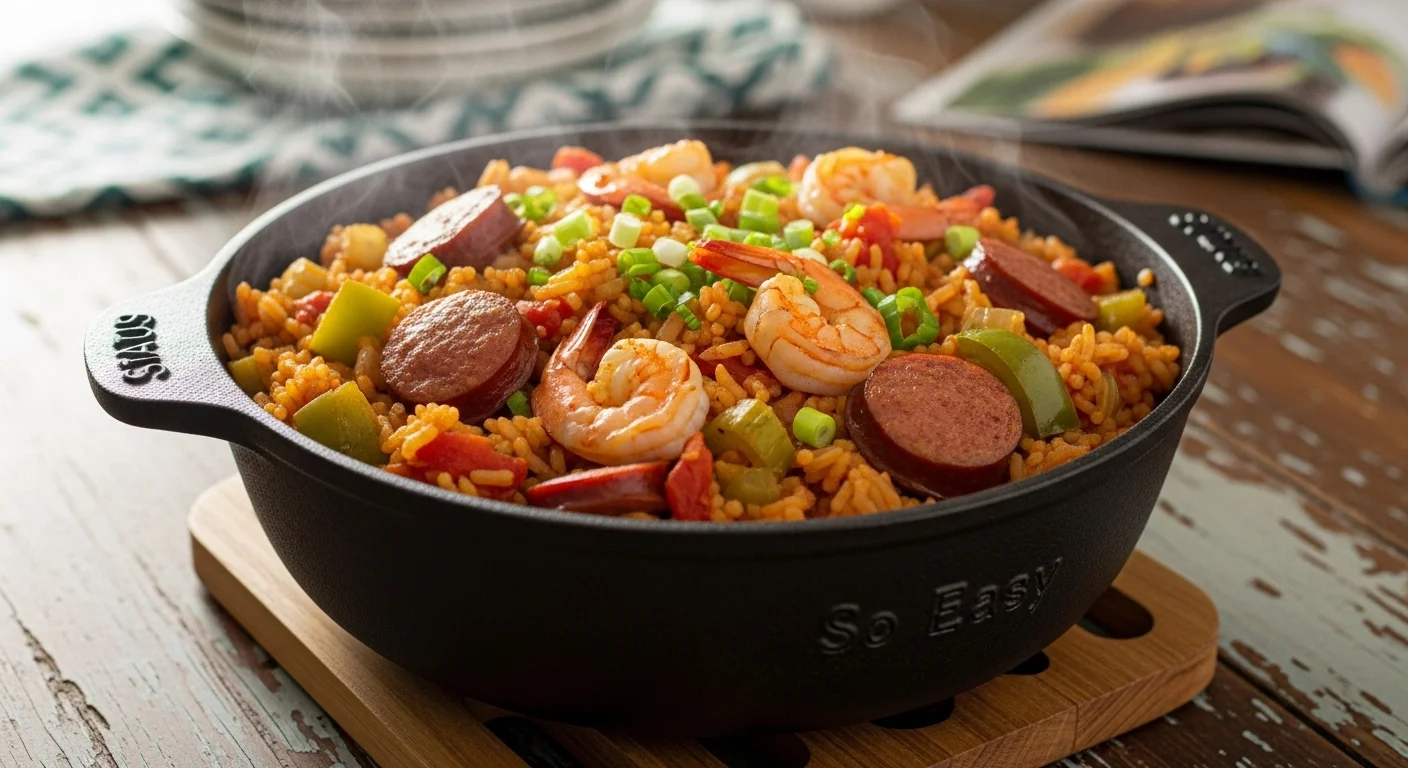
If you’re looking for a dish that bursts with flavor and is incredibly easy to prepare, you’ve landed in the right place! One-pot jambalaya with sausage and shrimp is a rich, hearty meal that captures the spirit of Southern cooking while keeping cleanup to a minimum.
What is Jambalaya?
Jambalaya is a beloved dish that hails from the vibrant kitchens of Louisiana. It’s a one-pot meal that combines rice with a medley of meat, seafood, and vegetables, all simmered together in a delicious, seasoned broth. The beauty of jambalaya is its flexibility; you can adapt it based on what you have on hand or your personal preferences, making it a go-to dish for many home cooks, including myself. Read Interesting article: I Tried the Lazy Chicken Rice Hack That’s All Over TikTok
Historical Background of Jambalaya
Tracing the roots of jambalaya takes us back to the early Spanish and French influences in New Orleans. The name itself is thought to derive from the Spanish word “jamba,” meaning “ham,” which reflects the inclusion of meats in the dish. Over time, it evolved to incorporate local ingredients, leading to the creation of various styles. For me, knowing the history behind this dish adds depth to my cooking experience; it reminds me that I’m part of a culinary tradition that is rich and diverse.
Regional Variations of Jambalaya
There are two primary types of jambalaya: Creole and Cajun. Creole jambalaya, often referred to as “red jambalaya,” includes tomatoes, which give it a vibrant color and tangy flavor. I remember the first time I tried a Creole version; the bright taste of the tomatoes complemented the shrimp beautifully. On the other hand, Cajun jambalaya skips the tomatoes and focuses on a deep, smoky flavor, often using darker spices and a variety of meats. Both styles are delicious in their own right, and I’ve enjoyed experimenting with both to see which one my friends and family prefer.
Key Ingredients for One-Pot Jambalaya
Now that we’ve explored the background of jambalaya, let’s dive into the key ingredients that make this dish a standout. The right combination of ingredients can elevate your one-pot jambalaya from good to unforgettable.
Sausage Options
When it comes to sausage, I’ve found that Andouille sausage is the traditional choice for jambalaya. Its smoky flavor adds a wonderful depth to the dish. You can also use other types of sausage like kielbasa or even chicken sausage if you want a lighter option. Personally, I appreciate the kick Andouille provides, but feel free to use whatever you have on hand. Just make sure it’s packed with flavor!
Types of Shrimp
As for the shrimp, I always recommend using fresh or frozen shrimp that are peeled and deveined. They cook quickly and add a lovely sweetness to the dish. In my experience, larger shrimp provide a more satisfying bite, but medium shrimp work just fine too. The key is to add them toward the end of the cooking process to prevent them from becoming rubbery.
Essential Vegetables
No jambalaya is complete without the “holy trinity” of Cajun cuisine: bell peppers, onions, and celery. I love how these vegetables create a flavorful base. Sautéing them until they’re tender releases their natural sweetness and helps build the dish’s overall character. Sometimes, I like to throw in a few garlic cloves for an extra kick, as garlic is a staple in my kitchen.
Spices and Seasonings
Seasoning is crucial in jambalaya. Typically, a mix of paprika, cayenne pepper, and dried thyme works wonders. I also tend to add a bay leaf or two for added aroma. Remember, the key is to taste and adjust as you go. Jambalaya should be full of flavor, and I’ve often found that a little extra seasoning can make a significant difference.
Rice Selection
For the rice, long-grain white rice is the standard choice in most recipes. I’ve tried using brown rice, but it requires a longer cooking time and changes the texture of the dish. So, if you want that classic jambalaya experience, stick with white rice. It soaks up the flavors beautifully and cooks to a fluffy perfection.
Preparation Steps for One-Pot Jambalaya
Now that we have all our ingredients lined up, let’s dive into how to bring this dish to life!
Prepping the Ingredients
Before I start cooking, I always make sure to prep all my ingredients. Chopping the vegetables, slicing the sausage, and measuring the spices ahead of time saves me from scrambling around the kitchen later. Plus, it makes the cooking process feel more organized and enjoyable.
Cooking Method Overview
The beauty of one-pot jambalaya is how simple the cooking method is. You start by sautéing the sausage and vegetables until they’re fragrant and starting to brown. Then, you add the rice and liquids, and let everything simmer together until the rice is tender and has absorbed all that delicious flavor. It’s hard not to love a dish that requires minimal effort and delivers maximum flavor!
Layering Flavors
I’ve learned that layering flavors is essential in cooking jambalaya. After sautéing the sausage and vegetables, I like to add the spices before the rice. This allows the spices to bloom and infuse the oil, which then coats the rice beautifully, ensuring every grain is packed with flavor.
Cooking Time and Techniques
Cooking jambalaya is all about timing. Typically, it takes about 20-25 minutes for the rice to cook through. I find it helpful to keep an eye on the pot and give it a stir occasionally to prevent sticking. Once the rice is fluffy and the liquid is absorbed, I add the shrimp, cover the pot, and let them steam for just a few minutes. It’s always exciting to see the shrimp turn that beautiful pink color, signaling that dinner is almost ready!
Common Mistakes to Avoid
As I’ve experimented with jambalaya over the years, I’ve learned that while it’s a forgiving dish, there are common pitfalls that can lead to disappointment. Here are a few mistakes I recommend avoiding to ensure your jambalaya turns out perfectly every time.
Overcooking the Rice
One of the biggest missteps I’ve made in the past is overcooking the rice. The goal is to have fluffy grains that soak up all the flavors, not a mushy mess. I remember the first time I made jambalaya; I was so eager to dig in that I didn’t pay attention to the cooking time. The rice ended up clumping together, and the dish lost that delightful texture. To avoid this, I suggest using a timer and checking the rice a minute or two before the recommended cooking time. If you notice it’s almost there but not quite, just remove it from the heat and let it sit covered for a few minutes. Trust me; this little trick has saved many meals for me!
Skipping the Sauté Step
Another mistake I’ve made is skipping the sautéing step. It might be tempting to just throw everything into the pot and let it do its thing, but that’s where a lot of flavor comes from. The caramelization of the sausage and vegetables creates a base that’s essential for a rich jambalaya. I learned this the hard way when I tried to speed up the process once. The dish turned out bland and lacked depth, reminding me that good things take time. So, be patient and let those ingredients get a nice golden color before moving on to the next steps.
Inadequate Seasoning
Seasoning is crucial in bringing a dish like jambalaya to life. In my earlier attempts, I didn’t realize how important it was to taste and adjust the seasoning throughout the cooking process. I would follow the recipe exactly, thinking that the right amounts would guarantee flavor. However, I found that each time I made jambalaya, the spices might need tweaking based on my ingredients or personal taste. Don’t be afraid to add a little extra paprika or cayenne if you feel it needs a kick. I now make it a point to taste as I go. It’s a great way to ensure the final dish is just how I like it!
Serving Suggestions
Now that your one-pot jambalaya is ready, it’s time to think about how to serve it. I’ve found that the right accompaniments can really elevate the meal.
Best Side Dishes
When it comes to sides, I often go for something light and fresh to balance the rich flavors of jambalaya. A simple green salad with a tangy vinaigrette is always a hit. I also enjoy serving cornbread on the side; it’s a classic Southern pairing that adds a delightful sweetness. Sometimes, I whip up a batch of collard greens or sautéed green beans to add some extra color and nutrition to the plate. These sides complement the rice dish beautifully, creating a well-rounded meal. Read Interesting article: 9 Light & Healthy Dinners for After the Holidays
Recommended Pairings (Wine/Drinks)
Drinks can also enhance the jambalaya experience. Personally, I love pairing it with a chilled glass of white wine, like Sauvignon Blanc, which has a crispness that cuts through the richness of the dish. If you prefer something stronger, a light beer or a refreshing cocktail, like a mojito, works well too. For non-alcoholic options, I recommend serving iced tea or a flavorful lemonade. The acidity and sweetness in these drinks balance the spices and add a refreshing touch to each bite.
Storage and Reheating Tips
If you’re lucky enough to have leftovers (which I usually don’t!), you’ll want to make sure you store them properly so you can enjoy your jambalaya later.
Storing Leftovers
After my meals, I always let the jambalaya cool down before transferring it to an airtight container. I’ve learned that if I put it away while it’s still hot, it can create steam and make the rice soggy. When stored correctly in the fridge, jambalaya can last for about three to four days. If I know I won’t eat it within that time frame, I sometimes freeze it in portions. It’s such a treat to pull out a container of homemade jambalaya on a busy day!
Reheating Methods
When it comes to reheating, I prefer using the stovetop rather than the microwave whenever possible. I find that reheating in a pot with a splash of water or broth keeps the rice from drying out and helps to maintain the flavors. I’ll heat it over medium-low heat, stirring occasionally until it’s warmed through. If I must use the microwave, I make sure to cover the bowl with a damp paper towel to help retain moisture. It’s important to me that my leftovers taste just as good as the first time around!
Variations and Customizations
Over the years, I’ve discovered that jambalaya is a dish that welcomes creativity. Here are some fun variations and customizations that I’ve enjoyed experimenting with.
Vegetarian/Vegan Jambalaya
If I want to make a vegetarian or vegan version of jambalaya, I simply swap out the sausage and shrimp for a variety of vegetables and plant-based proteins. Mushrooms add a nice umami flavor, while chickpeas or lentils can offer a hearty texture. I also like to use vegetable broth instead of chicken broth to keep it fully plant-based. The result is a comforting dish that still has all the bold flavors I love.
Substituting Proteins
Sometimes, I like to mix things up by using different proteins. Instead of shrimp, I’ve tried diced chicken or even crab meat, which adds a luxurious touch. I think it’s fun to play with the flavors and textures, as each protein brings its own unique taste to the dish. I’ve even made a seafood jambalaya featuring clams and mussels for a special occasion – it was a hit!
Spice Level Adjustments
For those who enjoy a bit of heat, adjusting the spice level is easy. I remember the first time I made jambalaya for friends; I underestimated their love for spicy food. I ended up adding extra cayenne pepper and some diced jalapeños, which brought the dish to life! So, if you’re up for it, don’t hesitate to experiment and find the right level of heat that suits your taste.
Frequently Asked Questions (FAQs)
I often get questions about jambalaya, especially from friends who are eager to try making it themselves. Here are some of the most common queries I’ve encountered.
Can I use brown rice instead of white rice?
While it’s possible to use brown rice, I generally don’t recommend it for jambalaya. Brown rice has a longer cooking time and changes the dish’s texture. If you do choose to use it, be prepared to adjust the cooking time significantly.
How can I make it spicier?
If you want to kick up the heat, try adding more cayenne pepper or incorporating spicy sausage. I’ve also enjoyed tossing in some chopped fresh jalapeños or hot sauce to take it up a notch!
What is the best sausage for jambalaya?
Andouille sausage is the traditional choice for jambalaya due to its smoky flavor. However, you can experiment with other types like kielbasa or even chicken sausage based on your preference.
Can I prepare it in advance?
Absolutely! Jambalaya can be made in advance, and the flavors often deepen as it sits. Just make sure to store it properly and reheat it gently to maintain its deliciousness!
What is Jambalaya?
Historical Background of Jambalaya
I’ve always found it fascinating how food can tell a story about culture and history. Jambalaya is no exception. This dish has roots that stretch back to the Spanish and French colonial influences in Louisiana. While it has evolved over time, its essence remains deeply rooted in the melding of cultures. I remember the first time I learned about its history; it made me appreciate the flavors even more. The blend of spices and ingredients reflects the diversity of the people who have called Louisiana home. It’s a beautiful representation of how food can unite different traditions into something uniquely delicious. Read Interesting article: 15-Minute Garlic Noodles (An Addictive, Easy Side)
Regional Variations of Jambalaya
One of the things I love most about jambalaya is how it varies from one region to another. Creole and Cajun jambalayas each have their distinct character, shaped by local ingredients and cooking styles. I’ve had the pleasure of tasting both styles, and they each bring something special to the table. The Creole version, with its rich tomato base, is vibrant and slightly tangy, which I find refreshing. Meanwhile, the Cajun version is heartier and smoky, often packed with a variety of meats that add depth. I often find myself wanting to try different variations, not just for the flavors but also to learn how they connect to the local culture.
Key Ingredients for One-Pot Jambalaya
Now, let’s explore the key ingredients that make jambalaya a standout dish. Each component plays a vital role in creating the rich, satisfying flavors that we all love.
Sausage Options
When I think of jambalaya, Andouille sausage immediately comes to mind. Its smoky flavor is just perfect for this dish. However, I’ve experimented with different types of sausage too. Once, I used a spicy Italian sausage, and it added a fun twist! It’s amazing how changing just one ingredient can completely alter the character of the dish. If you’re looking for something a bit lighter, chicken sausage is a great option that still packs a punch in flavor. Whatever you choose, I recommend picking a sausage that has a good balance of spices.
Types of Shrimp
For shrimp lovers like myself, choosing the right shrimp can elevate the jambalaya experience. I often opt for larger shrimp because they tend to have a more satisfying texture and flavor, but medium shrimp are just as acceptable. I remember a time when I used shrimp with the shells still on – while it added some flavor to the dish, it made eating a bit messy! That’s when I learned the importance of using peeled and deveined shrimp for ease and better enjoyment. Plus, they cook quickly, allowing you to get your meal on the table in no time.
Essential Vegetables
The “holy trinity” of Cajun cooking – bell peppers, onions, and celery – is indispensable in jambalaya. These vegetables not only provide flavor but also texture. I love how they soften and sweeten when sautéed. Sometimes, I even add a bit of green onion or a handful of diced tomatoes for variety. One of my favorite moments in cooking is when I see the vegetables transform as they cook; it’s almost like watching magic happen in the kitchen!
Spices and Seasonings
Spices are what truly bring the dish to life. I’ve found that a combination of paprika, cayenne pepper, and dried thyme adds the perfect balance of warmth and flavor. A bay leaf is also a must for that aromatic touch. I’ve learned to taste as I go, adjusting the spices to suit my palate. One time, I got a bit carried away with the cayenne, and it turned out to be a fiery feast! It taught me the importance of moderation and knowing my audience when serving meals.
Rice Selection
Rice is the backbone of jambalaya. Long-grain white rice is my go-to because it absorbs flavors so well and cooks to a fluffy texture. I remember trying to use a different type of rice once, and the dish turned out sticky and mushy. It was a lesson learned! If you’re looking for a classic jambalaya experience, stick with white rice, as it captures all the delicious flavors beautifully.
Preparation Steps for One-Pot Jambalaya
Let’s break down the preparation steps that make this dish a breeze to create.
Prepping the Ingredients
Before diving into cooking, I always take the time to prep my ingredients. Chopping vegetables, measuring spices, and slicing sausage ahead of time makes the actual cooking process smoother. I remember the chaos of trying to chop while stirring – never again! Preparing everything in advance allows me to focus on bringing the flavors together without feeling rushed.
Cooking Method Overview
The cooking method for jambalaya is straightforward, which is part of its charm. I usually start by sautéing the sausage and vegetables until they’re golden and fragrant. Then, I add the rice and liquids, letting everything simmer together. I love how this dish requires minimal effort while delivering such robust flavors. It’s like a comforting hug in a bowl!
Layering Flavors
Layering flavors is a technique I’ve come to appreciate in cooking. After the sausage and veggies are sautéed, I add the spices before the rice to allow them to bloom. This step is crucial in ensuring that every grain of rice is infused with flavor. I often find myself getting lost in the aroma as the spices heat up, making it hard to wait for the dish to finish cooking!
Cooking Time and Techniques
Cooking jambalaya takes patience. Typically, it takes about 20-25 minutes for the rice to reach that perfect fluffy texture. I keep an eye on it, stirring occasionally to prevent sticking. When the rice is almost ready, I toss in the shrimp and cover the pot to steam them for just a few minutes. It’s always a thrill to see the shrimp turn that gorgeous pink color, signaling that dinner is just moments away!
Frequently Asked Questions
“`htmlWhat is Jambalaya?
Jambalaya is a one-pot meal that combines rice with a medley of meat, seafood, and vegetables, all simmered together in a delicious, seasoned broth. It has roots in the vibrant kitchens of Louisiana and reflects a blend of Spanish and French influences.
What types of jambalaya are there?
There are two primary types of jambalaya: Creole and Cajun. Creole jambalaya includes tomatoes, giving it a vibrant color and tangy flavor, while Cajun jambalaya skips the tomatoes and focuses on a deep, smoky flavor with a variety of meats.
What is the best sausage for jambalaya?
Andouille sausage is the traditional choice for jambalaya due to its smoky flavor. However, you can also experiment with other types like kielbasa or chicken sausage based on your preference.
Can I use brown rice instead of white rice?
While it’s possible to use brown rice, it is generally not recommended for jambalaya, as it has a longer cooking time and changes the dish’s texture. If you do choose to use it, be prepared to adjust the cooking time significantly.
How can I make jambalaya spicier?
You can increase the heat by adding more cayenne pepper or incorporating spicy sausage. Chopped fresh jalapeños or hot sauce can also enhance the spiciness of the dish.
What vegetables are essential in jambalaya?
The essential vegetables in jambalaya are the “holy trinity” of Cajun cuisine: bell peppers, onions, and celery. These vegetables create a flavorful base for the dish.
How long does it take to cook jambalaya?
Typically, it takes about 20-25 minutes for the rice to cook through in jambalaya. It’s important to keep an eye on the pot and stir occasionally to prevent sticking.
Can I prepare jambalaya in advance?
Yes, jambalaya can be made in advance, and the flavors often deepen as it sits. Just make sure to store it properly and reheat it gently to maintain its deliciousness.
What are some common mistakes to avoid when making jambalaya?
Common mistakes include overcooking the rice, skipping the sautéing step, and inadequate seasoning. Each of these can lead to a less flavorful or poorly textured dish.
What are some good side dishes to serve with jambalaya?
Light and fresh side dishes, such as a simple green salad with vinaigrette, cornbread, collard greens, or sautéed green beans are great complements to jambalaya.
“`