
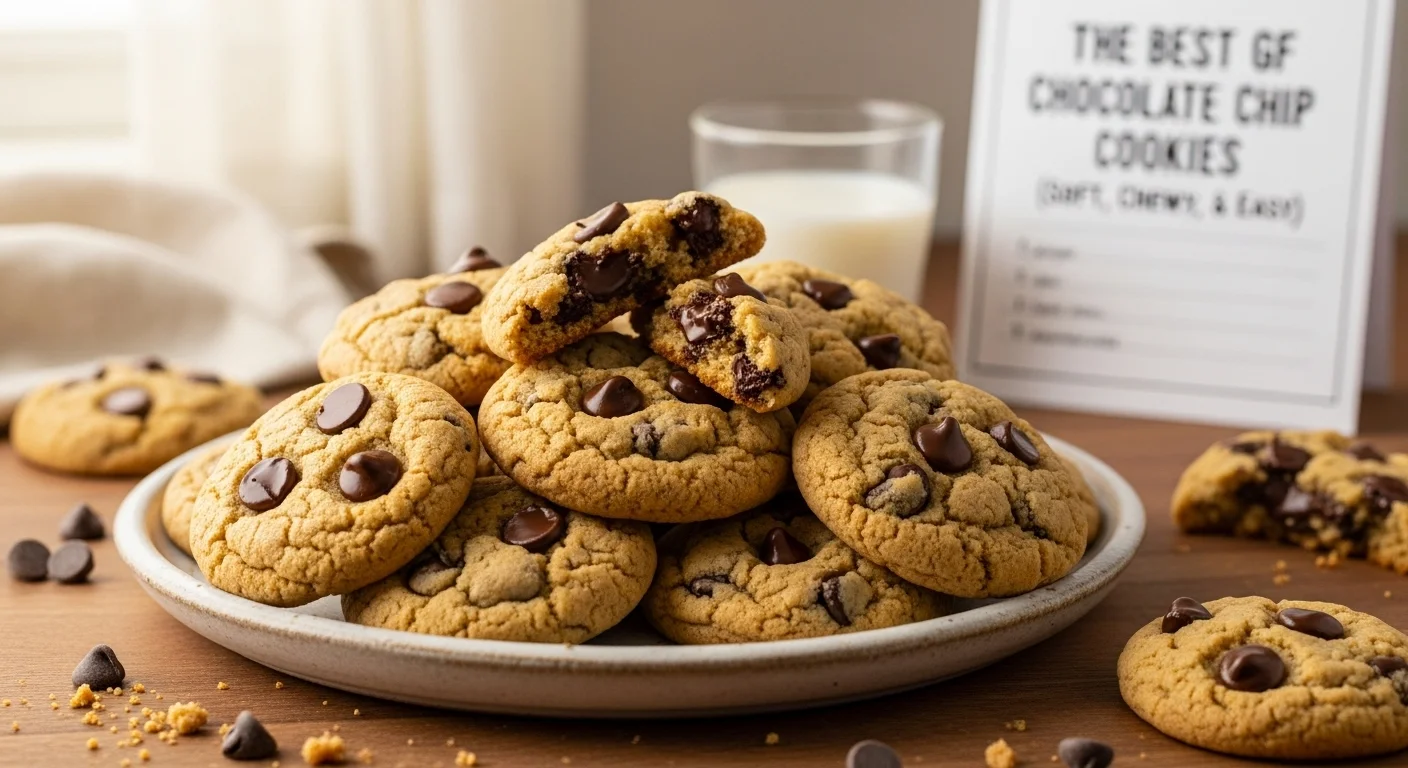
Get ready for the ultimate treat! These gluten-free chocolate chip cookies are soft, chewy, and easy to make. Whether you’re gluten-sensitive or just craving something sweet, this recipe is about to become your new favorite. Read Interesting article: No-bake cake recipe for beginners
Understanding Gluten-Free Baking
When I first ventured into gluten-free baking, I was overwhelmed but excited. The idea of making delicious cookies without gluten sounded like a challenge I was willing to take on. So, let’s dive into what gluten is, why some of us avoid it, and how to create scrumptious gluten-free treats.
What is Gluten and Why Avoid It?
Gluten is a group of proteins found in wheat and related grains. For many, gluten is perfectly safe and even delicious, but for some of us, it can lead to digestive issues, fatigue, and other health problems. I remember the first time I learned about gluten sensitivity; it was eye-opening. Suddenly, I understood why my friend always opted for gluten-free options at parties. If you or someone you love experiences discomfort after eating gluten, avoiding it becomes essential. But fear not! Just because we’re skipping gluten doesn’t mean we have to skip flavor, especially when it comes to cookies!
The Importance of Gluten-Free Ingredients
Using gluten-free ingredients is crucial in gluten-free baking. I learned that not all flours are created equal. For instance, almond flour, coconut flour, and gluten-free all-purpose flour each have unique properties that can affect the texture and taste of your cookies. I found that gluten-free baking often requires a bit of trial and error, but once you find the right combination, the results can be just as delightful as traditional cookies. It’s all about understanding how these substitutes interact with each other, which leads me to the next section.
Essential Ingredients for Gluten-Free Chocolate Chip Cookies
Gluten-Free Flour Options
The choice of flour can make or break your cookie recipe. After experimenting with various options, I often use a blend of gluten-free all-purpose flour that includes xanthan gum. This gum is a lifesaver because it mimics the elasticity that gluten provides. If you can’t find a pre-mixed option, you can create your own blend using brown rice flour, potato starch, and tapioca flour. I love the versatility of almond flour as well—it gives a wonderful nutty flavor and works beautifully in cookies.
Sweeteners: Granulated Sugar, Brown Sugar, and Alternatives
When it comes to sweeteners, I’ve found that a mix of granulated sugar and brown sugar provides the best flavor and texture. Brown sugar adds moisture and chewiness, while granulated sugar contributes to a lovely crisp edge. If you’re looking for alternatives, coconut sugar or maple syrup can also work wonders. Just remember, if you substitute liquid sweeteners, you may need to adjust other liquid ingredients in the recipe.
Butter vs. Margarine: Which is Best?
For me, butter is the go-to choice for flavor and texture in cookies. It adds richness and helps create that perfect chewy bite. However, if you’re dairy-free or vegan, you can opt for margarine or coconut oil. I experimented with coconut oil once and loved the slight tropical flavor it imparted. Always make sure your butter or margarine is softened to room temperature for easy mixing.
Eggs and Egg Substitutes
Eggs play a vital role in binding the ingredients together and providing moisture. I typically use large eggs in my recipes, but if you’re looking for plant-based alternatives, you can try flax eggs or chia seeds mixed with water. It’s amazing how these simple substitutes can create similar results! If you’re curious, I once made cookies with mashed bananas instead of eggs, and while they turned out delicious, they had a distinct banana flavor that was a fun twist!
How to Achieve the Perfect Texture: Soft and Chewy
Now that we have our ingredients sorted, let’s talk about achieving that perfect cookie texture. I know firsthand that this is where the magic happens. I’ve had my fair share of flat, crispy cookies, and I learned that little adjustments can lead to big improvements.
The Role of Fat in Cookie Texture
Fat is crucial in determining the texture of your cookies. The more fat you use, the softer and chewier the cookies will be. I like to slightly increase the butter in my recipes to achieve that perfect bite. It creates a decadent flavor that’s hard to resist!
Moisture Balance: Adding Ingredients Like Yogurt or Milk
In my baking adventures, I discovered that adding a bit of yogurt or milk can help maintain moisture in gluten-free cookies. I remember experimenting with Greek yogurt, and the cookies came out soft and delicious. It’s a simple trick that makes a noticeable difference in the final product.
Chilling the Dough: Benefits for Texture
Chilling the dough is another step I highly recommend. When I first learned about this, it amazed me how much of a difference it made. Chilling allows the flavors to meld and helps prevent the cookies from spreading too much while baking. I usually chill my dough for at least an hour, but sometimes, if I have the time, I let it sit overnight for even better results.
Step-by-Step Gluten-Free Chocolate Chip Cookie Recipe
Preparation: Tools and Equipment Needed
Before diving into the baking process, let’s gather the essential tools and equipment. I’ve found that having everything ready makes the experience enjoyable and seamless. Here are the items I recommend:
- Mixing Bowls: A set of various sizes, preferably glass or stainless steel.
- Measuring Cups and Spoons: Accurate measurements are crucial for baking success.
- Electric Mixer: While a whisk can work, an electric mixer saves time and effort.
- Baking Sheet: A non-stick or lined baking sheet is perfect for cookie placement.
- Parchment Paper: This helps prevent sticking and makes clean-up a breeze.
- Cookie Scoop or Spoon: For evenly sized cookies.
- Cooling Rack: Essential for letting your cookies cool properly.
Having these tools ready makes the whole baking process much smoother. I always feel more organized when everything is in place before I start mixing!
Mixing the Ingredients: Best Practices
Now that we have our tools, it’s time to mix the ingredients. I find that there’s a rhythm to this process that makes it really enjoyable. Here’s how I like to go about it:
- Preheat Your Oven: Set your oven to 350°F (175°C). This is the perfect temperature for baking cookies.
- Cream the Butter and Sugars: In a mixing bowl, combine your softened butter, granulated sugar, and brown sugar. I usually mix these until they’re light and fluffy. This step is crucial, as it helps incorporate air that will make your cookies nice and soft.
- Add the Eggs: Beat in your eggs one at a time. If you’re using any egg substitutes, add them here as well. Mix until everything is well combined.
- Incorporate Dry Ingredients: In a separate bowl, whisk together your gluten-free flour, baking soda, and salt. Gradually add this mixture to your wet ingredients, mixing until just combined. Overmixing can lead to tougher cookies, and trust me, no one wants that!
- Fold in the Chocolate Chips: Finally, gently fold in your chocolate chips. This part always makes me smile, as the anticipation of tasting those melty morsels builds up!
Baking Instructions: Temperature and Timing
Now comes the exciting part—baking your cookies! I remember my first batch; the smell filled my kitchen and left me counting down the minutes. Here’s how to make sure your cookies turn out perfectly:
- Prepare the Baking Sheet: Line your baking sheet with parchment paper for easy removal.
- Scoop the Dough: Use a cookie scoop or a spoon to place rounded tablespoons of dough on the baking sheet, leaving space between each cookie to allow for spreading.
- Bake: Place the sheet in the preheated oven and bake for 10 to 12 minutes, or until the edges are golden brown. I recommend keeping an eye on them during the last few minutes because everyone’s oven can vary a bit.
- Check for Doneness: The cookies might look slightly underbaked in the center, but they will continue to cook on the baking sheet once you take them out of the oven.
Cooling and Storing Your Cookies
After baking, it’s important to let your cookies cool properly. This is where I’ve learned to exercise a little patience! Here’s what I do:
- Transfer to a Cooling Rack: After 5 minutes on the baking sheet, I gently transfer the cookies to a cooling rack. This lets air circulate around them, keeping them from becoming soggy.
- Storing Your Cookies: Once cooled, I like to store my cookies in an airtight container. They can last about a week, but I find they rarely last that long in my house!
- Freezing for Later: If I have leftovers (which is rare!), I freeze them. I flash freeze the cookies individually and then transfer them to a freezer-safe bag. This way, I can enjoy a cookie anytime I get a craving!
Baking these gluten-free chocolate chip cookies is a delightful experience, and I hope you find joy in making them too! With the right techniques and a little love, you’ll have a batch that’s sure to impress your family and friends.
Variations on the Classic Recipe
Nut-Free Options
When I first started baking gluten-free chocolate chip cookies, I quickly realized that not everyone can enjoy nuts, whether due to allergies or personal preference. This led me on a quest to create nut-free versions of my favorite treats. One of the easiest ways to make these cookies nut-free is to simply swap out almond flour for a gluten-free all-purpose flour blend. It still gives you that lovely texture without the worry. I’ve also gotten creative by using seeds like sunflower or pumpkin seeds in place of nuts. They add a nice crunch and a bit of nutrition without compromising flavor!
Add-Ins: Nuts, Dried Fruits, and More
If you’re like me and love customizing your recipes, adding different ingredients can elevate your cookies to a whole new level. I often toss in some dark chocolate chunks for a rich taste, but I’ve also experimented with dried fruits like cranberries or cherries. It’s amazing how a little sweetness from the fruit can balance out the richness of the chocolate. You could even try adding a sprinkle of coconut flakes or some quick oats for added texture. Just remember to keep the proportions in check; too many add-ins can affect the dough consistency.
Flavor Enhancements: Vanilla, Espresso, and Sea Salt
One of the best parts about baking is the ability to play with flavors. I’ve found that a splash of vanilla extract can take gluten-free chocolate chip cookies to the next level. It adds warmth and depth that makes your cookies taste homemade in the best way. If you’re a coffee lover like I am, consider adding a touch of espresso powder to the batter. It enhances the chocolate flavor remarkably! Additionally, a sprinkle of sea salt on top of the cookies right before baking is a game changer. The contrast between the sweet cookie and the salty finish is just divine!
Common Mistakes to Avoid in Gluten-Free Baking
Overmixing vs. Undermixing the Dough
One of the most important lessons I’ve learned is about mixing the dough. It can be tempting to keep mixing until everything is perfectly smooth, but overmixing can lead to tough cookies. I remember the first batch I made where I didn’t pay attention to this; the cookies were chewy, but not in the delightful way I expected. I aim to mix until just combined. On the other hand, undermixing can result in uneven texture, where you bite into a pocket of dry flour. Finding that sweet spot of mixing is key!
Not Measuring Ingredients Correctly
Accuracy in measuring ingredients is crucial in baking, especially in gluten-free recipes. I can’t tell you how many times I’ve made the mistake of eyeballing flour or sugar, thinking, “How different can it be?” Trust me, it can make a huge difference! I always use measuring cups and spoons for dry ingredients and a liquid measuring cup for wet ones. It’s worth the extra effort to ensure your cookies turn out just right.
Using Substitutes for Key Ingredients
While it’s great to experiment with substitutes, not all ingredients can be swapped out freely. For instance, I once tried to replace the eggs in a cookie recipe with applesauce, thinking it would work like magic. While they were edible, the texture was off, and they lacked the chewiness I love. I’ve learned that some ingredients, like eggs and butter, play a vital role in creating the right structure and flavor. It’s important to do a little research or follow trusted recipes to avoid disappointment!
Frequently Asked Questions (FAQs)
Can I Use Regular Chocolate Chips?
Using regular chocolate chips can be a bit tricky if you’re strictly avoiding gluten. Most chocolate chips are made in facilities that process gluten, which can lead to cross-contamination. I recommend looking for gluten-free chocolate chips, which are widely available these days. They give you that same delicious chocolatey goodness without the worry!
How Can I Make These Cookies Vegan?
Making gluten-free chocolate chip cookies vegan is totally doable! You can substitute the butter with coconut oil or vegan margarine. For the eggs, try using flax eggs (1 tablespoon of ground flaxseed mixed with 2.5 tablespoons of water for each egg) or chia seeds mixed with water. These egg substitutes work surprisingly well and can give you that perfect chewy texture!
What is the Best Way to Store Gluten-Free Cookies?
I usually store my gluten-free cookies in an airtight container at room temperature. This keeps them fresh and chewy for about a week. If you want to keep them for longer, freeze them! I flash freeze the cookies on a baking sheet before transferring them to a freezer-safe bag. This way, I can pull out just a couple when the cookie cravings hit!
How Long Do Gluten-Free Cookies Last?
In my experience, gluten-free cookies can last about a week when stored properly. However, they’re usually gone much quicker in my house! If you find yourself with leftovers, freezing them is a great option, as mentioned. They can last for several months in the freezer, so you can always have homemade cookies on hand!
Final Thoughts
Baking gluten-free chocolate chip cookies has been an adventure filled with flavor and learning. I genuinely believe that everyone deserves to indulge in a sweet treat, no matter their dietary restrictions. The process of experimenting with different ingredients, understanding what works, and discovering new textures has not only improved my baking skills but also enriched my appreciation for the art of cooking.
Over the years, I’ve found that sharing these cookies with friends and family is one of the most rewarding parts of baking. Watching their faces light up with joy as they take their first bite is a feeling I cherish. Whether you’re making a classic batch or trying out the variations, every cookie tells a story of creativity and love. I encourage you to try different flavor combinations and ingredients that resonate with you—this will make your baking journey unique and personal.
If you ever feel overwhelmed, remember that it’s okay to make mistakes. Each batch is a learning experience! I’ve had my share of cookie disasters, but they’ve only pushed me to improve and innovate. The key is to enjoy the process, savor the moments in the kitchen, and share the delicious results with those you care about.
So, roll up your sleeves, gather your ingredients, and let’s make some gluten-free chocolate chip cookies that will not only satisfy your sweet tooth but also create wonderful memories. Read Interesting article: 6 No-Bake Desserts for Any Last-Minute Situation Happy baking!
Frequently Asked Questions
What is gluten and why should some people avoid it?
Gluten is a group of proteins found in wheat and related grains. Some people may experience digestive issues, fatigue, and other health problems when consuming gluten, making it essential for them to avoid it.
What are some essential gluten-free flour options for baking cookies?
Gluten-free all-purpose flour blends, almond flour, coconut flour, brown rice flour, potato starch, and tapioca flour are all great options. A blend that includes xanthan gum can also mimic the elasticity that gluten provides.
What sweeteners work best in gluten-free chocolate chip cookies?
A mix of granulated sugar and brown sugar is recommended for flavor and texture. Alternatives like coconut sugar or maple syrup can also be used, but liquid sweeteners may require adjustments to other liquid ingredients in the recipe.
Can I make gluten-free chocolate chip cookies without eggs?
Yes! You can use plant-based alternatives like flax eggs or chia seeds mixed with water. These substitutes bind the ingredients together and provide moisture, similar to traditional eggs.
How does chilling the dough affect cookie texture?
Chilling the dough allows flavors to meld and helps prevent the cookies from spreading too much while baking, resulting in a better texture. It is recommended to chill the dough for at least an hour, or even overnight for optimal results.
What tools are essential for baking gluten-free chocolate chip cookies?
Essential tools include mixing bowls, measuring cups and spoons, an electric mixer, a baking sheet, parchment paper, a cookie scoop or spoon, and a cooling rack for proper cooling.
How should I store gluten-free cookies to keep them fresh?
Store gluten-free cookies in an airtight container at room temperature for about a week. Flash freezing them individually before placing them in a freezer-safe bag can extend their shelf life for several months.
What are some common mistakes to avoid in gluten-free baking?
Common mistakes include overmixing or undermixing the dough, not measuring ingredients correctly, and using substitutes for key ingredients that may not work well, like replacing eggs with applesauce.
How can I make gluten-free chocolate chip cookies vegan?
To make them vegan, substitute butter with coconut oil or vegan margarine, and replace eggs with flax eggs or chia seeds mixed with water, which can provide a similar texture.
What variations can be made to the classic gluten-free chocolate chip cookie recipe?
Nut-free options can be created by swapping almond flour for a gluten-free all-purpose blend. Additionally, you can add dark chocolate chunks, dried fruits, or flavor enhancements like vanilla extract or espresso powder for a unique twist.
Read Interesting article: 20 Best Homemade Hostess Gifts for Thanksgiving