
Imagine biting into a warm, crusty baguette, its tangy aroma filling the air, transporting you straight to the charming streets of Paris. Making sourdough baguettes at home can bring that delightful experience to your kitchen.
What is Sourdough Baguette?
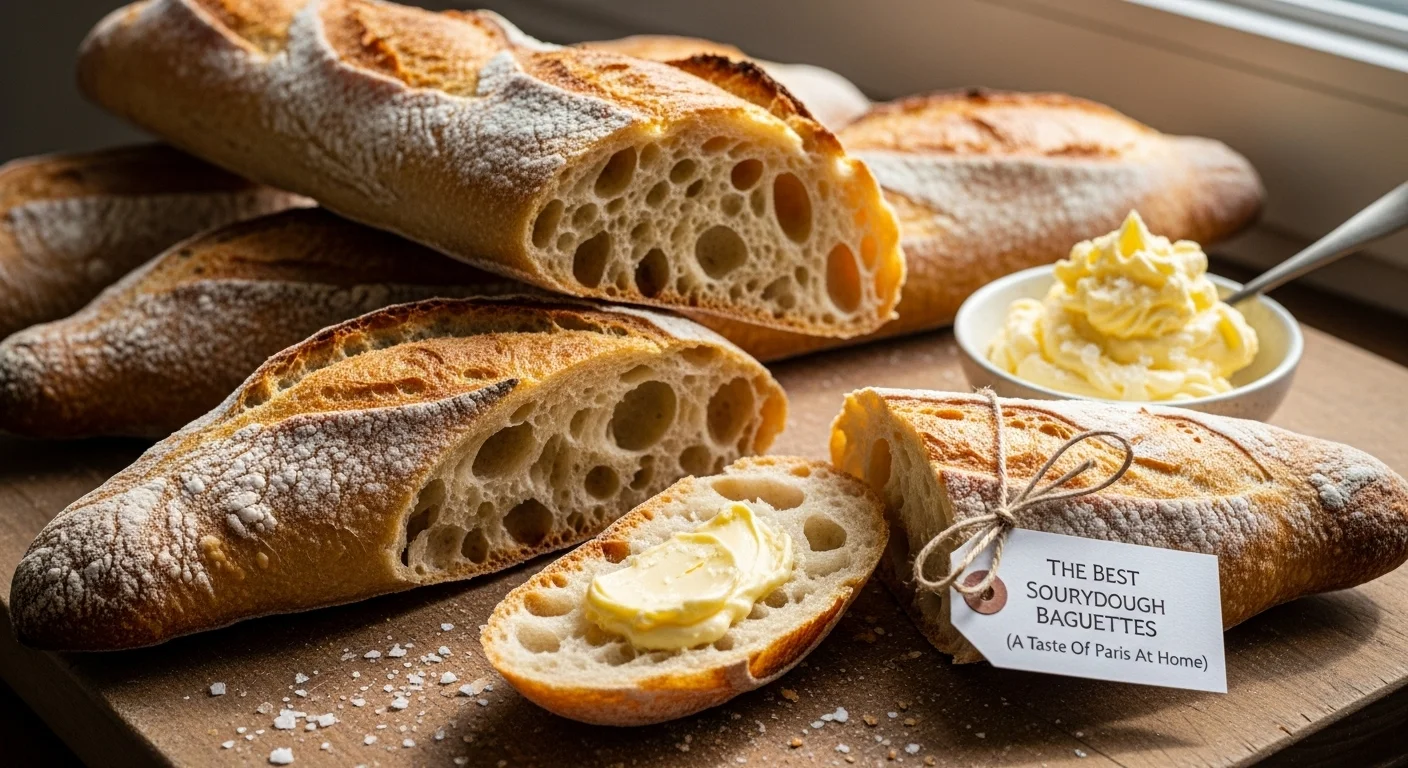
Sourdough baguettes are a unique twist on the classic French baguette, characterized by their tangy flavor and chewy texture. As someone who has spent countless hours experimenting with bread-making, I can tell you that the combination of a sourdough starter with the traditional baguette shape creates a loaf that is not only delicious but also an impressive centerpiece for any meal. The sourdough process involves fermentation, which adds depth to the flavor while also improving the bread’s shelf life.
The Basics of Sourdough Bread
Sourdough bread is different from conventional bread because it relies on wild yeast and lactic acid bacteria for fermentation. This process is what gives sourdough its characteristic tang. I remember my first encounter with sourdough; I was amazed at how the flavor seemed to develop and deepen over time. Unlike commercial yeast, which ferments quickly, sourdough takes its time, resulting in a more complex flavor and a lovely chewy texture. To start your journey, you’ll need a sourdough starter, which is essentially a mixture of flour and water that has been allowed to ferment naturally. It’s like nurturing a little pet; you feed it and take care of it, and in return, it rewards you with delicious bread.
What Makes a Baguette Unique?
The baguette’s unique shape and airy crumb set it apart from other bread types. Its long, thin form is perfect for achieving a crunchy crust and a soft interior. I remember the first time I shaped a baguette; it felt like an art form. The long, slender shape allows for a greater surface area, meaning more crispy crust for every bite. The traditional scoring on top not only adds to the aesthetics but also helps the bread to expand properly while baking, creating that distinctive look we all know and love.
The Art of Making Sourdough Baguettes
When it comes to making sourdough baguettes, the journey of creating them can be as rewarding as the result itself. I’ve learned that each step is essential, and with practice, it becomes a delightful routine. Below, I’ll share what I believe are the most crucial aspects in making these delightful loaves.
Essential Ingredients
To make the perfect sourdough baguette, you need a few key ingredients that work together harmoniously. Here’s what I use and why I think each element is important.
Flour Types: Bread Flour vs. All-Purpose
Choosing the right flour is vital for achieving the perfect texture. I often use bread flour due to its higher protein content, which helps develop gluten, giving the baguette its structure. While all-purpose flour can work, I find that the chewiness of bread flour creates a more authentic baguette experience.
Water Quality and Temperature
Water might seem like a simple ingredient, but it plays a significant role. I always use filtered water for my sourdough, as it’s free from chlorine and other impurities that can hinder fermentation. Temperature is also crucial; I aim for room temperature or slightly warmer water to help activate the yeast without killing it.
The Role of Salt
Salt not only enhances flavor but also strengthens gluten structure. I remember the first time I forgot to add salt; the bread was bland and dense. Now, I make sure to incorporate salt at the right stage of mixing so that it works its magic throughout the dough.
Understanding Starter Cultures
Your sourdough starter is the heart of your baguette. I’ve learned that maintaining a healthy starter is key to achieving that desired tangy flavor. It’s important to feed your starter regularly, and I’ve found that keeping it at room temperature provides the best results for fermentation. Read Interesting article: Creamy One-Pot Mac And Cheese (No Draining Pasta!)
Step-by-Step Preparation Guide
Making sourdough baguettes can seem daunting, but I promise it’s a process worth diving into. Here’s a breakdown of the steps I follow, which might help simplify things for you.
Creating and Maintaining a Sourdough Starter
To start, you’ll need to create your sourdough starter, which can take about 5-7 days. I mix equal parts of flour and water, and then let it sit at room temperature, feeding it daily. It’s fascinating to watch how it bubbles and grows. Once it’s ready, I store it in the fridge and feed it once a week.
Kneading Techniques
Kneading is where the magic happens. I usually knead my dough by hand for about 10-15 minutes, feeling the texture change from shaggy to smooth. This is a workout, but I think it’s the perfect way to connect with the dough. If I’m feeling lazy, I also use a stand mixer, but there’s something satisfying about kneading by hand.
Fermentation and Proofing Times
After kneading, I allow my dough to ferment. I prefer a bulk fermentation of about 4-6 hours, depending on the temperature. I often take mental notes while waiting; it’s surprising how much the dough transforms during this time. Once bulk fermentation is complete, I shape the dough and let it proof for another hour or so. I’ve learned that patience is key here; rushing can lead to less-than-ideal results.
Shaping the Baguette
Shaping the baguette is an art. I gently stretch and roll the dough, working to create tension on the surface. I remember feeling a sense of accomplishment the first time I got it right. The beautiful surface helps achieve that lovely crust we all crave.
Baking Tips for Perfect Sourdough Baguettes
Baking your baguettes is the final step, and it’s where all your hard work pays off. Getting it right can be a bit tricky, but these tips have helped me achieve that perfect bake.
Oven Setup: Steam vs. No Steam
Creating steam in the oven is vital for achieving a crusty exterior. I often place a pan of water in the bottom of the oven or use a spray bottle to mist the walls of the oven as I place my baguettes inside. This helps create that bakery-quality crust.
Temperature and Baking Time
I usually bake my baguettes at a high temperature of around 475°F. The baking time can vary, but I find that 20-25 minutes usually does the trick. I often peek through the oven door to watch the magic happen. Seeing that golden-brown color develop is one of my favorite moments.
How to Achieve the Perfect Crust
To get the perfect crust, I also focus on the scoring. I use a sharp blade to make a few diagonal cuts on the surface before baking. This not only makes the baguettes look beautiful but also allows for proper expansion in the oven. I’ve learned that practice makes perfect, so don’t be afraid to experiment with different scoring patterns.
Top Recipes for Sourdough Baguettes
Now that we’ve covered the essentials of making sourdough baguettes, I can’t wait to share some of my favorite recipes. Each of these variations offers a unique twist while staying true to the spirit of sourdough. I love experimenting in the kitchen, and I think you’ll find these recipes both rewarding and delicious. Read Interesting article: Deliciously Easy Asian-Style BBQ Chicken Recipe
Classic French Sourdough Baguette Recipe
This recipe is the cornerstone of my sourdough baking journey. It captures the essence of what a traditional baguette should be: crusty on the outside, soft and airy on the inside. Here’s how I make it:
-
Ingredients:
- 500g bread flour
- 350g water (room temperature)
- 100g active sourdough starter
- 10g salt
-
Instructions:
- In a large bowl, mix the flour and water until just combined. Let it rest for 30 minutes. This is the autolyse stage, which helps with gluten development.
- Add the sourdough starter and salt. Mix until fully incorporated.
- Knead the dough for about 10-15 minutes until smooth.
- Let it bulk ferment for 4-6 hours at room temperature, performing stretch and folds every hour.
- Shape the dough into baguettes and let them proof for an hour.
- Preheat your oven to 475°F with steam.
- Score the loaves and bake for 20-25 minutes until golden brown.
I love the aroma that fills my kitchen when these are baking. It reminds me of walking past a bakery in Paris early in the morning.
Whole Wheat Sourdough Baguette Recipe
If you’re looking for a healthier option, I highly recommend trying a whole wheat version. It adds a nutty flavor that pairs beautifully with its tangy notes.
-
Ingredients:
- 400g whole wheat flour
- 100g bread flour
- 350g water
- 100g active sourdough starter
- 10g salt
-
Instructions:
- Mix the whole wheat flour, bread flour, and water. Let it rest for 30 minutes.
- Add the sourdough starter and salt, mixing until combined.
- Knead the dough for 10-15 minutes.
- Bulk ferment for about 4-5 hours, incorporating stretch and folds.
- Shape into baguettes and proof for 1 hour.
- Preheat the oven to 475°F with steam, score, and bake for 20-25 minutes.
This baguette pairs wonderfully with hearty soups and salads. I’ve served it alongside a warm bowl of chili, and it was a hit!
Herbed Sourdough Baguette Recipe
If you’re looking to elevate your sourdough experience, adding herbs can really take it to the next level. I love using fresh rosemary or thyme in this recipe.
-
Ingredients:
- 500g bread flour
- 350g water
- 100g active sourdough starter
- 10g salt
- 2 tablespoons finely chopped fresh herbs
-
Instructions:
- Mix the flour and water, letting it rest for 30 minutes.
- Add the sourdough starter, salt, and herbs. Mix until incorporated.
- Knead the dough for about 10-15 minutes.
- Bulk ferment for 4-6 hours, doing stretch and folds along the way.
- Shape into baguettes, proof for an hour, and preheat the oven to 475°F.
- Score and bake for 20-25 minutes.
These herbed baguettes are perfect for dipping in olive oil or pairing with cheese at a gathering. They always get rave reviews!
Cheese and Olive Sourdough Baguette Recipe
For cheese lovers, this recipe combines tangy cheese and olives, resulting in a savory treat. I can’t resist making this one for special occasions. Read Interesting article: 15-Minute Ground Beef Stir-Fry (Better Than Takeout)
-
Ingredients:
- 500g bread flour
- 350g water
- 100g active sourdough starter
- 10g salt
- 100g grated cheese (like Gruyère or cheddar)
- 100g chopped olives (green or black)
-
Instructions:
- Combine the bread flour and water, resting for 30 minutes.
- Add the sourdough starter, salt, cheese, and olives. Mix thoroughly.
- Knead for about 10 minutes until smooth.
- Allow bulk fermentation for 4-6 hours, adding stretch and folds.
- Shape into baguettes and proof for an hour.
- Preheat your oven to 475°F, score the loaves, and bake for 20-25 minutes.
These baguettes are fantastic on their own or sliced for a charcuterie board. I find that they disappear quickly!
With these recipes, I invite you to embark on your sourdough baguette journey. Each loaf tells a story, and I hope you enjoy the process as much as I do. Happy baking!
Common Mistakes to Avoid
As I dove deeper into the world of sourdough baguettes, I quickly realized that even the smallest mistake could lead to disappointing results. Over the years, I’ve made my fair share of blunders, and I’ve learned that avoiding these common pitfalls can make a world of difference in your baking journey. Here are some mistakes to watch out for:
Under or Over Fermentation
Fermentation is a critical stage in bread-making, and I’ve had my ups and downs with it. Under-fermented dough can lead to a dense loaf, lacking that airy quality we all crave. On the flip side, over-fermentation can result in a bread that collapses and loses its structure. I remember one time, I got caught up in my day and let my dough ferment for way too long. The result was a flat, sad baguette that didn’t rise at all. I learned that keeping an eye on the dough’s progress is essential. Observing its texture and volume during the bulk fermentation phase really helps me gauge when it’s just right. A good rule of thumb is to look for a dough that has roughly doubled in size and feels puffy.
Improper Shaping Techniques
Shaping is an art form, and let me tell you, I’ve had my fair share of struggles with it. When I first tried to shape my baguettes, I often ended up with misshapen loaves that didn’t rise properly in the oven. I learned that creating tension in the dough while shaping is key to a good rise. It’s like wrapping a present; you want to make sure everything is snug but not too tight. Take your time with this step. I often practice my shaping skills using scrap dough just to get the feel for it before moving on to the real thing. The more I practiced, the more confident I became, and my baguettes started to take on that beautiful, classic shape.
Baking Temperature Issues
Baking temperature can be a game changer in achieving that perfect crust. I can’t tell you how many times I’ve under-baked my baguettes because I was too eager to pull them out of the oven. Now, I always use an oven thermometer to ensure I’m hitting that sweet spot of around 475°F. I’ve learned that every oven is a bit different, and getting to know mine has been a journey. If my baguettes are coming out pale or doughy, I know I need to crank up the heat or leave them in a tad longer. Watching them transform in those final minutes is one of my favorite parts of the process; that golden crust is the ultimate reward for my patience.
Serving Suggestions for Sourdough Baguettes
Once you’ve mastered the art of making sourdough baguettes, the fun doesn’t stop there! There are endless ways to enjoy them. I love experimenting with different serving suggestions, and here are a few of my favorites:
Pairing with Cheese and Charcuterie
There’s something magical about the combination of sourdough baguettes with cheese and charcuterie. I often host gatherings where I create a cheese board featuring a variety of cheeses, cured meats, and my fresh baguettes. The tanginess of the sourdough complements the rich flavors of the cheese beautifully. I remember one night serving a creamy brie alongside a sharp cheddar, and my baguette was the perfect vehicle to enjoy them. I also love adding some olives and pickles for that extra burst of flavor. It makes for a beautiful centerpiece that not only looks great but tastes incredible.
Best Spreads and Dips
Another delightful way to enjoy sourdough baguettes is by pairing them with spreads and dips. I love making homemade hummus or a roasted red pepper dip to serve with slices of baguette. The crusty exterior and soft interior of the bread are perfect for dipping. I also enjoy a classic garlic butter spread or a herbed cream cheese. I remember introducing my friends to a whipped feta dip one time, and they couldn’t get enough. The way sourdough absorbs those flavors is just divine. I often set out a few different dips so everyone can have fun mixing and matching.
Using Baguettes in Sandwiches
Sourdough baguettes are not just for snacking or pairing; they make fantastic sandwiches too! I love creating gourmet sandwiches using fresh ingredients. One of my go-to combinations is a classic turkey and avocado sandwich with a spread of Dijon mustard. The crunch of the crust pairs wonderfully with the creamy avocado. In the summertime, I often whip up a Caprese sandwich with fresh mozzarella, ripe tomatoes, and basil. The flavors meld together beautifully, and it feels like a celebration of summer in every bite. I’ve even made breakfast sandwiches with eggs and cheese for a hearty morning treat!
With these serving suggestions, I think you’ll find that sourdough baguettes can elevate any meal or gathering. They’re versatile, delicious, and always a crowd-pleaser. Enjoy experimenting with your own pairings and let your creativity shine!
Frequently Asked Questions
What is a sourdough baguette?
A sourdough baguette is a unique twist on the classic French baguette, characterized by its tangy flavor and chewy texture, created by using a sourdough starter and traditional baguette shape.
What ingredients are essential for making sourdough baguettes?
Essential ingredients include bread flour, water, active sourdough starter, and salt. Each element plays a crucial role in developing the texture and flavor of the baguette.
Why is the choice of flour important in sourdough baguettes?
The choice of flour is vital for achieving the perfect texture. Bread flour, with its higher protein content, helps develop gluten and gives the baguette its structure, while all-purpose flour can also work but may not provide the same chewiness.
How should I maintain my sourdough starter?
Your sourdough starter should be fed regularly and kept at room temperature for optimal fermentation. It typically takes about 5-7 days to create a healthy starter.
What is the importance of fermentation in sourdough bread making?
Fermentation is crucial as it develops the flavor and texture of the bread. Under-fermented dough can lead to a dense loaf, while over-fermented dough may collapse and lose its structure.
What are some common mistakes to avoid when making sourdough baguettes?
Common mistakes include under or over fermentation, improper shaping techniques, and incorrect baking temperatures, all of which can negatively impact the final result of the baguette.
How can I achieve a perfect crust on my sourdough baguettes?
To achieve a perfect crust, it’s important to create steam in the oven during baking and to score the loaves with a sharp blade before placing them in the oven.
What are some recommended recipes for sourdough baguettes?
Recommended recipes include Classic French Sourdough Baguette, Whole Wheat Sourdough Baguette, Herbed Sourdough Baguette, and Cheese and Olive Sourdough Baguette, each offering unique flavors and textures.
What are some serving suggestions for sourdough baguettes?
Sourdough baguettes can be paired with cheese and charcuterie, served with spreads and dips, or used to make gourmet sandwiches, enhancing any meal or gathering.
How can I ensure my sourdough baguettes rise properly?
To ensure proper rising, focus on creating tension while shaping the dough and monitor fermentation times, aiming for the dough to double in size and feel puffy during the bulk fermentation phase.