
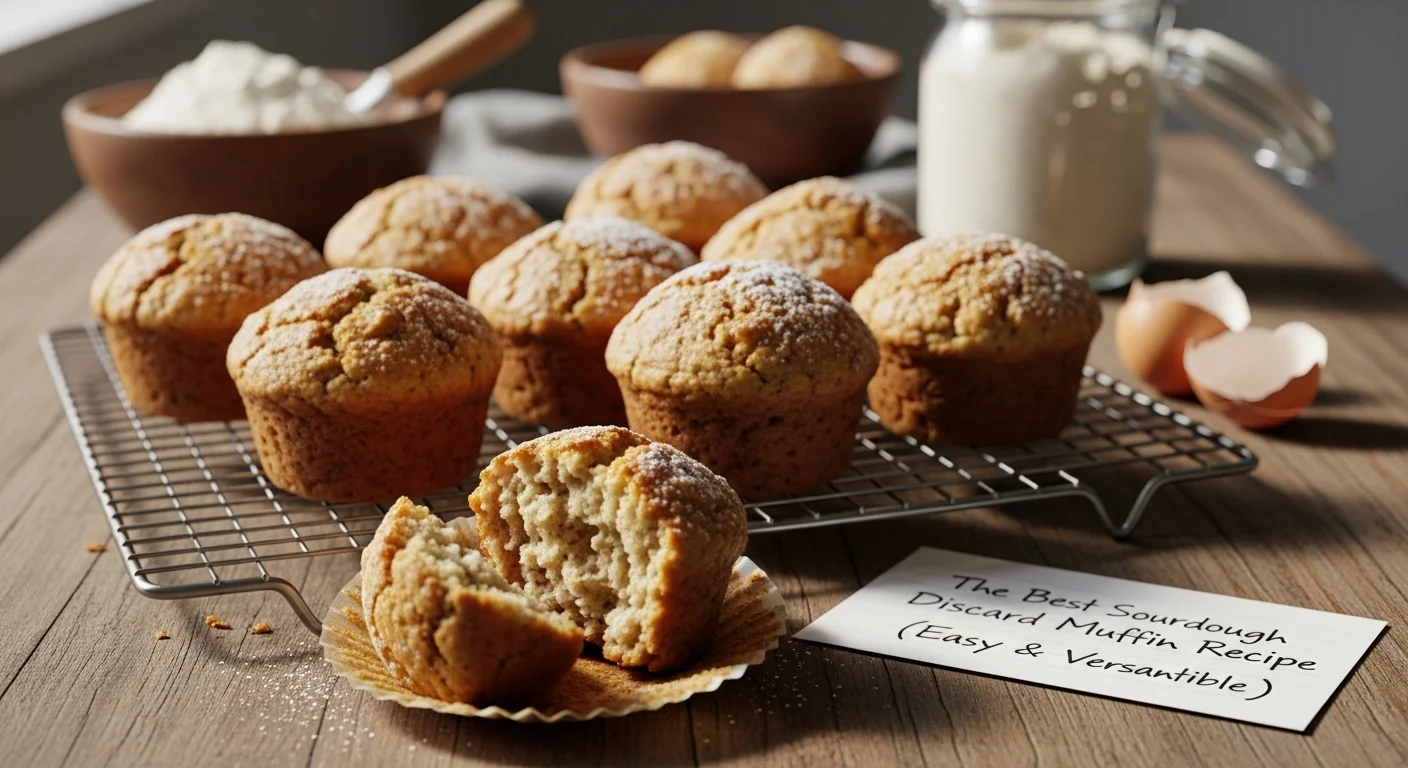
If you’re like me, you hate wasting food, especially that delicious sourdough starter we lovingly nurture. That’s why I’m excited to share my favorite sourdough discard muffin recipe—easy to make, versatile, and absolutely delightful! Read Interesting article: Fudgy Sourdough Discard Brownies (You Won’t Taste The Tang)
Understanding Sourdough Discard
What is Sourdough Discard?
Sourdough discard is the portion of your sourdough starter that you remove before feeding it with fresh flour and water. As I began my sourdough journey, I quickly realized that this “discard” didn’t have to be thrown away. Instead, it represents a treasure trove of flavor and potential! Each time I fed my starter, I would save a cup of the discard, and that’s when the real fun began. This mixture contains live yeast and bacteria, which can add a unique tangy flavor to baked goods.
Benefits of Using Sourdough Discard in Baking
Using sourdough discard in baking offers numerous benefits that I’ve come to appreciate. First and foremost, it prevents waste, which is a huge plus for me. But beyond that, it enhances the taste and texture of baked goods. The natural fermentation from the discard can lead to a light, airy muffin with a slightly tangy flavor profile that sets it apart from regular muffins. I’ve found that my muffins are not only more flavorful but also stay moist for longer, making them a great option for meal prep or grabbing a quick snack.
Another benefit is the nutritional boost. The fermentation process increases the bioavailability of nutrients, which means your body can absorb them more efficiently. When I bake with sourdough discard, I feel like I’m not just indulging in a treat but also nourishing my body. Plus, it opens the door to creativity in the kitchen! You can experiment with different flavors and ingredients, turning the simple muffin into something extraordinary. For more creative ideas, check out my Crispy Sourdough Discard Cracker Recipe (So Addictive).
How to Store Sourdough Discard Properly
Storing sourdough discard is simple, and I’d love to share how I do it. First, make sure that your discard is at room temperature, especially if you’ve just fed your starter. I typically store mine in a clean, airtight container in the refrigerator. It can last there for about a week, although I always try to use it within a few days for the best flavor and freshness.
If you find yourself with a large amount of discard and can’t use it all quickly, you can freeze it! I’ve done this many times—just pour the discard into ice cube trays or freezer-safe containers. Once frozen, I transfer the cubes to a larger bag to save space. It’s a fantastic way to have on-hand sourdough discard ready for muffins, pancakes, or any recipe that calls for it. Just remember to thaw it in the refrigerator overnight before using it in your baking adventures.
One thing I’ve learned through my sourdough journey is to keep track of how long the discard has been stored. If it starts to develop an off smell or an unusual color, it’s best to err on the side of caution and discard it. Trust your senses—if it doesn’t smell right, don’t use it. But when stored properly, it can add a delightful touch to your baking for days!
Understanding sourdough discard has transformed my baking experience. It’s not just a byproduct; it’s an ingredient that adds depth, flavor, and a bit of creativity to my kitchen. As we move on, I can’t wait to share my favorite recipe for sourdough discard muffins, where all these benefits come together beautifully!
The Best Sourdough Discard Muffin Recipe
Ingredients Needed
For me, one of the joys of baking is using simple ingredients that I usually have on hand. This sourdough discard muffin recipe is no different. Here’s what you’ll need:
- 1 cup sourdough discard (at room temperature)
- 1/2 cup milk (or your favorite dairy-free alternative)
- 1/4 cup vegetable oil (or melted butter)
- 1/2 cup sugar (I prefer brown sugar for a deeper flavor)
- 1 large egg
- 1 teaspoon vanilla extract
- 1 1/2 cups all-purpose flour (you can mix in whole wheat flour for extra nutrition)
- 1 teaspoon baking powder
- 1/2 teaspoon baking soda
- 1/2 teaspoon salt
These ingredients create a perfect base for delicious muffins. Feel free to mix and match based on your pantry’s offerings!
Equipment Required
Having the right tools makes the baking process smoother. Here’s what you’ll need:
- Mixing bowls
- Whisk or fork
- Measuring cups and spoons
- Spatula
- Muffin tin
- Parchment paper liners (optional, but they make cleanup easier)
- Oven
I find that having everything laid out makes me feel more organized and ready to bake!
Step-by-Step Instructions
Preparing the Muffin Batter
First things first, let’s get that muffin batter ready! I usually start by preheating my oven to 350°F (175°C) because I like to have everything set as I mix. In a large mixing bowl, I combine the sourdough discard, milk, oil, sugar, egg, and vanilla extract. Using a whisk or a fork, I mix these ingredients until they are well combined and smooth.
Next, in another bowl, I sift together the flour, baking powder, baking soda, and salt. I’ve noticed that sifting helps the ingredients blend better, resulting in a fluffier muffin. Gradually, I add the dry ingredients to the wet mixture, stirring gently with a spatula until just combined. It’s okay if there are a few lumps; overmixing can lead to dense muffins, and I’ve learned that less is often more!
Baking the Muffins
Once the batter is ready, I prepare my muffin tin by lining it with paper liners or greasing it lightly. I then fill each muffin cup about three-quarters full with the batter. If I’m feeling adventurous, I might sprinkle some chocolate chips or berries on top for extra flavor. After that, it’s time to pop them in the oven for about 18-20 minutes.
I always set a timer because there’s nothing worse than forgetting about your muffins! When they’re done, I use a toothpick to check for doneness; it should come out clean or with just a few crumbs attached. The aroma that fills my kitchen during baking is simply heavenly!
Cooling and Serving Tips
After baking, I take the muffins out of the oven and let them cool in the tin for about 5 minutes. Then, I transfer them to a wire rack to cool completely. This step is crucial because it helps prevent a soggy bottom. I often enjoy them warm, maybe with a smear of butter or a drizzle of honey. They make for a fantastic breakfast or snack, and I’ve even shared them with friends and family, who always ask for the recipe!
One tip I’ve found helpful is to store any leftovers in an airtight container. They last a few days at room temperature, but I recommend freezing them if I can’t finish them in time. Just pop them in the microwave for a few seconds, and they taste almost fresh out of the oven!
Variations of Sourdough Discard Muffins
Sweet Variations
Once I got the hang of the base muffin recipe, I couldn’t help but dive into experimenting with different flavors. The beauty of sourdough discard muffins is their versatility. Here are a couple of my favorite sweet variations that I think you’ll love!
Blueberry Sourdough Discard Muffins
Blueberry muffins have always been a favorite of mine. To make blueberry sourdough discard muffins, I simply add one cup of fresh or frozen blueberries to the muffin batter after mixing the wet and dry ingredients. If using frozen blueberries, I recommend tossing them in a little flour to prevent them from sinking to the bottom. The burst of sweet, juicy blueberries combined with the tangy notes from the sourdough creates a delightful treat!
Chocolate Chip Sourdough Discard Muffins
Who doesn’t love chocolate? Adding chocolate chips to the muffins is another variation I adore. I typically fold in about a cup of semi-sweet or dark chocolate chips into the batter right before pouring it into the muffin tin. It’s like having a little surprise in each bite. Sometimes, I even sprinkle a few extra chocolate chips on top before baking for that extra chocolaty goodness!
Savory Variations
While sweet muffins are great, I love to mix things up with savory options as well. These muffins are perfect for brunch or a quick snack on the go. Here are a couple of savory ideas I’ve tried and truly enjoyed!
Cheddar and Chive Sourdough Discard Muffins
For a cheesy twist, I create cheddar and chive muffins by adding one cup of shredded sharp cheddar cheese and a handful of chopped fresh chives to the batter. The cheese melts beautifully while baking, giving the muffins a rich flavor. I’ve found that these muffins pair wonderfully with a bowl of soup or as a side for breakfast. They’re savory, satisfying, and perfect for cheese lovers!
Spinach and Feta Sourdough Discard Muffins
Another savory variation that I enjoy is spinach and feta muffins. I incorporate one cup of chopped fresh spinach (or thawed frozen spinach) and half a cup of crumbled feta cheese into the batter. The combination of flavors is so delightful and makes for a great snack or light lunch option. I often serve these muffins alongside a salad for a delicious and balanced meal.
Common Questions About Sourdough Discard Muffins
Can I Use Active or Mature Sourdough Starter?
This is a question I’ve encountered quite a bit. Yes, you can use an active or mature sourdough starter for these muffins! I’ve tried it both ways—with discard and with a more active starter—and found that using an active starter can give the muffins an even lighter texture. Just remember that if your starter is very active, you might want to reduce the amount of baking powder to avoid over-leavening.
How to Adjust the Recipe for Gluten-Free Muffins?
If you’re looking to make gluten-free muffins, I recommend using a gluten-free all-purpose flour blend. My best results came from blends that contain xanthan gum, which helps mimic the elasticity of gluten. I usually substitute the all-purpose flour cup-for-cup with the gluten-free blend. Just keep an eye on the baking time, as it may vary slightly!
What to Do If Muffins Are Too Dense?
Dense muffins can be a bummer, but it’s not the end of the world. If I find my muffins are too dense, I’ve discovered a couple of tricks. First, make sure you’re not overmixing the batter! It’s okay to have a few lumps. Also, double-check that your baking powder and baking soda are fresh, as expired leavening agents can result in dense baked goods. If you’re still having issues, consider adding a touch more liquid to the batter. Sometimes a little extra moisture can lighten things up.
How Long Do Sourdough Discard Muffins Last?
These muffins are best enjoyed fresh, but they can last for a few days when stored properly. I typically keep them in an airtight container at room temperature for up to three days. If I want to keep them longer, I freeze them. When I’m ready to enjoy, I simply pop them in the microwave for a few seconds or let them thaw at room temperature. They taste almost as good as when they were fresh out of the oven!
Tips for Perfect Sourdough Discard Muffins
Choosing the Right Flour
The type of flour you choose can make a significant difference in your muffins. I usually stick to all-purpose flour, but I love mixing in whole wheat flour for added nutrition. If you decide to go this route, I suggest starting with half whole wheat and half all-purpose to see how the texture changes. You can experiment until you find the perfect combo that suits your taste!
Balancing Sweetness and Flavor
Sweetness can vary depending on personal preference, so I always taste the batter before baking. If it feels too sweet, you can reduce the sugar slightly. On the other hand, if you’re adding tart fruits like cranberries, you might want to up the sugar a bit to balance the flavors. I’ve learned that finding that sweet spot is key to delicious muffins!
Understanding Baking Times and Temperatures
Every oven is a little different, which is something I’ve had to learn the hard way. I recommend keeping an eye on your muffins as they bake, especially the first time you make them. If your oven tends to run hot, you might need to reduce the baking temperature by 25°F. Check for doneness with a toothpick—if it comes out clean or with a few crumbs, you’re good to go!
Creative Ways to Use Sourdough Discard
Other Recipes with Sourdough Discard
I’ve always believed that sourdough discard is more than just muffin material. Once I started experimenting, I found so many delightful ways to incorporate that leftover starter into my cooking. One of my favorite recipes is for sourdough discard pancakes. The process is similar to making regular pancakes, but the discard adds a lovely tang and fluffy texture. I usually mix it in with my standard pancake batter, and I can’t even begin to tell you how much my family enjoys them. They’re light, airy, and have a flavor that makes every bite feel special.
Another fun recipe I stumbled upon is sourdough discard crackers. It’s a simple way to create a crispy snack. I combine the discard with some flour, olive oil, and seasonings of my choice, roll it out thin, and bake until crispy. They are perfect for pairing with cheese or dips, and I’ve even turned them into a fun activity with my kids. We love getting creative with toppings like sesame seeds, herbs, or spices! You can find a great recipe for these crackers here.
Using Discard in Pancakes and Waffles
If you’re a pancake or waffle lover, you’re in for a treat! I can’t stress enough how well sourdough discard works in these recipes. For pancakes, I typically replace a portion of the flour in my go-to recipe with sourdough discard. The result is always deliciously fluffy pancakes that are slightly tangy. I’ve also added blueberries or chocolate chips for an extra sweet touch, and it never disappoints!
When it comes to waffles, the sourdough discard lends itself beautifully to that crispy exterior we all crave. I mix my batter just like I would for pancakes but let it sit for a bit to allow the flavors to develop. After pouring it into the waffle iron, I often top them with fresh fruit, yogurt, or maple syrup for a delightful breakfast. Trust me, once you try sourdough discard pancakes and waffles, there’s no going back!
Incorporating Discard into Bread Recipes
As I continued my sourdough journey, I discovered that I could sneak sourdough discard into other bread recipes too. When making quick breads like banana bread or zucchini bread, I usually toss in some discard. It adds a depth of flavor that enhances the overall taste. The moisture from the discard also helps keep the bread soft longer, which is a big win in my book.
Even when baking regular yeasted bread, I’ve learned to mix in some sourdough discard for an extra boost of flavor. I typically adjust the recipe slightly by reducing the amount of water to account for the moisture in the discard. It’s amazing how a little bit of that fermented goodness can elevate a simple loaf into something extraordinary!
Final Thoughts
Using sourdough discard has truly transformed my approach to baking and cooking. I’ve learned that what might seem like trash can turn into a treasure trove of flavor and creativity. From those delicious muffins to pancakes, crackers, and even bread, there’s so much potential in that little cup of leftover starter. I encourage you to get adventurous in your kitchen—experiment with flavors, adjust recipes, and make them your own. With every dish, you’ll not only reduce waste but also embark on a delicious journey full of tangy surprises. Enjoy every moment of your sourdough adventure!