
There’s nothing quite like a homemade sourdough hamburger bun. Soft, sturdy, and bursting with flavor, these buns elevate any burger to gourmet status. Let’s dive into what makes sourdough buns so special!
Understanding Sourdough Hamburger Buns
What is Sourdough?
Sourdough is a type of bread made through a natural fermentation process. Instead of using commercial yeast, it relies on wild yeast and bacteria present in the environment and flour. This starter culture is what gives sourdough its characteristic tangy flavor and chewy texture. I remember the first time I watched my sourdough starter bubble and grow; it felt like magic! It was a humble mix of flour and water, yet it transformed into something alive. The process of nurturing it became a rewarding experience, connecting me to the age-old tradition of bread-making. Read Interesting article: Sunday Meal Prep Secrets: 7 Genius Hacks for a Stress-Free Week
Benefits of Using Sourdough
One of the biggest advantages of sourdough is its health benefits. The natural fermentation breaks down gluten and phytates, making it easier to digest. I’ve found that when I eat sourdough, I don’t experience the bloating I sometimes get with regular bread. Plus, the longer fermentation process enhances the flavor, giving sourdough buns a depth that regular hamburger buns just can’t compete with. It’s not just bread; it’s a crafted experience that my taste buds truly appreciate.
Difference Between Sourdough and Regular Buns
When comparing sourdough buns to regular hamburger buns, the differences are striking. Regular buns are often soft and fluffy but can lack flavor and character. They’re usually made with commercial yeast, which results in a quicker rise but doesn’t allow for the complexity of flavors that sourdough provides. I’ve tried many types of buns, but every time I bite into a sourdough version, I’m reminded of the rich, tangy taste and the sturdy structure that holds all my favorite toppings without falling apart. The difference isn’t just in taste; it’s in the entire eating experience.
Key Characteristics of the Best Sourdough Hamburger Buns
Softness and Texture
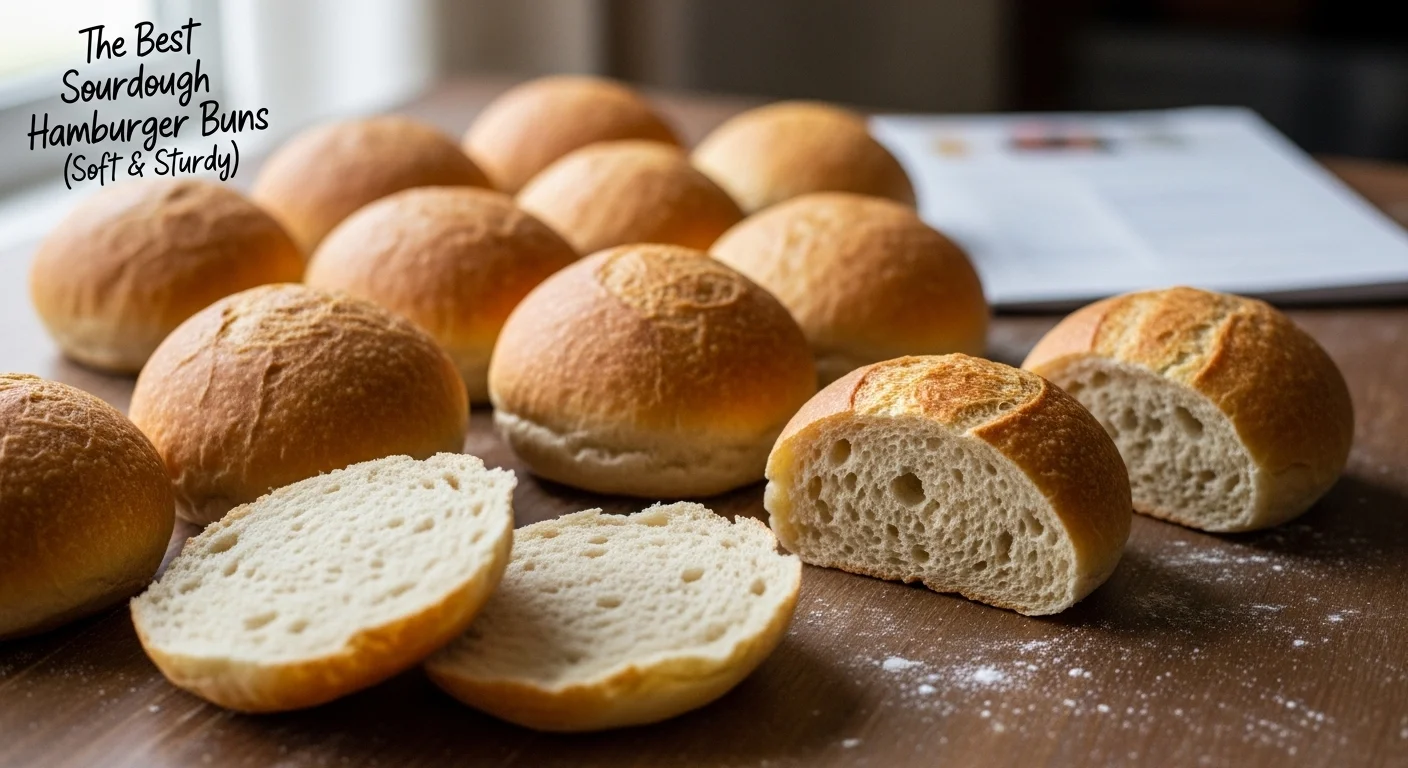
The best sourdough hamburger buns strike a balance between softness and texture. They should have a tender crumb, making them easy to bite into, yet firm enough to hold their shape. From my experience, achieving that perfect softness comes from the right combination of flour, hydration, and fermentation time. I’ve baked buns that were too dense and others that were too airy, but I found that a good hydration level (around 70% or more) really makes a difference. The result? A bun that feels light and fluffy yet has enough body to embrace a juicy burger.
Sturdiness for Holding Ingredients
Sturdiness is crucial, especially if you’re loading up your burger with all the fixings. I hate when a bun disintegrates under a mountain of toppings! The best sourdough buns hold everything together, even when stacked high. The key here is the gluten development during kneading and fermentation. I’ve learned that allowing the dough to ferment longer helps strengthen the gluten structure. When I switched to a longer fermentation approach, my buns transformed from good to absolutely great. They could handle all my favorite toppings without crumbling.
Flavor Profile
The flavor is what truly sets sourdough apart. The fermentation process creates a complex tang that is both unique and delightful. I love how a simple burger can become a gourmet meal when served on a sourdough bun. The flavor complements the meat and toppings beautifully, enhancing the overall experience. I often experiment with different types of flour, like adding a bit of whole wheat or rye, to create even more layers of flavor. Each variation is an adventure in taste!
Appearance and Crust
Let’s not forget about appearance! A great sourdough hamburger bun should have a beautiful golden crust—crunchy on the outside and soft on the inside. I’ve found that steam in the oven during baking helps create that perfect crust. When I pull a batch of buns out of the oven, the aroma fills my kitchen, and the sight of those golden brown tops makes my heart skip a beat. A well-formed bun is not only visually appealing but also promises a satisfying crunch that contrasts nicely with the soft interior. It’s all part of the experience!
Top Recipes for Sourdough Hamburger Buns
Classic Soft Sourdough Hamburger Buns
I often find myself reaching for the classic recipe when I want to impress guests or enjoy a simple, comforting burger at home. These Classic Soft Sourdough Hamburger Buns are straightforward yet yield fantastic results. To make them, I start by mixing my active sourdough starter with flour, water, and a touch of salt. The dough gets a good knead until it’s smooth, and then I let it rise until it doubles in size. After shaping the dough into buns, I let them proof again before baking. The result is a light, airy, and delicious bun that perfectly complements any burger. I remember the first time I served these—everyone was raving about how soft and flavorful they were!
Whole Wheat Sourdough Hamburger Buns
If you’re looking for something a bit healthier, Whole Wheat Sourdough Hamburger Buns are my go-to choice. They offer a nuttier flavor and added nutrients compared to their white flour counterparts. When I make these, I typically substitute about half of the all-purpose flour with whole wheat flour. The key is to adjust the hydration slightly since whole wheat flour absorbs more water. I’ve learned that letting the dough rest for a while before kneading helps to further enhance the flavor. With this recipe, I get a hearty bun that stands up beautifully to all the toppings I love, and I feel good about serving it. Read Interesting article: The Green Goddess Wrap Trend Finally Makes Sense
Gluten-Free Sourdough Hamburger Buns
For my friends who follow a gluten-free diet, I wanted to create a recipe that everyone could enjoy. Gluten-Free Sourdough Hamburger Buns are surprisingly easy to make! I use a blend of gluten-free flours, like brown rice flour and tapioca flour, combined with my sourdough starter. The texture is a little different, but I find that adding a bit of psyllium husk helps bind everything together and adds a nice chewiness. When I bake these, the aroma wafts through my home, and they never last long! It’s satisfying to see everyone enjoying a burger on a bun tailored to their dietary needs.
Herbed Sourdough Hamburger Buns
For a twist on the classic, Herbed Sourdough Hamburger Buns are a delightful option. I love adding fresh herbs like rosemary and thyme to my dough, which elevates the flavor profile significantly. The process is similar to making classic buns, but I chop up the herbs finely and mix them into the dough during the kneading stage. The blend of the sourdough tang with fragrant herbs creates a unique taste that pairs beautifully with grilled meats or veggie burgers. Every time I serve these at a barbecue, people ask for the recipe. It’s amazing how a few simple herbs can transform a bun!
Essential Ingredients for Perfect Sourdough Hamburger Buns
Sourdough Starter
Having a healthy and active sourdough starter is the cornerstone of making delicious sourdough hamburger buns. I learned that my starter needs to be fed regularly to ensure it’s bubbly and ready to use. When I bake, I usually take my starter out of the fridge a few hours before I begin and give it a couple of feedings to wake it up. It’s such a rewarding feeling to see it grow and become lively, knowing it’s going to contribute to the flavor of my buns. A well-maintained starter is like liquid gold in my kitchen!
Flour Types (Bread Flour vs. All-Purpose Flour)
The type of flour I use can significantly affect the texture and flavor of my sourdough buns. Bread flour, with its higher protein content, helps develop more gluten, making for a chewier, sturdier bun. I often mix bread flour with all-purpose flour to achieve a balance between tenderness and strength. I’ve experimented with different flour blends, and I find that a combination produces a bun that’s both soft and able to hold up under the pressure of juicy burgers and toppings. It’s all about finding that sweet spot!
Hydration Levels
Hydration levels are crucial when it comes to sourdough buns. I’ve found that a higher hydration dough (around 70% or more) gives a softer crumb, but it can be tricky to work with. I remember the first time I tried a high-hydration recipe; it felt like I was wrestling with a sticky monster! But once I got the hang of it, I noticed the amazing texture it produced. It’s all about experimenting to see what works for you, and adjusting your technique accordingly.
Additional Flavor Enhancers (Seeds, Herbs, etc.)
I love adding a little something extra to my sourdough hamburger buns. A sprinkle of sesame seeds on top gives a nice crunch and visual appeal, while mixing in herbs or spices can enhance the flavor even further. I often toss in flaxseeds or chia seeds for a nutritional boost, which also adds a lovely texture. It’s fun to play around with different ingredients to see how they change the flavor. Each batch of buns becomes a new adventure in my kitchen!
Step-by-Step Guide to Making Sourdough Hamburger Buns
Preparing the Sourdough Starter
Before diving into the bun-making process, I always ensure my sourdough starter is in its prime. I take it out of the fridge several hours before I plan to bake, feeding it with equal parts flour and water. It’s fascinating to watch it come alive, bubbling and expanding as it gets ready for action. Once it doubles in size and looks nice and frothy, I know it’s ready to be incorporated into my dough. This step sets the foundation for the flavor and texture of my buns, so I never rush it!
Dough Mixing and Kneading
Once my starter is at its peak, I combine it with flour, water, and salt in a large mixing bowl. I often use my hands to mix the ingredients because it’s a tactile experience I enjoy. As the dough comes together, I make sure it’s well mixed but not overworked at this stage. Kneading is where the magic happens; I usually knead for about 8 to 10 minutes until the dough becomes smooth and elastic. It’s satisfying to feel the dough transform under my hands, and I often find myself lost in thought during this process, thinking about all the wonderful burgers I’ll be making!
Fermentation and Proofing
This is where patience comes into play. I place the kneaded dough in a lightly oiled bowl and cover it with a damp cloth. I let it ferment for several hours at room temperature. The dough should rise and become bubbly, which is a sign that the wild yeast is working its magic. I often check on my dough every hour, feeling excited as it grows. Once it has roughly doubled in size, I know it’s ready for the next step: proofing.
Shaping the Buns
Shaping the dough into buns is one of my favorite parts of the process. I gently turn the risen dough onto a floured surface and divide it into equal portions, about 100-120 grams each for standard burger sizes. I roll each piece into a smooth ball and then flatten it slightly to form a bun shape. I’ve found that being gentle while shaping helps retain the air bubbles created during fermentation, which is vital for a light, airy texture. After shaping, I place the buns on a baking sheet lined with parchment paper, cover them, and let them proof again until they puff up nicely.
Baking Tips for the Perfect Crust
When it’s time to bake, I preheat my oven to around 425°F (220°C). To achieve that beautiful, crunchy crust I love, I always place a small pan filled with hot water at the bottom of the oven. The steam helps create a lovely crust while keeping the interior moist. Just before placing the buns in, I often brush them with an egg wash or sprinkle them with sesame seeds for added crunch and flavor. Watching them bake is one of the highlights of my day; the aroma that fills the kitchen is simply irresistible. I usually bake them for about 15-20 minutes until they are golden brown and sound hollow when tapped on the bottom. When I pull them out, I can’t help but admire my creation—it’s the perfect culmination of patience and care!
Storage and Serving Suggestions
How to Store Sourdough Hamburger Buns
After all that hard work, I want to make sure my buns stay fresh for as long as possible. I typically let them cool completely before storing. If I plan to eat them within a couple of days, I’ll place them in a paper bag at room temperature. For longer storage, I prefer freezing them. I wrap each bun tightly in plastic wrap and then place them in a zip-top bag. This way, they stay fresh for up to a month. It’s such a treat to pull out a bun from the freezer, and it feels like a little gift from my past self!
Best Ways to Reheat Sourdough Buns
I’ve tried several methods for reheating my sourdough buns, and I’ve found that the oven produces the best results. I preheat the oven to 350°F (175°C) and place the buns directly on the rack for about 5-10 minutes until they’re warm. If I want to add a bit of crunch back to the crust, I’ll lightly spritz them with water before popping them in the oven. For a quicker option, I occasionally microwave them for about 10-15 seconds, but I prefer the oven method for keeping that lovely texture intact.
Pairing Suggestions for Burgers
Now that I have my beautiful sourdough buns ready, it’s time to think about burgers! I love experimenting with different combinations. A classic beef patty topped with melted cheddar and homemade pickles is always a winner. For those who enjoy a lighter meal, a grilled chicken breast with avocado and fresh greens on a sourdough bun is delightful. I also like to whip up veggie patties for my plant-based friends, often topped with hummus and roasted red peppers. Whatever the combination, I find that the tangy flavor of the sourdough bun enhances every bite. It’s the perfect canvas for all kinds of delicious fillings! Read Interesting article: Easy Salisbury Steak (With Mushroom Gravy)
Common Mistakes to Avoid When Making Sourdough Hamburger Buns
Over-proofing the Dough
One of the common pitfalls I’ve encountered is over-proofing the dough. It can be tempting to leave it for just a bit longer, but I’ve learned that too much time can lead to a flat bun. I always keep a close eye on my dough’s rise; it should double in size but not collapse when I poke it gently.
Using the Wrong Flour Type
Choosing the right flour type is crucial. I used to think any flour would do, but I quickly learned that using only all-purpose flour can lead to a less satisfying texture. Bread flour, with its higher protein content, helps create that sturdy structure I love. Mixing in some all-purpose flour is great for balance, but I never skip on the bread flour!
Inadequate Hydration
I can’t stress enough how important hydration levels are in the dough. I remember when I first tried a low-hydration recipe; the buns turned out dry and crumbly. Higher hydration dough can be challenging to work with, but the rewards are worth it. I’ve found that adjusting my technique and being patient pays off in the end.
Not Preheating the Oven Properly
Lastly, I’ve had my share of baking mishaps from not preheating the oven adequately. A hot oven is vital for that perfect crust. I make it a point to preheat the oven for at least 30 minutes before baking. This way, I know my buns will rise beautifully and develop that golden crust I crave.
Frequently Asked Questions about Sourdough Hamburger Buns
Can I Make Sourdough Hamburger Buns Without a Starter?
While it’s possible to make buns without a sourdough starter, they won’t have that unique flavor and texture that sourdough offers. Using a starter is what gives these buns their signature tang, so I wouldn’t recommend skipping this step if you want that delicious sourdough experience!
How Long Do Sourdough Hamburger Buns Last?
When stored properly, sourdough buns can last about 2-3 days at room temperature. If you freeze them, they can last a month or even longer, but I usually consume them well before that! They never last long in my house.
Can I Freeze Sourdough Hamburger Buns?
Absolutely! Freezing is one of my favorite ways to preserve leftover buns. Just make sure they are completely cooled and wrapped tightly before placing them in the freezer. When you’re ready to enjoy them again, just follow my reheating tips to bring them back to life.
What Can I Substitute for Ingredients?
If you’re looking to modify the ingredients, there are several options. For example, you can substitute whole wheat flour for a portion of the all-purpose flour for added nutrition. If you’re in a pinch and don’t have a sourdough starter, you might try using a commercial yeast; however, the flavor will differ significantly. It’s all about experimenting and finding what works best for your taste!