
Vegan scones are a delightful treat that can be enjoyed by everyone, regardless of dietary preferences. Fluffy, light, and easy to make, they are perfect for breakfast, brunch, or a cozy afternoon snack! If you’re looking for gluten-free options, check out The Best Gluten-Free Savory Scones (Cheddar & Chive).
Understanding Vegan Scones
What are Vegan Scones?
When I first heard about vegan scones, I must admit I was skeptical. How could something so rich and buttery be made without animal products? But as I dove into the world of plant-based baking, I discovered that vegan scones are not just possible; they can be incredibly delicious! At their core, vegan scones are simply scones made without dairy or eggs. Instead, we use plant-based alternatives to achieve that perfect flaky texture and comforting flavor. It’s all about finding the right ingredients and techniques.
Key Ingredients for Vegan Scones
To create the light and fluffy texture that we all love in scones, there are a few key ingredients we need to focus on. First, flour is essential. Most recipes call for all-purpose flour, but you can use a blend of whole wheat flour for added nutrition. Next, we have plant-based butter, which is crucial for that rich taste and flaky texture. Non-dairy milk, like almond or oat milk, keeps our scones moist. Then, we have sweeteners and leaveners. A bit of sugar along with baking powder or baking soda helps our scones rise and adds a touch of sweetness. In my experience, the combination of these ingredients makes for some of the best vegan scones I’ve ever tasted! If you’re interested in trying a gluten-free version, consider The Best Gluten-Free Scones Recipe (Sweet Or Savory).
Benefits of Choosing Vegan Scones
There are so many reasons to choose vegan scones over traditional ones. For me, the biggest advantage is the health aspect. Vegan scones can be lower in cholesterol and saturated fats. Plus, they can cater to various dietary restrictions, making them a versatile option for gatherings. I’ve also found that vegan scones can be just as satisfying and flavorful as their non-vegan counterparts. They’re perfect for sharing with friends who may be on different diets, so everyone can enjoy a delicious treat together. And let’s not forget the environment! Choosing plant-based options is a step toward reduction in our carbon footprint.
Essential Ingredients for Fluffy Vegan Scones
Flour Types: All-Purpose vs. Whole Wheat
When I bake vegan scones, I often experiment with different flour types. All-purpose flour is a classic choice because it gives a light, fluffy texture. However, whole wheat flour adds a nutty flavor and a bit more fiber. I usually do a mix of both for my scones. It’s amazing how a simple switch in flour can transform the final product! You might want to try it out yourself to find your perfect balance.
Plant-Based Butter Options
Choosing the right plant-based butter can make all the difference in your scone-making experience. I’ve tried various brands, and I feel that the ones that are closest to traditional butter in texture and flavor yield the best results. Look for ones that are specifically labeled for baking. If you’re feeling adventurous, you can even make your own by blending coconut oil with a bit of olive oil. It adds a unique flavor that I’ve really enjoyed in my vegan scones.
Non-Dairy Milk Choices
For non-dairy milk, I’ve found that almond milk provides a nice flavor without being overpowering. However, oat milk is creamier and can add a wonderful richness to the scones. I remember the first time I used oat milk; it made my scones so moist and tender! I highly recommend experimenting with different non-dairy milks to see which one you prefer. Just make sure you’re using an unsweetened variety to control the sweetness level in your scones.
Sweeteners: Sugar vs. Natural Alternatives
When it comes to sweetening my vegan scones, I tend to stick with organic cane sugar for its simplicity. However, I’ve also experimented with maple syrup and agave nectar, which can give a nice depth of flavor. If you’re looking for a healthier option, coconut sugar is another great alternative; it has a lovely caramel-like taste that can elevate your scones. I believe the key is to find a sweetener that complements the other flavors in your scone.
Leavening Agents: Baking Powder and Baking Soda
Finally, let’s talk about leavening agents. I always use baking powder in my scone recipes, as it gives the dough that necessary lift. Sometimes, I’ll add a pinch of baking soda too, especially if I’m using an acidic ingredient like lemon juice or vinegar. The combination helps create that fluffy texture we all desire. I learned to not skip this step, as it truly makes a difference!
Basic Vegan Scone Recipe
Step-by-Step Instructions
Now that we’ve chatted about the essential ingredients, I’m excited to share a basic vegan scone recipe that I love! It’s super simple and absolutely delicious. Here’s how I do it:
- Preheat your oven: I always start by preheating my oven to 400°F (200°C). This gets the oven nice and hot, which is essential for those fluffy scones.
- Mix dry ingredients: In a large bowl, I combine 2 cups of all-purpose flour, 1 tablespoon of baking powder, and a pinch of salt. For extra flavor, I sometimes add a tablespoon of sugar.
- Add plant-based butter: Next, I take 1/2 cup of cold plant-based butter and cut it into the flour mixture. I usually use my fingers to crumble it together until it looks like coarse crumbs. It’s messy but fun!
- Incorporate wet ingredients: In a separate bowl, I mix 3/4 cup of non-dairy milk and 1 teaspoon of vanilla extract. I pour this mixture into the dry ingredients and stir until just combined. Remember not to overmix; it’s okay if there are a few lumps!
- Shape the dough: On a lightly floured surface, I gently knead the dough a couple of times and then pat it into a circle about 1-inch thick. Using a knife, I cut it into 8 wedges.
- Bake the scones: I place the scones on a baking sheet lined with parchment paper and bake them for about 15-20 minutes, or until they’re golden brown on top. The aroma in my kitchen is just heavenly during this time!
- Cool and enjoy: Once baked, I let them cool for a few minutes before digging in. They’re best served warm with a bit of jam or a spread of your choice.
Common Mistakes to Avoid
From my experience, there are a few common mistakes that can make or break your scone-making journey. Here’s what I’ve learned:
- Overmixing the dough: I’ve been there, and trust me, overmixing leads to tough scones. Mix just until combined for that perfect flaky texture.
- Not using cold ingredients: Cold plant-based butter and milk help create that desirable flaky texture. I make sure to keep my butter in the fridge until I’m ready to use it.
- Skipping the baking powder: This is a crucial ingredient for lift. I always double-check that my baking powder is fresh before starting.
- Not preheating the oven: I’ve been guilty of forgetting this step. Baking scones in a properly preheated oven ensures they rise nicely.
- Cutting the scones too small: I prefer my scones to be a decent size, so I cut them into wedges that are about 1-inch thick. This helps them stay moist in the center while browning on the outside.
Flavor Variations for Vegan Scones
Fruit-Infused Scones: Blueberry, Raspberry, and More
One of my favorite ways to enjoy vegan scones is by adding fruit! Blueberries and raspberries are my go-to choices. When I add them, I toss them in a little flour before folding them into the dough. This helps prevent them from sinking, and the burst of fruitiness in each bite is just delightful! I often make a batch of blueberry scones, and they disappear within minutes.
Herb and Savory Options: Rosemary, Thyme, and Cheese
If you’re feeling adventurous, why not try savory scones? I’ve made them with fresh rosemary or thyme, and they pair beautifully with soups or salads. Sometimes, I’ll add a sprinkle of vegan cheese for an extra layer of flavor. These savory scones are perfect for a brunch gathering or as a side for dinner.
Chocolate Chip Vegan Scones
For those of us who have a sweet tooth, chocolate chip vegan scones are a must! I’ve found that using dairy-free chocolate chips adds that indulgent touch. I like to mix them in gently so they’re evenly distributed throughout the dough. The warm chocolate melting in a freshly baked scone is pure bliss!
Spiced Pumpkin Scones for Fall
When autumn rolls around, I can’t resist making spiced pumpkin scones. I incorporate pumpkin puree and a mix of warm spices like cinnamon, nutmeg, and ginger. The result is a cozy treat that pairs perfectly with a cup of chai or coffee. I remember the first time I made these; they were gone within hours, and my friends still ask for the recipe!
Serving Suggestions for Vegan Scones
Best Accompaniments: Spreads and Jams
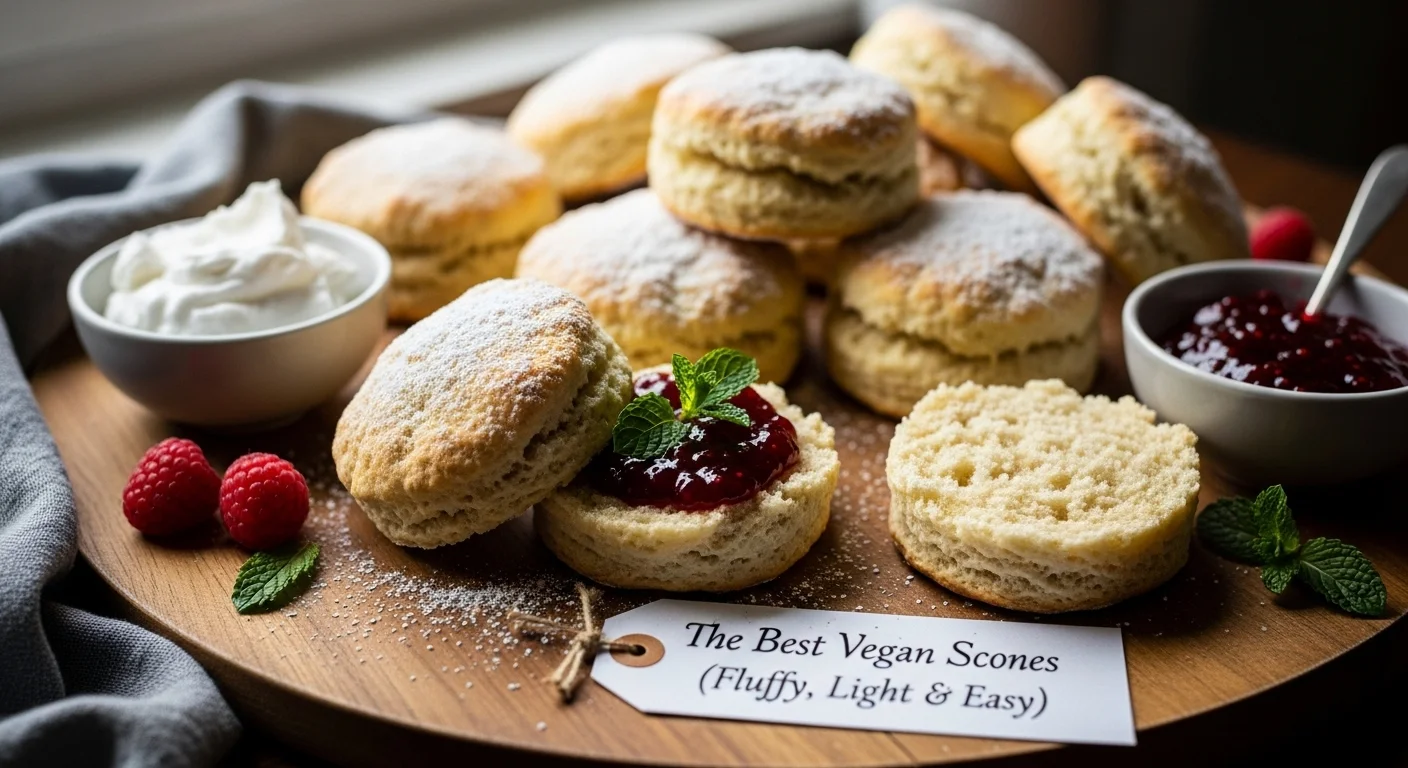
When it comes to enjoying vegan scones, I love to think about the perfect accompaniments! One of my very favorites is a generous spread of vegan butter. It melts beautifully on warm scones, adding that rich, creamy texture we all crave. I also adore fruit jams, especially homemade ones. My go-to is raspberry jam, but I’ve also enjoyed apricot and even citrus marmalade. The sweetness and tartness from the jam complement the scones so well! If you’re in the mood for something different, a drizzle of maple syrup can be a delightful touch, adding a unique twist to your flavor experience.
Pairing Vegan Scones with Beverages
Now, let’s not forget about drinks! I personally find that vegan scones pair wonderfully with a hot cup of tea. Earl Grey or chai are my top picks, as their aromatic flavors really enhance the overall experience. If you’re more of a coffee lover, a rich espresso or a creamy oat milk latte can create a delightful balance with the sweetness of the scones. I remember a cozy afternoon spent with a friend where we savored scones alongside herbal tea, and it felt so comforting. You could also serve them with fresh fruit-infused water for a refreshing option that cleanses the palate!
Storing and Reheating Vegan Scones
How to Store Scones for Freshness
After baking a batch of scones, I want to make sure they stay fresh for as long as possible. I usually let them cool completely before storing. Once cooled, I place them in an airtight container at room temperature if I plan to eat them within a couple of days. For longer storage, I recommend freezing them. I wrap each scone individually in plastic wrap, then place them in a freezer bag. This way, I can pull out as many as I want without worrying about freezer burn. I often find myself reaching for a scone from the freezer on busy mornings—it’s a treat that makes my day feel special!
Best Ways to Reheat Scones
When it’s time to enjoy some of those stored scones, I have a couple of favorite reheating methods. If I’m in a hurry, I pop them in the microwave for about 15-20 seconds. This warms them up nicely, but I find they lose a bit of their texture that way. For my preferred method, I use the oven. I preheat it to 350°F (175°C) and place the scones on a baking sheet for about 10 minutes. This method brings back their lovely crispness on the outside while keeping them soft and warm inside. I love the aroma that fills the kitchen during this time—it’s like a warm hug!
Frequently Asked Questions About Vegan Scones
Can I Substitute Ingredients in the Recipe?
Absolutely! One of the joys of baking is experimenting with substitutions. I’ve often switched out all-purpose flour for gluten-free flour blends, and it worked out wonderfully. If you don’t have plant-based butter, you might try using coconut oil or even applesauce for a lighter option. I’ve found that each substitution can yield different textures and flavors, so it’s fun to discover what works for your taste!
How Do Vegan Scones Compare to Traditional Scones?
In my opinion, vegan scones can be just as fluffy and delicious as traditional ones! The main difference lies in the ingredients, but when done right, I honestly believe you won’t notice a huge difference in taste or texture. I’ve served vegan scones to friends who didn’t even realize they were plant-based until I told them! It really comes down to using quality ingredients and techniques.
Are Vegan Scones Healthy?
That’s a great question! While vegan scones can be lower in saturated fat and cholesterol since they don’t contain dairy, the healthiness can depend on the ingredients you choose. Using whole grain flours and natural sweeteners can boost the nutritional profile. For me, while they can be a treat, I enjoy them in moderation as part of a balanced diet. They’re definitely a healthier option compared to many traditional scones, especially when you consider how you can customize them with fruits and nuts!
Final Thoughts
Reflecting on my journey with vegan scones, I can’t help but feel grateful for the delicious discoveries I’ve made along the way. It’s truly remarkable how something that once seemed so foreign to me has become a staple in my kitchen. I’ve found that baking vegan scones is not just about creating a tasty treat; it’s also about embracing creativity and exploring new flavors. Whether it’s the burst of fresh blueberries or the warmth of pumpkin spice, each batch tells a story and adds joy to my day.
What I love most is how versatile vegan scones can be. From sweet to savory, I’ve had so much fun experimenting with different flavor combinations. Each variation allows me to cater to different preferences, making it easy to share with family and friends. I remember hosting a brunch where I offered a selection of scones—each unique and bursting with flavor. It was heartwarming to see everyone enjoying them, regardless of their dietary choices.
As we navigate our diets and lifestyles, I believe there’s always room for plant-based options like vegan scones. They serve as a reminder that indulgence doesn’t have to come at the expense of health or ethics. I feel empowered knowing that I can whip up something delightful that aligns with my values while still satisfying my sweet tooth.
If you’re just starting your vegan baking adventure or if you’re a seasoned pro, I encourage you to try making vegan scones. Don’t hesitate to play around with ingredients and flavors. You might just stumble upon your new favorite recipe. Trust me; the smell of freshly baked scones wafting through your home is worth every bit of effort you put in. So grab your apron, gather those ingredients, and start baking! You won’t regret it.
In the end, it’s all about enjoying the process and sharing the love. I hope that every bite of your vegan scones brings you as much joy as they do for me. Happy baking!
Frequently Asked Questions
What are Vegan Scones?
Vegan scones are scones made without dairy or eggs, utilizing plant-based alternatives to achieve a flaky texture and comforting flavor. They can be delicious and satisfying for everyone, regardless of dietary preferences.
What are the key ingredients for making Vegan Scones?
The key ingredients for vegan scones include all-purpose flour (or a mix of whole wheat flour), plant-based butter, non-dairy milk (such as almond or oat milk), sweeteners like sugar, and leaveners such as baking powder or baking soda.
What are the benefits of choosing Vegan Scones?
Vegan scones can be lower in cholesterol and saturated fats, cater to various dietary restrictions, and are just as satisfying and flavorful as traditional scones. Additionally, choosing plant-based options helps reduce our carbon footprint.
How do I prevent my Vegan Scones from being tough?
To prevent tough scones, avoid overmixing the dough, ensure to use cold ingredients, and don’t skip the baking powder. Additionally, preheating the oven is essential for proper rising.
What are some common mistakes to avoid when making Vegan Scones?
Common mistakes include overmixing the dough, not using cold ingredients, skipping the baking powder, neglecting to preheat the oven, and cutting the scones too small.
Can I customize the flavor of Vegan Scones?
Yes! You can customize vegan scones with various flavors such as fruits (e.g., blueberries, raspberries), herbs (e.g., rosemary, thyme), chocolate chips, or spices (e.g., pumpkin spice) to create unique variations.
What are the best accompaniments for Vegan Scones?
Vegan scones pair wonderfully with vegan butter, fruit jams (like raspberry), or a drizzle of maple syrup. They also go well with beverages such as tea (Earl Grey or chai) and coffee (espresso or oat milk latte).
How should I store Vegan Scones for freshness?
After baking, allow the scones to cool completely and store them in an airtight container at room temperature for a couple of days. For longer storage, wrap individual scones in plastic wrap and place them in a freezer bag to prevent freezer burn.
What is the best way to reheat Vegan Scones?
The best way to reheat vegan scones is to preheat the oven to 350°F (175°C) and place the scones on a baking sheet for about 10 minutes. Alternatively, you can microwave them for 15-20 seconds, though this may affect their texture.
Are Vegan Scones healthy?
Vegan scones can be a healthier option compared to traditional scones as they are typically lower in saturated fat and cholesterol. The healthiness depends on the ingredients used, such as whole grain flours and natural sweeteners.
“`