
Making sourdough bread doesn’t have to be complicated or time-consuming. With the no-knead method, anyone can create a delicious loaf at home with minimal effort and a little patience.
Understanding No-Knead Sourdough Bread
What is No-Knead Bread?
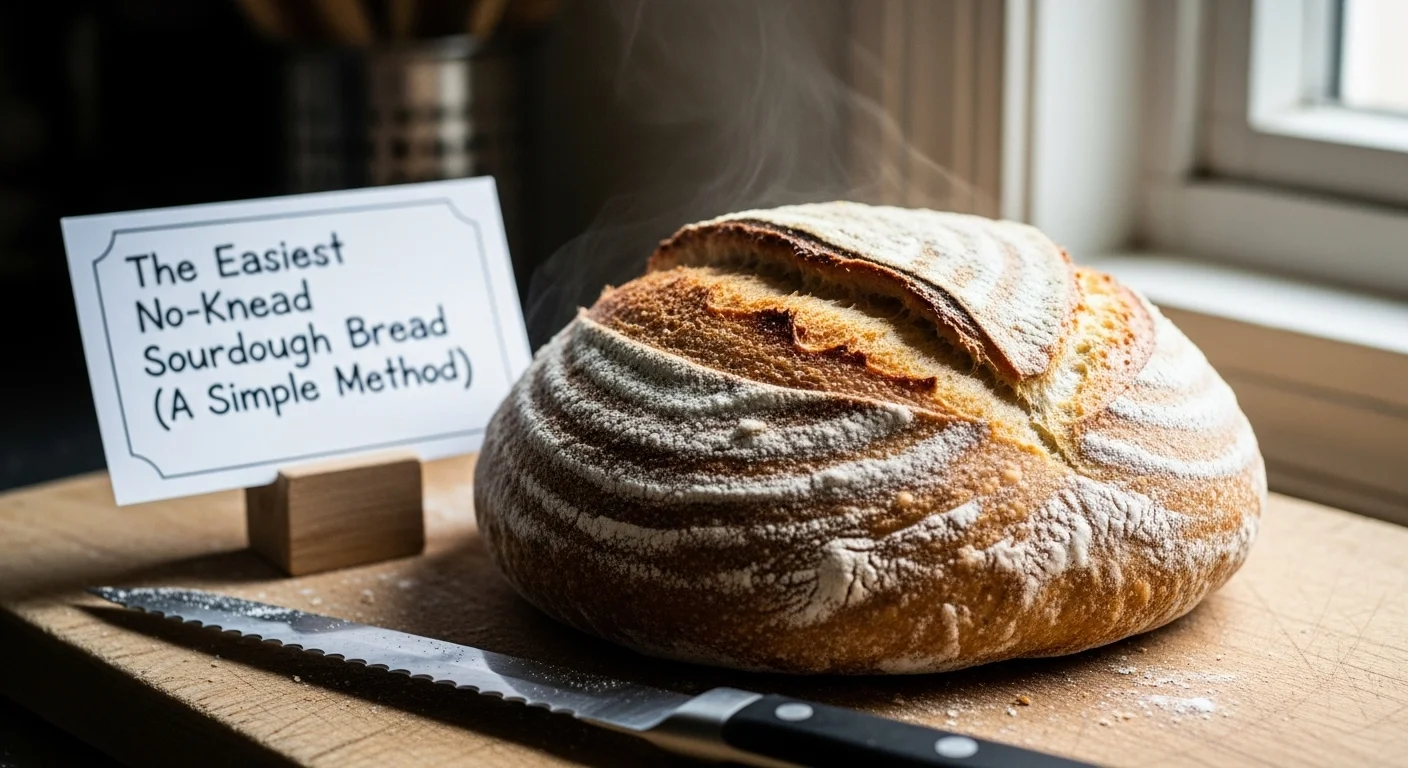
No-knead bread is a method of making bread that allows you to enjoy the art of bread-making without the labor-intensive process of kneading. Instead of traditional kneading, this method relies on time and a proper fermentation process to develop gluten in the dough. I first came across this approach during a baking class, and I was amazed at how simple it was. The key is a long fermentation period, which allows the dough to rise and develop flavor naturally. It’s a game-changer for anyone who loves fresh bread but feels intimidated by the traditional methods.
Benefits of No-Knead Sourdough
There are so many reasons why I love the no-knead sourdough method. First and foremost, it’s incredibly forgiving. If you’ve ever found yourself busy and unable to spend hours in the kitchen, this method works with your schedule. The long fermentation time allows the yeast and bacteria in the sourdough starter to work their magic, giving you bread with a rich flavor and chewy texture without the need for constant attention.
Another benefit is the simplicity of the ingredients. I appreciate that no-knead bread requires just a few staples: flour, water, salt, and your sourdough starter. This means I can whip up a batch without needing to run to the store for fancy ingredients. Plus, the long fermentation process enhances the bread’s nutritional value, making it easier to digest and providing a unique, tangy flavor. Easy No-Knead Sourdough Focaccia (Beginner Friendly) is a great way to explore this method further!
Difference Between Kneaded and No-Knead Bread
For a long time, I thought kneading was an essential step in bread-making. I learned that it is primarily used to develop gluten, which gives bread its structure. Traditional kneaded bread requires physically working the dough until it becomes smooth and elastic. In contrast, no-knead bread utilizes time to achieve the same results. I feel that this method is perfect for busy bakers like myself who might not have the time or energy to knead dough for 10-15 minutes.
Additionally, the no-knead method produces a different texture. I’ve noticed that no-knead bread often has a more open crumb structure, which is delightful to bite into. The crust tends to be thicker and crunchier, creating that perfect contrast with the soft interior. It’s truly a wonderful experience to make and eat this bread.
Essential Ingredients for No-Knead Sourdough Bread
Flour Types: Bread Flour vs. All-Purpose Flour
When it comes to flour, I’ve experimented with both bread flour and all-purpose flour for my no-knead sourdough. Bread flour has a higher protein content, which helps develop more gluten and gives the bread a chewier texture. On the other hand, all-purpose flour works well too, especially for those who may not have bread flour on hand. I’ve found that using a blend of both can yield delicious results, balancing chewiness and softness perfectly.
The Role of Water in Sourdough
Water is another crucial ingredient in no-knead sourdough bread. The hydration level of the dough can significantly affect the final product. Typically, I use about 75% hydration, meaning that for every 100 grams of flour, I’ll use 75 grams of water. This higher hydration helps create that lovely open crumb structure and enhances the bread’s flavor. However, if you’re new to baking, starting with a slightly lower hydration level might make it easier to handle the dough.
Understanding Sourdough Starter
Your sourdough starter is the heart of this bread. It’s a mixture of flour and water that has fermented with wild yeast and bacteria. When I began my sourdough journey, I was amazed at how I could cultivate this living culture. It does take time and a bit of care, but it’s worth it! A healthy starter will provide the leavening power needed for your bread to rise and develop that characteristic tangy flavor.
Salt: Importance and Quantity
Salt plays an essential role in bread-making, not only for flavor but also for controlling fermentation. I typically use about 1.5% salt relative to the flour weight. This might seem like a small amount, but it enhances the overall taste of the bread and slows down yeast activity, allowing for better flavor development during fermentation. Just be sure to mix it in thoroughly with the flour so that it evenly distributes throughout the dough.
Step-by-Step Guide to Making No-Knead Sourdough Bread
Gathering Your Ingredients
Before diving into the bread-making process, I find it helpful to gather all my ingredients and tools. This way, everything is within reach, and I can focus solely on creating my loaf. For my no-knead sourdough, I typically need:
- Flour (either bread flour, all-purpose flour, or a blend)
- Water (preferably filtered or at room temperature)
- Active sourdough starter
- Salt
Additionally, having a large mixing bowl, a spatula, a kitchen scale for precise measurements, and a Dutch oven or a baking stone for baking will make the process smoother. I remember the first time I made bread; I had to hunt for my scale and mixing bowl, which added unnecessary stress. Now, I keep everything organized and ready to go!
Mixing the Dough
The mixing process is one of my favorite parts. I start by measuring out the flour and water into my mixing bowl. I usually go for a 1:1 ratio of starter to flour by weight, which helps create that perfect fermentation environment. For example, if I use 500 grams of flour, I’ll add 375 grams of water and 125 grams of my active starter.
Next, I sprinkle the salt over the flour and water, gently folding everything together with a spatula or my hands until it’s fully combined. The dough may seem a bit shaggy at first, but that’s completely normal. I love how it feels in my hands, slightly sticky but full of potential. I make sure to incorporate all the flour from the sides of the bowl, as this ensures an even mixture.
Fermentation Process: Bulk Rise
After mixing, it’s time for the bulk rise. I cover my bowl with a clean kitchen towel or plastic wrap and let it sit at room temperature. This is where the magic happens! During this time, the yeast in my sourdough starter starts to ferment the dough, creating air pockets and developing flavor.
Depending on the temperature of my kitchen, this process usually takes about 12 to 18 hours. I typically do this overnight, allowing me to wake up to a beautifully risen dough. I remember one time I woke up and could hardly believe how much my dough had puffed up! It was such a satisfying sight. I recommend checking your dough after about 8 hours to see how it’s progressing, especially if you’re in a warmer environment.
Shaping the Dough
After the bulk rise, it’s time to shape the dough. I lightly flour my work surface and gently turn the dough out, being careful not to deflate it too much. I love this step because it feels like I’m molding something special. I gently stretch the dough into a rectangle and then fold it over itself a couple of times to create tension.
Once I’ve shaped it into a round, I place it seam-side down on a piece of parchment paper. This makes for easy transfer to my Dutch oven later. I’ve learned that shaping is an art in itself, and with practice, I’ve gotten better at creating a nice tight surface on the dough.
Final Proofing
Now that my dough is shaped, it needs one last proof before baking. I cover it again with a towel and let it rise for about 1 to 2 hours. During this time, I heat my oven to around 450°F (232°C) and place my Dutch oven inside to preheat. I find that preheating helps create a steamy environment that encourages a beautiful rise and crust.
When the dough is ready, it should feel puffy to the touch. I remember the first time I forgot about my dough, and it ended up over-proofing—resulting in a flat loaf. Now, I set a timer to keep track, and I can say the reward of a perfectly proofed loaf is worth it!
Baking Techniques and Tips
Once my dough has proofed, I use a sharp knife or a razor blade to score the top. This allows steam to escape and gives my loaf a beautiful pattern. Carefully, I lift the parchment paper with the dough and place it into the hot Dutch oven. I cover it with the lid and pop it into the oven. I usually bake it covered for the first 30 minutes to trap steam, then remove the lid for the remaining 15-20 minutes to develop a golden crust.
I love peeking through the oven door to watch my bread rise and turn golden brown. The aroma that fills my kitchen is simply irresistible! After about 45 minutes, I carefully remove the bread and let it cool on a wire rack. This step is crucial, as cutting too soon can result in a gummy interior. I can hardly wait to slice into it and enjoy the fruits of my labor.
Common Issues and Troubleshooting
Why is My Bread Dense?
One of the most common issues I’ve encountered while making no-knead sourdough is ending up with a dense loaf. It can be disheartening, especially after putting in all that time and effort. From my experience, a dense bread often results from insufficient fermentation. If the dough hasn’t had enough time to rise, the yeast won’t create those lovely air pockets that make bread light and airy.
Another reason could be the quality or activity level of your sourdough starter. I learned that a sluggish starter may not provide enough leavening power. Ensuring your starter is bubbly and active before you begin mixing your dough is crucial. If I’m not sure about my starter’s health, I do a quick “float test” by dropping a spoonful of it into a glass of water. If it floats, it’s good to go!
Crust Issues: Too Hard or Too Soft
I remember the first time my bread came out with a crust that was almost like a rock. It was tough to cut through, and I was left wondering what went wrong. From what I’ve learned, a crust that’s too hard can happen if the oven temperature is too high or if the bread was baked for too long. I’ve found that keeping an eye on the baking time and adjusting my oven temperature can help achieve that perfect balance.
On the flip side, if your crust comes out too soft, it might be because there wasn’t enough steam during baking. I love using a Dutch oven because it traps steam, but if I ever bake without one, I’ll toss a pan of water into the oven to create that steamy environment. It’s a simple trick that makes a huge difference!
Flavor Problems: Under- or Over- Fermented
Flavor is one of the most rewarding aspects of baking sourdough, but it can also be a tricky thing to master. I’ve had my share of loaves that were either under- or over-fermented. If your bread tastes bland, it could mean it didn’t ferment long enough. I recommend giving it that extra time and ensuring your kitchen is at a comfortable temperature for fermentation. A warm, cozy spot is ideal!
On the other hand, if you notice a sour flavor that’s overpowering, it’s likely over-fermented. I’ve learned that keeping a close eye on the dough during the bulk rise and final proofing can help. Trust your instincts! If it looks puffy and bubbly, it’s probably ready to bake. If it starts to collapse, it’s time to bake.
How to Achieve the Perfect Crumb Texture
Getting that ideal crumb texture has been one of my greatest joys in baking no-knead sourdough. A perfect crumb should be light and airy, with irregular holes throughout. I’ve found that several factors play a role in achieving this texture. Firstly, the hydration level is key. The higher the hydration, the more open the crumb can be. If you’ve got the courage to experiment, try increasing the water slightly in your recipe.
Another tip I’ve found helpful is to be gentle during the shaping process. It’s easy to deflate the dough too much, which can lead to a denser crumb. I try to handle the dough with care, preserving those air pockets. And don’t forget the importance of a good scoring technique! Scoring allows for proper expansion in the oven, contributing to a nice rise and beautiful crumb structure.
Storing and Serving No-Knead Sourdough Bread
Best Practices for Storing Bread
Once I’ve successfully baked my no-knead sourdough, I want to ensure it stays fresh for as long as possible. I’ve learned that the way I store it can significantly affect its longevity. For short-term storage, I typically leave it out on the counter, wrapped in a clean kitchen towel or in a paper bag. This helps maintain its crust while preventing it from becoming too soft.
If I want to keep my bread longer, I slice it and place it in a resealable plastic bag or airtight container. However, I make sure to remove as much air as possible to prevent it from getting stale. Freezing is also a great option! I’ll wrap the whole loaf or slices in plastic wrap and then in aluminum foil before placing them in the freezer. It’s always nice to have some homemade bread on hand for those busy days!
How to Reheat Sourdough Bread
There’s nothing quite like the smell of freshly baked bread, and sometimes I find myself wanting to enjoy that experience even after a few days. Reheating sourdough bread can bring back that crusty exterior and soft interior. I usually preheat my oven to about 350°F (175°C) and place the bread, wrapped in foil, directly on the oven rack for about 10-15 minutes. This method helps restore that crunchy crust while warming the inside perfectly.
If I’m dealing with just a slice, I often use a toaster. A quick toast can revive the flavors and textures, making it feel almost fresh-baked again!
Serving Suggestions: Pairings and Recipes
Sourdough bread is incredibly versatile, and I love experimenting with different toppings and pairings. One of my favorite ways to enjoy it is with a simple spread of butter and a sprinkle of sea salt. It’s a classic for a reason! I also find that sourdough pairs beautifully with soups and stews, perfect for dipping.
If I’m feeling adventurous, I might whip up some homemade bruschetta by topping slices of toasted sourdough with diced tomatoes, basil, garlic, and a drizzle of balsamic vinegar. It’s a hit at gatherings! The Only Balsamic Vinaigrette Recipe You’ll Ever Need is a great addition to elevate your bread dishes. And let’s not forget about sandwiches—sourdough makes a fantastic base for grilled cheese or any favorite deli meats. The possibilities are endless, and I love discovering new ways to enjoy my homemade bread!
Frequently Asked Questions
What is no-knead bread?
No-knead bread is a method of making bread that allows you to enjoy bread-making without kneading. It relies on a long fermentation period to develop gluten in the dough, resulting in rich flavor and texture without constant attention.
What are the benefits of making no-knead sourdough?
The benefits include its forgiving nature, the simplicity of ingredients (flour, water, salt, and sourdough starter), and enhanced nutritional value due to the long fermentation process, making it easier to digest and providing a unique flavor.
How does no-knead bread differ from traditional kneaded bread?
No-knead bread uses time instead of physical kneading to develop gluten, resulting in a different texture with a more open crumb structure and a thicker, crunchier crust compared to traditional kneaded bread.
What types of flour can be used for no-knead sourdough?
You can use either bread flour, which has a higher protein content for chewiness, or all-purpose flour. A blend of both can also yield delicious results, balancing chewiness and softness.
What is the importance of hydration in no-knead sourdough?
The hydration level significantly affects the final product. A typical hydration level is about 75%, which helps create an open crumb structure and enhances flavor. Beginners may start with a slightly lower hydration for easier handling.
What is a sourdough starter, and why is it important?
A sourdough starter is a mixture of flour and water that has fermented with wild yeast and bacteria. It provides the leavening power needed for the bread to rise and develops the characteristic tangy flavor of sourdough.
How should I shape the dough after the bulk rise?
After the bulk rise, lightly flour your work surface and gently turn the dough out. Stretch it into a rectangle, fold it over itself to create tension, and shape it into a round before placing it seam-side down on parchment paper.
What common issues can occur when baking no-knead sourdough?
Common issues include dense bread due to insufficient fermentation or a sluggish starter, hard crust from too high oven temperature or overbaking, and flavor problems from under- or over-fermentation.
What are the best practices for storing no-knead sourdough bread?
For short-term storage, leave the bread on the counter wrapped in a kitchen towel or paper bag. For longer storage, slice it and place it in a resealable bag or airtight container, removing as much air as possible. Freezing is also an option.
How can I reheat sourdough bread to restore its freshness?
To reheat sourdough bread, preheat your oven to 350°F (175°C), wrap the bread in foil, and heat for about 10-15 minutes. For slices, using a toaster can quickly revive the flavors and textures.
Read Interesting article: I Tried the Internet’s Favorite Chicken Pot Pie Hack