
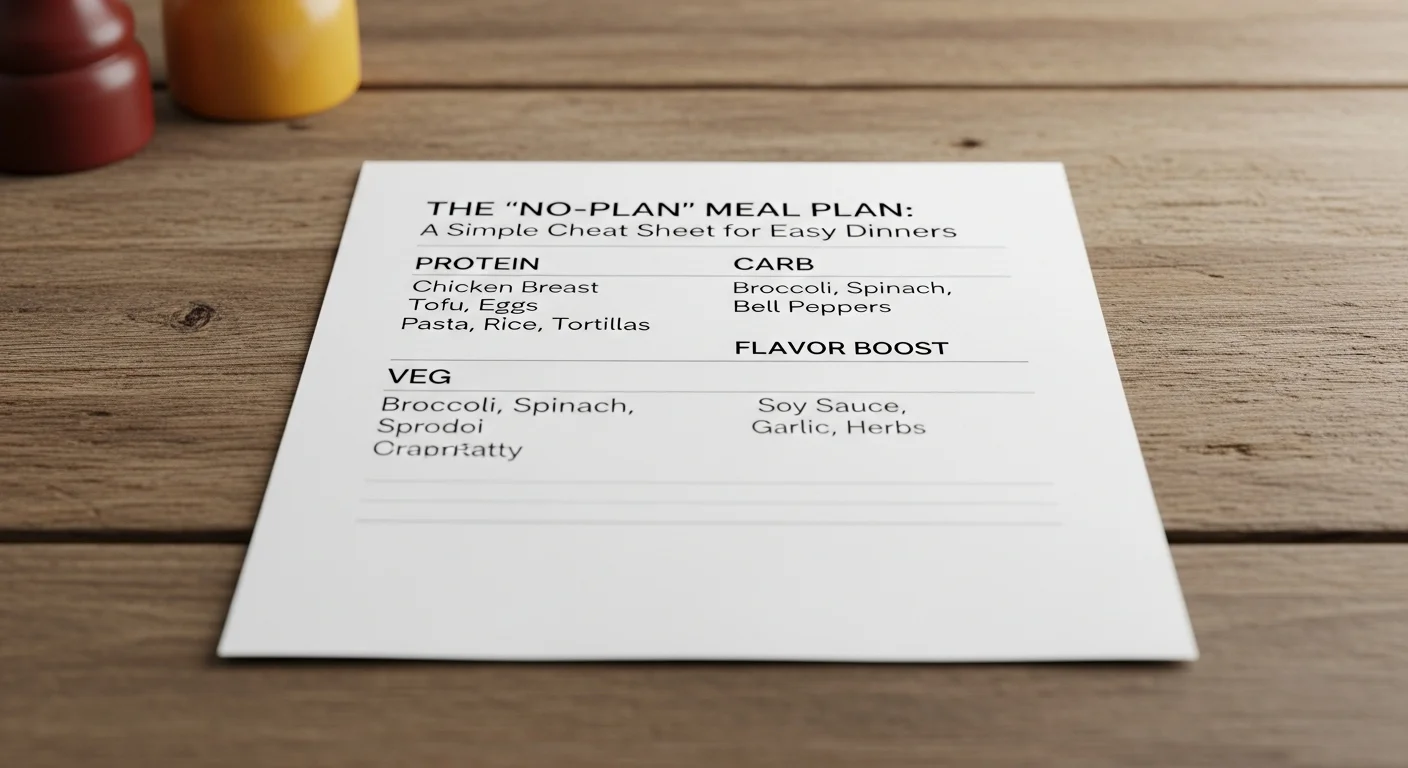
Life can get hectic, and the last thing I want to worry about is what to make for dinner. Enter the “No-Plan” meal plan—a simple cheat sheet that frees me from the stress of daily meal prep while still delivering delicious dinners.
Understanding the “No-Plan” Meal Plan
When I first heard about the “No-Plan” meal plan, I thought it sounded too good to be true. How could I possibly manage my dinners without a structured plan? But diving into it revealed a refreshing approach to meals that not only simplified my life but also made cooking more enjoyable. The essence of this plan lies in flexibility and creativity, allowing me to work with what I have on hand instead of adhering to a strict menu.
Why I Chose the “No-Plan” Approach
As someone who often juggles multiple responsibilities—work, family, and social commitments—I found that traditional meal planning was becoming burdensome. Each week, I would spend hours crafting an elaborate menu, creating grocery lists, and then inevitably find myself scrambling when plans changed or ingredients went bad. I realized I needed a more adaptable strategy that still allowed for wholesome, home-cooked meals without the stress of rigid planning.
The “No-Plan” meal plan allows me to embrace spontaneity. Instead of sticking to a pre-decided recipe, I began to stock my pantry with versatile staples that I could combine in various ways, leading to a treasure trove of easy dinner options. This approach not only reduces food waste but also encourages me to be more resourceful in the kitchen.
The Core Components of the “No-Plan” Meal Plan
At the heart of the “No-Plan” meal plan are a few core components that I rely on to make my dinners both simple and satisfying. Here’s a breakdown of what I incorporate into my kitchen routine:
1. Stocking Versatile Staples
To make the “No-Plan” meal plan work, I focus on stocking my pantry with a variety of versatile staples. This includes:
- Pasta and Grains: I always keep different types of pasta, rice, quinoa, and couscous on hand. These can serve as the base for countless meals.
- Canned Goods: Canned beans, tomatoes, and vegetables are my lifesavers. They offer a quick punch of nutrition and flavor without requiring much prep.
- Frozen Produce: I love having a selection of frozen vegetables and fruits ready to go. They’re perfect for adding color and nutrients to any dish.
- Proteins: I keep a variety of proteins in the freezer, such as chicken breasts, fish fillets, and plant-based options like tofu. This way, I can choose what I feel like eating on the spot.
- Herbs and Spices: Having a good assortment of dried herbs and spices allows me to elevate simple dishes into flavorful masterpieces with minimal effort.
2. Embracing Flexibility in Cooking
With my pantry stocked, I let creativity take the lead when it comes to cooking. I don’t adhere to specific recipes; instead, I decide what to make based on what I have available. For instance, if I see a box of pasta, some frozen broccoli, and a can of tuna, I can whip up a quick pasta dish in no time. The beauty of this approach is that I get to experiment with flavors and cooking styles, which keeps meals exciting and prevents boredom.
3. One-Pan and One-Pot Meals
One of my favorite tricks in the “No-Plan” meal plan is to rely on one-pan or one-pot meals. These dishes are incredibly easy to prepare and clean up afterward, which is a major win in my book. Some go-to recipes include:
- Stir-Fries: I toss together whatever protein and vegetables I have, add some soy sauce or teriyaki, and serve it over rice or noodles.
- Sheet Pan Dinners: This can include a combination of protein, veggies, and seasonings all roasted together. It’s a minimal-effort, maximum-flavor scenario.
- Chili or Stews: Using canned beans and tomatoes, I can throw together a hearty chili or stew that simmers on the stove with little fuss.
Tips for Success with the “No-Plan” Meal Plan
To truly thrive with the “No-Plan” meal plan, I’ve picked up a few tips along the way that help streamline the process:
- Prepping Ingredients: When I have a moment, I chop vegetables or marinate proteins so they’re ready to go when I need them.
- Batch Cooking: Occasionally, I’ll prepare larger portions of certain meals, like soups or casseroles, and freeze leftovers for quick dinners later.
- Stay Inspired: I browse recipe sites or social media platforms like Pinterest to spark ideas. Even if I don’t follow a recipe exactly, it can help me think outside the box.
The “No-Plan” meal plan has transformed my approach to weeknight dinners, making them less stressful and more enjoyable. By stocking versatile staples, embracing flexibility in cooking, and focusing on quick, simple meals, I’ve been able to savor delicious food without the burden of strict planning. In the next section, I’ll delve deeper into how to further enhance this meal strategy by incorporating seasonal ingredients and tips for keeping meals exciting throughout the week.
“`htmlIncorporating Seasonal Ingredients
One of the fantastic aspects of the “No-Plan” meal plan is how I can easily integrate seasonal ingredients into my meals. I’ve found that eating with the seasons not only enhances the freshness of my dishes but also encourages me to experiment with new flavors and textures. Each season brings its own bounty, and I’ve learned to appreciate what nature has to offer throughout the year.
During spring, for example, I can’t get enough of asparagus, peas, and radishes. These vibrant vegetables not only add color to my plate but also a delightful crunch. I often toss them into a simple pasta dish or a mixed salad with a light vinaigrette for a refreshing meal. In summer, I embrace the juicy tomatoes, zucchini, and corn, which become staples in my kitchen. A quick ratatouille or a corn salad is a must, allowing me to savor the essence of summer in every bite.
Fall brings a treasure trove of hearty squash, sweet potatoes, and Brussels sprouts. I love roasting these vegetables with a drizzle of olive oil and a sprinkle of my favorite spices to create a comforting side dish that pairs beautifully with any protein. Winter, on the other hand, calls for root vegetables, kale, and citrus. I find that a warm, nourishing stew loaded with carrots, potatoes, and kale is perfect for chilly evenings, and the addition of some lemon or orange zest brings a bright note to the dish.
By choosing seasonal ingredients, I not only support local farmers but also save money on produce that’s often more affordable and available. I make a habit of visiting local farmers’ markets or even my neighborhood grocery store to see what’s in season each week. This practice has helped me discover new ingredients and recipes I might not have tried otherwise.
Keeping Meals Exciting Throughout the Week
Even with a flexible approach, I sometimes find myself falling into a rut where I prepare the same few meals repeatedly. To combat this, I’ve developed a few strategies to keep things fresh and exciting throughout the week. One of my favorites is to theme my nights. For instance, I have “Meatless Mondays,” “Taco Tuesdays,” and “Throwback Thursdays” where I recreate dishes from my childhood. This gives me a fun structure while still allowing room for creativity.
On “Meatless Mondays,” I get to explore plant-based meals that often surprise me with their flavors. I might whip up a creamy mushroom risotto using arborio rice, or prepare a hearty lentil soup that’s packed with spices and warmth. It’s an opportunity for me to try out new vegetarian recipes that I might have overlooked before.
“Taco Tuesdays” are always a hit in my household. I love experimenting with various fillings, from grilled fish to roasted veggies, and using different toppings like fresh salsa, guacamole, or pickled onions. The best part is that everyone can customize their own tacos, making it a fun and interactive dining experience.
On “Throwback Thursdays,” I often recreate dishes that hold special memories for me, whether it’s my grandmother’s chicken pot pie or a classic mac and cheese. This not only brings nostalgia to my table but also allows me to pass down family traditions to my loved ones.
Using Leftovers Creatively
Leftovers are an integral part of my “No-Plan” meal strategy. Rather than viewing them as just remnants of a previous meal, I’ve learned to see them as opportunities for new creations. For example, if I have leftover roasted chicken, I can transform it into a hearty chicken salad, or I can use it in a creamy chicken and rice casserole. This not only minimizes waste but also saves me time during the week, as I can rely on these pre-cooked components to whip up meals quickly.
Additionally, I often turn leftover grains into a delicious grain bowl. I’ll add whatever vegetables I have on hand, a sprinkle of cheese, and a drizzle of dressing or sauce to create a satisfying meal. The key is to be imaginative and open to experimenting with flavors and textures that might seem unusual at first but can lead to delightful surprises.
I also keep a stash of freezer-friendly meals on hand. If I have any leftover soups, stews, or casseroles, I’ll portion them into containers and freeze them for future dinners. This not only ensures that I always have a meal ready to go but also allows me to enjoy the fruits of my cooking labor long after the initial meal.
With the “No-Plan” meal plan, I’ve embraced a more relaxed and enjoyable approach to cooking. By incorporating seasonal ingredients, keeping meals exciting, and utilizing leftovers creatively, I feel empowered in the kitchen. I look forward to dinner time without the stress of strict planning, and I relish the freedom to create delicious meals that reflect both my tastes and the seasons.
“` “`htmlExperimenting with World Cuisines
One of the most exciting benefits of the “No-Plan” meal plan is the opportunity it gives me to explore various world cuisines. I’ve always been fascinated by different cultures, and food is one of the best ways to experience them. Instead of sticking to familiar recipes, I’ve started to incorporate flavors and ingredients from around the globe into my weeknight dinners. This exploration not only broadens my culinary skills but also makes dinner time a delightful adventure.
When I think about Italian cuisine, for instance, I might whip up a quick pasta dish with a twist. I love using fresh basil, tomatoes, and garlic to create a simple yet flavorful sauce. But I don’t stop there; I’ll experiment by adding unexpected ingredients like a splash of balsamic vinegar or some sautéed zucchini. The result is a dish that’s inspired by tradition but uniquely my own.
On the other hand, I might dive into Mexican flavors by making a quick enchilada casserole using leftover chicken, tortillas, canned beans, and cheese. I’ll sprinkle some cilantro on top and serve it with a side of guacamole for that vibrant, fresh touch. This not only satisfies my cravings for comfort food but also gives me a sense of connection to diverse culinary traditions.
Asian cuisine has become another favorite area for me to explore. Stir-fries are fantastic for using up whatever vegetables I have lingering in the fridge. I’ll often toss in some soy sauce, ginger, and sesame oil to create a quick and flavorful meal. Occasionally, I’ll try my hand at making homemade dumplings or spring rolls, using a mix of leftover proteins and veggies wrapped in rice paper. These experiences allow me to learn more about different cooking techniques while enjoying a variety of flavors.
To keep things interesting, I’ve started a tradition of “Cultural Cooking Nights” with my family. Each week, we pick a different country to explore through food. We research traditional dishes, gather ingredients, and prepare a meal together. This not only strengthens our family bond but also opens our eyes to the beautiful diversity of global cuisine. It’s a fun way to make cooking a collaborative process rather than a chore.
Utilizing Kitchen Gadgets for Efficiency
In my journey with the “No-Plan” meal plan, I’ve discovered that having the right kitchen gadgets can make a significant difference in both efficiency and enjoyment. While I try to keep things simple, a few reliable tools have become my trusty companions in the kitchen.
For starters, a good quality chef’s knife is essential. I’ve learned that a sharp knife can make prep work quicker and safer. Chopping vegetables becomes a breeze, and I find that I’m more inclined to experiment with different ingredients when I can easily prepare them. Alongside my knife, a sturdy cutting board is just as important—all those fresh veggies need a reliable surface!
Another gadget I can’t live without is my Instant Pot. It’s a game-changer for quick meals. I can throw in a bunch of ingredients in the morning, set it to cook, and come home to a hearty stew or soup. Plus, it works wonders for cooking grains like rice or quinoa quickly. It’s a lifesaver on busy nights and allows me to reclaim my evenings without sacrificing a home-cooked meal.
I also love my slow cooker for those days when I have a bit more time to plan ahead. I can prepare everything in the morning, set it to low, and let it simmer throughout the day. Walking into the house after a long day to the aroma of a savory dish is one of the best feelings! I often make large batches of chili, curry, or even pulled pork, which I can later use for various meals throughout the week.
Blenders and food processors are also great additions to my kitchen arsenal. They allow me to whip up smoothies, sauces, and dips in no time. I’ve even started making my own pesto and hummus, which not only tastes better than store-bought versions but also adds a personal touch to my meals.
Building a Community Around Food
One of the unexpected joys of adopting the “No-Plan” meal plan has been the community it has fostered around food. I’ve found that sharing meals with others creates connections that go beyond simple sustenance. Inviting friends and family over for dinner has become a regular occurrence, and I’ve made it a point to host potluck-style meals where everyone brings a dish. This not only lightens my load but also introduces me to new recipes and ideas.
These gatherings are always filled with laughter and conversation, and I love hearing the stories behind each dish. It’s a beautiful way to celebrate diversity and discover the culinary heritage of those around me. Plus, I often ask guests to share their favorite family recipes, which gives me more inspiration for my own cooking.
Additionally, I’ve connected with fellow food enthusiasts through social media platforms. Sharing my cooking adventures, photos, and experiences has led to friendships with people who share similar interests. We exchange tips, recommend local markets, and even plan meet-ups to cook together. This community support has been invaluable, encouraging me to step outside my comfort zone and try new things.
Ultimately, the “No-Plan” meal plan has transformed my view of cooking from a task to a joyful experience. By exploring world cuisines, utilizing helpful gadgets, and building a community around food, I’ve created a lifestyle that celebrates creativity and connection in the kitchen. I look forward to what culinary adventures await me next!
“`