
Cooking the perfect ribeye steak in an air fryer might sound tricky, but trust me, it’s easier than you think! Get ready to enjoy a juicy, flavorful steak that melts in your mouth, all thanks to this foolproof method. If you’re looking for a quick appetizer, consider trying Juicy Air Fryer Steak Bites (A 10-Minute Appetizer).
Understanding Ribeye Steak
What is Ribeye Steak?
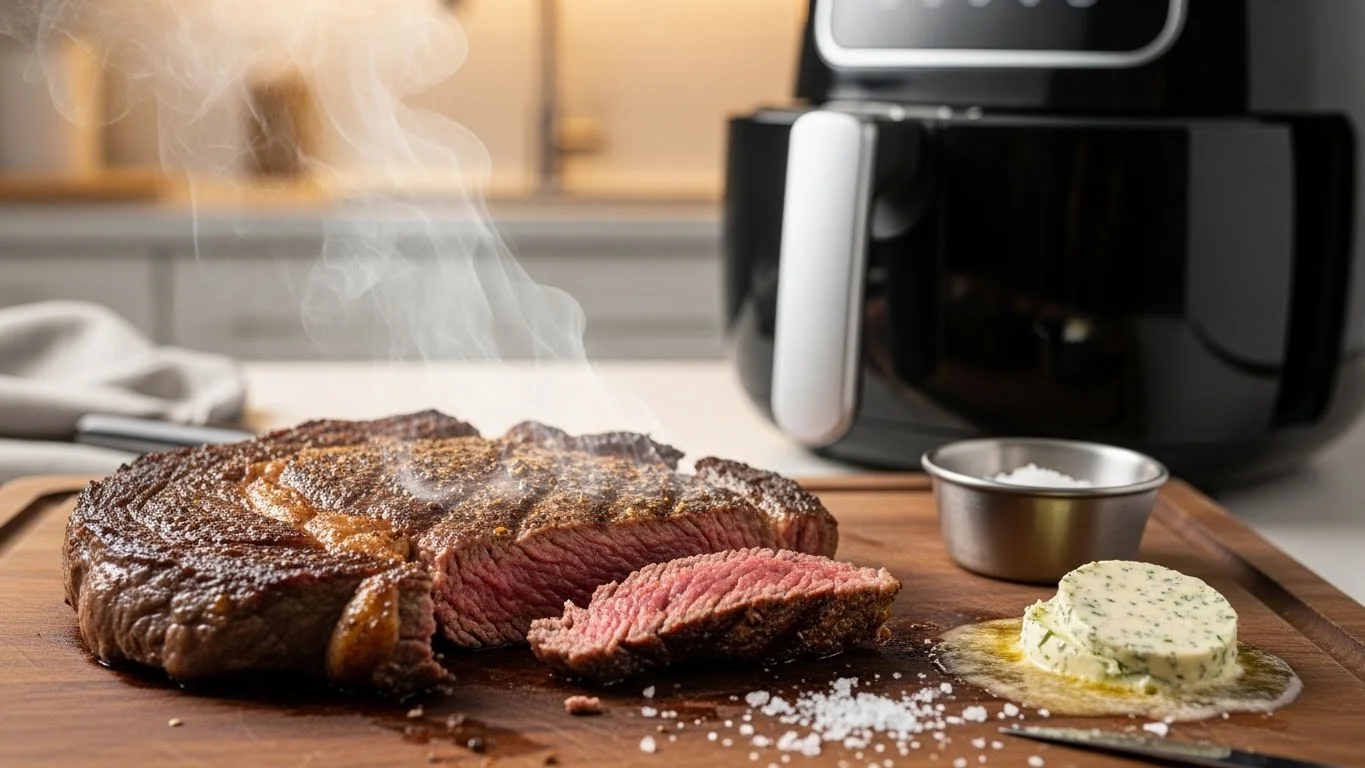
Ribeye steak is one of the most beloved cuts of beef, and for good reason. Known for its rich marbling and robust flavor, it’s cut from the rib section of the cow. This marbling is essentially intramuscular fat, which not only gives the ribeye its signature tenderness but also infuses it with a luscious flavor as it cooks. Whenever I think about a treat for myself or a special dinner, ribeye is always top of mind!
Different Cuts of Ribeye
The ribeye steak itself comes in a few different styles, and I’ve discovered that knowing the differences can help in choosing the perfect cut for your meal. You have the bone-in ribeye, which comes with the rib bone intact and offers an extra punch of flavor. Then there’s the boneless ribeye, which is a classic choice for convenience and ease of cooking. For those who really want to indulge, the “tomahawk” ribeye—with its long bone—is a showstopper that can impress anyone at a dinner party. Each cut has its own unique qualities, but all are delicious when cooked correctly.
Why Ribeye is Ideal for Air Frying
You might be wondering why ribeye is particularly suitable for air frying. From my experience, the air fryer does a fantastic job of cooking this cut evenly and quickly. The high heat helps render the fat beautifully, resulting in a crispy exterior while keeping the inside juicy and tender. Plus, I love how the air fryer can give me that delicious sear without having to heat up my entire kitchen with a grill or stovetop. It’s a win-win! For more tips on achieving the perfect sear, check out The Best Air Fryer Steak (Juicy & Perfect Sear).
Essential Tools and Ingredients
Choosing the Right Air Fryer
Before diving into cooking, let’s talk about the air fryer itself. If you don’t have one yet, I highly recommend looking for a model with a good temperature range (at least up to 400°F) and a spacious basket to fit a ribeye steak comfortably. I’ve tried a few different brands, and I find that those with a digital display make it easier to set the cooking time and temperature accurately. It’s all about making the cooking process as stress-free as possible!
Recommended Ribeye Steak Quality
When it comes to ribeye, quality matters. I always look for steaks that are well-marbled, as this usually indicates a good level of flavor and tenderness. If you can, go for USDA Prime or Choice grades. These cuts often have the perfect balance of fat and meat, which is essential for air frying. And don’t forget to check the color; a bright red hue usually means freshness. I feel like the quality of the steak can really elevate the entire cooking experience!
Essential Seasonings and Marinades
Seasoning is where you can really make your ribeye shine. I keep it simple with salt and pepper most of the time, but I also love experimenting with different marinades. A blend of olive oil, garlic, and herbs can work wonders. For instance, I’ve found that using rosemary and thyme in my marinade brings out fantastic flavors. If I want to kick it up a notch, I might add a splash of balsamic vinegar or soy sauce. The key is to let the steak marinate for at least 30 minutes, allowing those flavors to penetrate the meat. Trust me; it makes a difference!
Additional Tools for Preparation
Aside from the air fryer, having the right tools can really streamline the process. A good quality meat thermometer is a must-have to check doneness without cutting into the steak. I also love having a sharp knife handy for trimming any excess fat or slicing my steak after cooking. Lastly, a large cutting board is essential for prepping and resting your steak post-cooking. I’ve learned that taking these steps helps ensure everything goes smoothly when it’s time to cook!
Preparing the Ribeye Steak
Thawing and Bringing to Room Temperature
Before I cook my ribeye steak, I always make sure to thaw it properly. If I’m using a frozen steak, I take it out of the freezer and place it in the fridge for about 24 hours. This gives it time to thaw slowly and evenly, which I believe is key for maintaining its texture and flavor. If I’m in a hurry, I sometimes use the cold water method—placing the sealed steak in a bowl of cold water for about an hour. Just make sure it’s well sealed, so the water doesn’t get in!
Once thawed, I let the ribeye sit at room temperature for about 30 to 40 minutes before cooking. I’ve found that this helps the steak cook more evenly. When the steak is closer to room temperature, it can sear beautifully on the outside while ensuring the inside reaches the desired doneness without overcooking the outer layer. It’s a simple step, but it makes a noticeable difference!
Seasoning Techniques for Maximum Flavor
When it comes to seasoning my ribeye, I like to keep it straightforward yet effective. I typically start with a generous sprinkle of kosher salt and freshly ground black pepper on both sides. I’ve learned that giving the steak a good rub with the salt helps to enhance its natural flavors. I usually add the salt about 15 minutes before cooking—this allows it to penetrate the meat a bit.
For an extra layer of flavor, I sometimes experiment with other seasonings. Things like garlic powder, onion powder, or even a bit of smoked paprika can bring wonderful complexity to the dish. I’ve also tried a steak rub that includes a mix of spices, and it can really amp up the flavor profile! The key is to find the balance that suits your taste. I always remind myself that ribeye has a rich flavor, so I aim for seasonings that complement rather than overpower it.
Marinating Tips for Enhanced Taste
Marinating my ribeye steak is another way I love to enhance its flavor. While I often go for a simple seasoning, when I want something a bit more special, I whip up a marinade. I usually start with a base of olive oil to help lock in moisture, then add acidity with vinegar or citrus juice. For instance, I love using a mixture of soy sauce, garlic, and a touch of brown sugar, which gives the steak a beautiful glaze and rich flavor.
When marinating, I typically let the ribeye soak for at least 30 minutes but sometimes I’ll go for a few hours or even overnight in the fridge. I’ve noticed that the longer it marinates, the more flavor it absorbs, but I also have to be careful not to let it sit too long, especially with acidic marinades, as they can start to break down the meat and change its texture. I often taste my marinade beforehand to ensure it’s balanced and flavorful, which helps me get the best result when it’s time to cook!
Cooking the Ribeye Steak in an Air Fryer
Optimal Temperature Settings
Once I’ve prepped my ribeye steak, it’s time to get cooking! I typically preheat my air fryer to around 400°F. This high temperature is perfect for achieving that beautiful sear on the outside while keeping the inside juicy and tender. I’ve found that starting with a hot air fryer leads to better results overall. It’s always a good idea to give it a few minutes to heat up before placing the steak inside.
Cooking Time Guidelines for Different Doneness Levels
Cooking times can vary based on how you like your steak, and I’ve learned that a little practice goes a long way. For a medium-rare ribeye, I usually cook it for about 10 to 12 minutes, flipping it halfway through. If I prefer it medium, I’ll aim for around 12 to 14 minutes. I’ve found that checking it a couple of minutes before the estimated time is crucial; my air fryer can sometimes cook faster than I expect!
As a rule of thumb, I always recommend using a meat thermometer. For medium-rare, I look for an internal temperature of about 130°F, while medium is around 140°F. I’ve made the mistake of relying solely on time in the past, and trust me, a thermometer is a game changer.
How to Use the Air Fryer for Even Cooking
To ensure even cooking, I make sure not to overcrowd the air fryer basket. I’ve noticed that if the steak is too cramped, it can lead to uneven cooking and a less-than-ideal texture. I always aim to have space around the steak for the hot air to circulate, which is what makes the air fryer so effective. If I’m cooking more than one, I might have to do it in batches.
Another tip I’ve picked up is to flip the steak halfway through cooking. This helps achieve a nice crust on both sides. The air fryer’s design is perfect for this because it consistently circulates hot air, giving the steak that delicious outside sear while keeping it tender inside. I really enjoy the ease and speed of air frying—it allows me to enjoy a perfectly cooked ribeye in no time!
Checking for Doneness
Using a Meat Thermometer
One of the best investments I’ve made in my cooking journey is a reliable meat thermometer. It takes the guesswork out of cooking, and when it comes to ribeye steak, it’s especially important. I typically insert the thermometer into the thickest part of the steak to get the most accurate reading. For medium-rare, I aim for around 130°F, while medium is about 140°F. If I’m feeling adventurous, I sometimes push the boundaries to medium-well, which sits around 150°F. I remember the first time I used a thermometer; it completely changed the way I approached cooking steak. No more cutting into the meat to check—it’s all about precision!
Visual Cues for Perfectly Cooked Steak
While I swear by my meat thermometer, I’ve also learned to pay attention to visual cues. For instance, if I cut into the steak and see a warm, pink center surrounded by a slightly firmer outer layer, I know I’ve hit that medium-rare sweet spot. The juices should run red, indicating it’s still juicy and tender. If the juices run clear, it’s often a sign that I’ve overcooked it. I also like to look at the surface of the steak; a nice, caramelized crust is a good indicator that it’s cooked well on the outside. This combination of thermometer readings and visual checks makes the cooking process much more intuitive for me!
Resting the Steak for Juiciness
After cooking, I can’t stress enough the importance of resting the steak. This little step can make a huge difference in flavor and texture. I usually let my ribeye rest for about 5 to 10 minutes after taking it out of the air fryer. During this time, the juices redistribute throughout the meat, resulting in a more flavorful and juicy steak. I’ve observed that if I skip this step and dive right in, the juices tend to run out onto the plate, leaving me with a drier steak. It’s one of those simple yet effective tricks I learned the hard way, but now it’s a non-negotiable part of my cooking routine!
Serving Suggestions
Ideal Side Dishes for Ribeye Steak
When it comes to serving my ribeye steak, I love to think about the perfect accompaniments. One of my favorite side dishes is a classic garlic mashed potato. The creamy texture pairs beautifully with the rich flavor of the steak. I also enjoy a fresh green salad, perhaps with a tangy vinaigrette, to cut through the richness and provide a refreshing contrast. Recently, I’ve been experimenting with roasted vegetables—think carrots, asparagus, and Brussels sprouts drizzled with olive oil and a sprinkle of salt and pepper. They not only add color to the plate but are also packed with flavor!
Complementary Sauces and Toppings
While I often enjoy my ribeye steak simply seasoned, I can’t resist the occasional sauce to elevate the dish even further. A garlic herb butter is one of my go-to toppings; it melts into the warm steak and adds a delicious richness. I’ve also experimented with chimichurri sauce, which is fresh and vibrant, thanks to the herbs and garlic. It’s a perfect match for the savory notes of the ribeye. Another option I love is a red wine reduction sauce; it adds a touch of elegance and sophistication to the meal. I recommend trying these sauces to find your personal favorite!
Wine Pairing Recommendations
Pairing wine with ribeye steak can truly enhance the dining experience. Personally, I gravitate toward a full-bodied red, like a Cabernet Sauvignon or a Malbec. These wines have the bold flavors that complement the richness of the steak beautifully. I remember sharing a bottle of Cabernet with friends during a dinner party, and it was a match made in heaven! If I’m in the mood for something lighter, a Pinot Noir can also work well, offering a nice contrast without overpowering the steak. I enjoy exploring different pairings, and it’s always fun to see how the flavors interact! For those interested in a meat-focused diet, check out A 7-Day Food Guide for the Carnivore Diet.
Common Mistakes to Avoid
Overcooking or Undercooking the Steak
One mistake I’ve made in the past is overcooking my ribeye steak. It’s easy to do, especially when I’m trying to impress guests. I’ve learned to trust my thermometer and to keep an eye on the clock. Undercooking can also be a concern for some, but I think it’s better to err on the side of caution. If you’re unsure, it’s always okay to cook a little longer rather than risk serving a dry steak. I’ve found that practice really helps me gauge doneness better over time.
Neglecting to Rest the Meat
As I mentioned earlier, resting the steak is so crucial, yet I’ve often been tempted to skip this step in the excitement of serving dinner. I’ve found that rushing this part can lead to a less enjoyable steak experience. Taking those few extra minutes to let the steak rest ensures that I get the juiciest and most flavorful bite in every slice. It’s a small but critical mistake that I now always pay attention to.
Skipping Seasoning or Marinating
Finally, I’ve learned that seasoning or marinating my ribeye is not something I can overlook. A well-seasoned steak is key to maximizing flavor. I’ve made the mistake of thinking that the ribeye would shine on its own, but I was wrong. Adding salt, pepper, and a few herbs can really elevate the overall dish. I encourage everyone to experiment with different seasonings and marinades to find what works best for their palate!
Frequently Asked Questions
What is ribeye steak?
Ribeye steak is a cut of beef known for its rich marbling and robust flavor, cut from the rib section of the cow. The marbling, which is intramuscular fat, contributes to its tenderness and flavor.
What are the different cuts of ribeye steak?
The ribeye steak comes in several styles, including bone-in ribeye for extra flavor, boneless ribeye for convenience, and the tomahawk ribeye, which has a long bone and is great for impressing guests.
Why is ribeye steak ideal for air frying?
Ribeye steak is suitable for air frying because the air fryer cooks it evenly and quickly, rendering the fat for a crispy exterior while keeping the inside juicy and tender.
What should I look for when choosing an air fryer for cooking ribeye steak?
When selecting an air fryer, look for a model with a good temperature range (at least up to 400°F) and a spacious basket to fit a ribeye steak comfortably.
How can I enhance the flavor of ribeye steak through seasoning?
To enhance the flavor, season the ribeye steak with salt and pepper, and consider experimenting with marinades, such as a mixture of olive oil, garlic, and herbs, or adding balsamic vinegar or soy sauce.
What are the optimal cooking temperatures and times for ribeye steak in an air fryer?
Preheat the air fryer to around 400°F. Cook for about 10-12 minutes for medium-rare and 12-14 minutes for medium, flipping halfway through. Use a meat thermometer to check for doneness, aiming for 130°F for medium-rare and 140°F for medium.
How can I check for doneness without cutting into the steak?
Use a meat thermometer to check the internal temperature. For medium-rare, aim for around 130°F; for medium, around 140°F. Additionally, look for visual cues like a warm pink center and a caramelized crust.
Why is it important to let the ribeye steak rest after cooking?
Resting the steak for about 5 to 10 minutes allows the juices to redistribute throughout the meat, resulting in a more flavorful and juicy steak.
What are some ideal side dishes to serve with ribeye steak?
Complementary side dishes include garlic mashed potatoes, fresh green salads, and roasted vegetables like carrots, asparagus, and Brussels sprouts.
What are common mistakes to avoid when cooking ribeye steak?
Common mistakes include overcooking or undercooking the steak, neglecting to rest the meat after cooking, and skipping seasoning or marinating, which are crucial for maximizing flavor.