
Getting started with sourdough baking can feel like a daunting task, but nurturing your own sourdough starter is an incredibly rewarding experience. Let’s dive into how to make that starter thrive! If you’re looking for a straightforward recipe, check out Easy No-Fail Sourdough Bread For Absolute Beginners.
Understanding Sourdough Starters
What is a Sourdough Starter?
A sourdough starter is a mixture of flour and water that captures wild yeast and bacteria from the environment. This living culture is what makes sourdough bread rise and gives it that unique tangy flavor. When I first started baking sourdough, I was fascinated by the idea that I could create something so alive and dynamic in my own kitchen. The starter needs to be fed regularly and cared for, much like a pet. It’s a commitment, but one that brings delicious rewards.
Importance of a Healthy Starter
Having a healthy sourdough starter is crucial for successful baking. A robust starter will produce better rises and develop more complex flavors in your bread. I’ve learned from experience that a neglected starter can lead to disappointment. It may not rise well or could produce bread that tastes off. I found that regular feeding and attention to its condition made all the difference. When you ensure your starter is healthy, it reflects in the quality of your bread, and that’s something we all want, right?
Key Ingredients for a Sourdough Starter
Creating a sourdough starter only requires flour and water, but not all flour is created equal. I typically use all-purpose flour for my starter, but I’ve experimented with various types. Whole wheat flour provides more nutrients for the yeast and bacteria, while rye flour can kick-start fermentation because it’s packed with wild yeast. The water you use is also important. I prefer using filtered water to avoid chlorine, which can inhibit yeast growth. These ingredients are the building blocks of your starter, and finding the right combination for your environment can take some trial and error.
Types of Sourdough Starters
Liquid vs. Stiff Starters
One of the first decisions I had to make was whether to create a liquid or stiff starter. Liquid starters are more common and typically have a higher hydration level, which makes them easier to mix and incorporate into recipes. However, a stiff starter, which has less water, can be more forgiving and may yield a stronger flavor. I tried both and found that I preferred the versatility of a liquid starter, but that’s a personal choice based on my baking style.
Whole Wheat vs. White Flour Starters
Whole wheat starters are nutrient-rich, encouraging faster fermentation, while white flour starters tend to have a milder flavor profile. I started with a whole wheat starter, and I loved how quickly it became active. After a while, I switched to a white flour starter for a milder flavor in my bread. Each type has its own charm, and it’s worth experimenting to see what you prefer. You might find that you enjoy the complexity of a whole wheat starter one day and the simplicity of a white flour starter the next.
Rye Flour Starters and Their Benefits
Rye flour is another fantastic option for a sourdough starter. From my experience, rye starters tend to ferment quickly and develop a distinct, earthy flavor. They are excellent at capturing wild yeast from the environment, which is why many bakers swear by them. I’ve mixed rye flour into my starters, and I noticed a significant boost in activity. If you’re looking for a starter that’s robust and flavorful, consider giving rye flour a try.
Feeding Your Sourdough Starter
What Does ‘Feeding’ a Starter Mean?
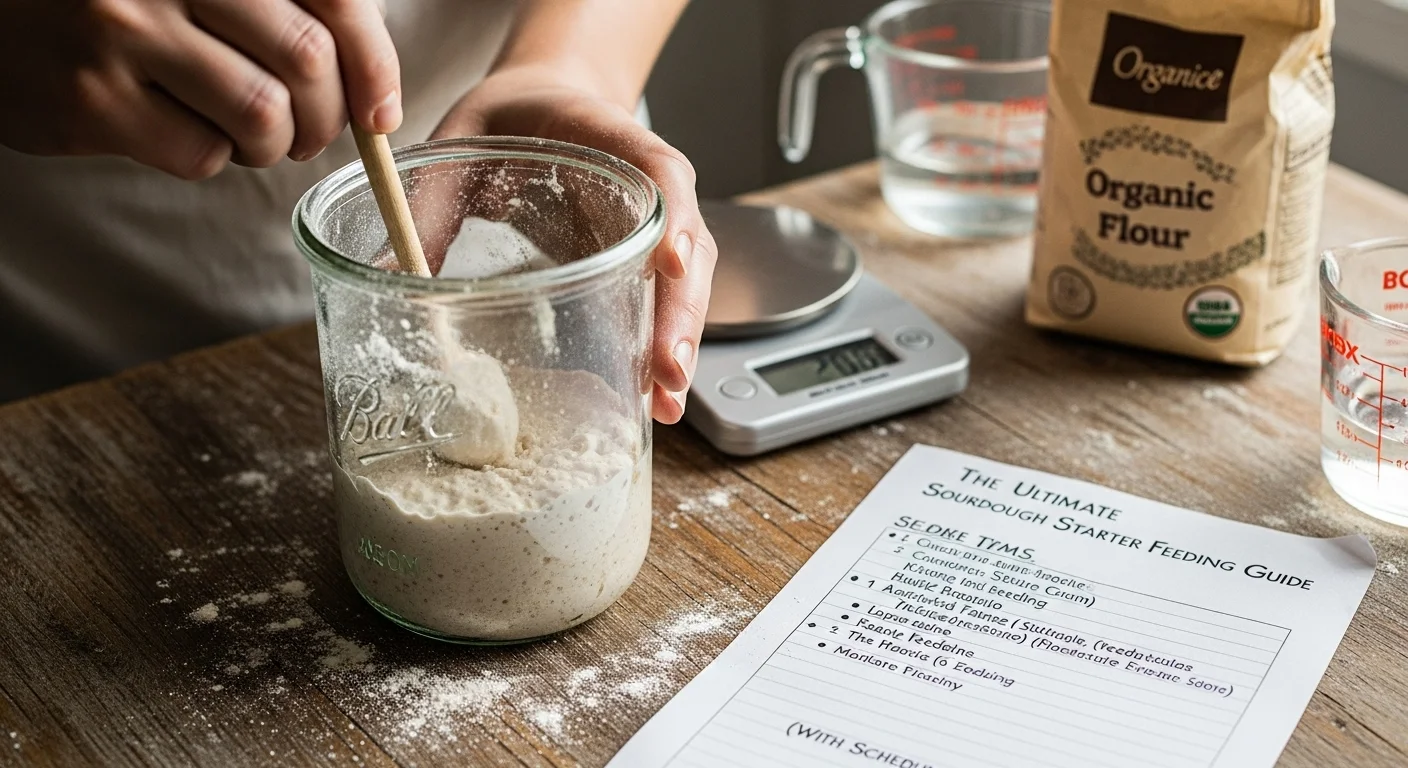
Feeding your sourdough starter is all about providing it with fresh flour and water, which fuels the yeast and bacteria in the mixture. I remember the first time I fed my starter—it felt like a little ritual. I’d take it out of the fridge, give it a good stir, and then add equal parts flour and water. This process revitalizes the microorganisms, ensuring they have what they need to thrive. It’s like giving them a meal, and in return, they help me create some fantastic bread.
Frequency of Feeding: Daily vs. Weekly
The frequency of feeding your starter depends on how often you plan to use it. When I first started, I fed mine daily, especially since I was excited and eager to bake. If you’re keeping your starter at room temperature, daily feedings are ideal. However, if you prefer to store it in the fridge, weekly feedings are sufficient. I found that with the occasional neglect, my starter still bounced back beautifully, but I always felt a bit more connected to it when I fed it daily. It really depends on your lifestyle and baking habits.
How to Properly Feed Your Starter
Feeding your starter isn’t complicated, but there are a few steps I’ve learned to make it more effective. Here’s how I do it:
- Remove the starter from its container and discard about half. This keeps the mixture manageable and prevents it from overflowing.
- Add equal parts flour and water by weight. For example, if I keep 100 grams of starter, I’ll add 100 grams of flour and 100 grams of water.
- Mix everything together until it’s smooth. I like to use a spatula, as it’s easy to incorporate the flour without too much mess.
- Transfer the mixture back into its container, cover it loosely, and let it sit at room temperature until it becomes bubbly and puffy.
This simple process has become one of my favorite parts of baking. I love seeing the transformation of my starter after each feeding!
Common Mistakes to Avoid When Feeding
As I delved deeper into sourdough baking, I made some mistakes during the feeding process. Here are a few that I’ve learned to avoid:
- Not Discarding Enough: If you don’t discard some of the starter, it can become too acidic or unmanageable in volume. I learned that keeping the starter size reasonable helps maintain its health.
- Using Chlorinated Water: I made the mistake of using tap water at first, only to find my starter sluggish. Switching to filtered or bottled water made a huge difference.
- Feeding Too Much or Too Little: Finding the right balance of flour and water is key. I’ve found that sticking to a 1:1:1 ratio (starter:flour:water) works well, but adjusting based on the environment is important too.
By being mindful of these common pitfalls, my sourdough journey has become much smoother. I feel more in tune with my starter and, in turn, my baking results have improved tremendously.
Feeding Schedule for Sourdough Starters
Beginner Feeding Schedule
If you’re just starting out, I recommend feeding your starter once a day at room temperature. This schedule allows you to see how it reacts and helps you become familiar with its behavior. My first feeding routine looked like this: I’d feed my starter every morning, and by the afternoon, I would see little bubbles forming. It felt rewarding to witness the growth, and I got excited about the prospect of baking. For more beginner-friendly recipes, check out Easy Gluten-Free Sourdough: A Beginner’s No-Fail Guide.
Intermediate Feeding Schedule
Once you’re comfortable with your starter, you might decide to explore an intermediate schedule. This could mean feeding it twice a day if you’re keeping it at room temperature. I found that this helped maintain a bubbly and active starter, which was perfect for more ambitious baking projects. The key is to pay attention to how quickly it rises and falls; this will help you determine the best feeding frequency.
Advanced Feeding Techniques
For those who have become more experienced, advanced feeding techniques can include adjusting the ratios of flour and water based on the specific needs of your starter. Some bakers prefer to use different types of flour, like whole wheat or rye, during feedings to encourage diverse microbial activity. I experimented by alternating between all-purpose and whole wheat flour, and I noticed a more robust flavor in my bread. It’s all about finding what works best for you and your starter.
Adapting the Schedule for Different Climates
Climate can play a significant role in how often you should feed your starter. Living in a warmer area, I discovered that my starter would become active much faster, requiring more frequent feedings. Conversely, in cooler temperatures, it might take longer to rise. I learned to adapt my routine based on the environment—sometimes even putting my starter in a slightly warmer spot to encourage activity. Observing how your starter behaves in different conditions is a crucial part of the sourdough journey.
Signs of a Healthy Sourdough Starter
Bubbles and Rise: What to Look For
One of the most satisfying parts of watching a sourdough starter is seeing it come to life. After I feed my starter, I look for bubbles forming throughout the mixture. These bubbles indicate that the wild yeast and bacteria are doing their job, fermenting the mixture and producing carbon dioxide. I remember the first time I noticed my starter doubling in size; it felt like such an achievement! Typically, a healthy starter will rise and fall, so when I see it reaching its peak height and then gradually deflating, I know everything is on track. It’s a simple yet rewarding visual cue that guides my baking adventures.
Smell: Identifying the Right Aroma
The smell of your sourdough starter is also a key indicator of its health. A good starter will have a pleasant, slightly tangy aroma—think of it as the scent of fresh, homemade bread. At first, I was surprised by how aromatic my starter was, but over time I learned to appreciate its unique fragrance. If your starter smells off, like rotten or overly acidic, it could be a sign that something is wrong. I’ve found that trust your nose! The aroma tells you a lot about the microbial activity happening in your starter.
Timing: When is Your Starter Ready to Use?
Timing is everything when it comes to using your sourdough starter in baking. I’ve learned that a starter is usually at its peak about 4 to 6 hours after feeding, but this can vary based on its environment. During this time, it will be bubbly and have risen significantly. I pay close attention to the rise; it’s usually my cue to start baking. If I’m unsure, I often perform the “float test.” I take a small spoonful of the starter and drop it into a glass of water. If it floats, it’s ready to go! This little trick has saved me from some less-than-ideal baking sessions.
Storing Your Sourdough Starter
Short-Term Storage Options
If you’re planning to bake regularly, keeping your sourdough starter at room temperature is a great option. I’ve found it easy to keep it on my countertop; I just make sure to feed it daily. However, if life gets busy and I can’t bake as often as I’d like, I’ve learned to store it in the fridge. This slows down the fermentation process and allows me to space out feedings to once a week. Just remember to take it out and feed it a day or two before I plan to bake—it really helps revive its activity!
Long-Term Storage Techniques
For those times when I need a longer break from baking, I’ve explored a few long-term storage options. One method is to dry my starter. I spread a thin layer of the starter on a piece of parchment paper and let it air dry completely. Once dry, I break it into flakes and store it in an airtight container. When I’m ready to revive it, I add water and flour, and it usually springs back to life after a few feedings. It’s an effective way to ensure I always have a backup starter when I need it!
Reviving a Neglected Starter
If I’ve let my starter sit in the fridge for too long or neglected it, I’ve learned how to revive it. I start by discarding a good portion of the starter, just like a regular feeding. Then, I give it a few feedings of equal parts flour and water every 12 hours, stored at room temperature. It usually takes a day or two, but I’ve seen it come back to life, bubbling and active again. Patience is key here; I remind myself that like any living thing, my starter needs a little TLC to thrive once more.
Common Issues and Troubleshooting
What to Do if Your Starter Isn’t Rising
There have been times when my starter just wouldn’t rise, and I’ve learned not to panic. The first thing I check is the temperature of my kitchen. A chilly environment can slow down fermentation. If it’s too cold, I try moving my starter to a warmer spot, like near the oven or in a sunny window. If that doesn’t help, I switch to a more nutrient-rich flour for a few feedings, which can sometimes jumpstart its activity. I’ve also found that vigorous stirring can help incorporate air into the mixture, giving the yeast a boost.
Dealing with Off Smells or Colors
If my starter develops a strange smell or color, I’ve learned to assess the situation carefully. A layer of liquid on top, known as “hooch,” is a sign that my starter is hungry and needs feeding. I stir it back in or pour it off before giving it a good feed. However, if I notice signs of mold or a strong off-odor, it’s best to err on the side of caution. In those cases, I’ve had to let go of that batch and start fresh. It’s tough, but I remind myself that it’s all part of the learning process!
Understanding and Fixing Over-Feeding or Under-Feeding
Finding the right balance in feeding my starter has been an ongoing journey. If I feed it too much, it can become sluggish and less active. I’ve learned to pay attention to its behavior after feeding; if it doesn’t rise as expected, I might need to scale back. On the flip side, under-feeding can lead to an overly acidic starter. If that happens, I try to feed it a couple of times with fresh flour and water to restore balance. Monitoring its activity and adjusting my feeding schedule accordingly has made a significant difference in my sourdough baking success.
Using Your Sourdough Starter
When to Use Your Starter for Baking
Knowing when to use your sourdough starter is essential for achieving the best results in your baking. I’ve found that my starter is at its peak about 4 to 6 hours after feeding, which is when it’s bubbly and has risen significantly. This timing can vary based on temperature and the specific activity of your starter. I’ve learned to keep an eye on the bubbles and the rise, which signal it’s ready for action. The excitement of preparing to bake a loaf of bread is palpable during this time, and it’s gratifying to see how my care and attention have transformed the starter into a powerful leavening agent.
Recipes to Try with Your Sourdough Starter
Once you’re ready to bake, the possibilities with sourdough are endless! My journey started with a simple sourdough bread recipe that focused on the starter’s natural flavor. As I gained confidence, I began experimenting with different recipes. Here are a few favorites:
- Classic Sourdough Bread: This is the quintessential recipe that showcases the flavor and texture of your starter. The crust is beautifully caramelized, and the inside is soft and chewy.
- Sourdough Pancakes: I love making pancakes with my starter! It adds a lovely tang and makes them fluffy.
- Sourdough Pizza Crust: Using my starter for pizza dough has made for some of the best homemade pizzas I’ve ever had. The crust is crispy and full of flavor.
- Gluten-Free Breadsticks: For those looking for gluten-free options, I highly recommend trying Easy Gluten-Free Breadsticks Recipe (Chewy & Garlicky).
These recipes not only utilize the sourdough starter effectively but also allow for creativity as you can adjust and add your favorite toppings and ingredients.
Tips for Baking with Sourdough
Baking with sourdough can be a bit different from baking with commercial yeast, and I’ve learned a few tips along the way that have helped me achieve successful loaves:
- Be Patient: Sourdough requires longer fermentation times. Don’t rush the process; it’s part of what makes sourdough unique and delicious.
- Autolyse Technique: I’ve found that allowing the flour and water to rest before adding the starter enhances gluten development, which results in a better texture.
- Use a Dutch Oven: Baking in a Dutch oven creates steam, which is crucial for achieving that beautiful crust. This method has transformed my bread from good to amazing!
Every baking session is an opportunity to learn and refine your technique. I often jot down notes about what worked well and what I might want to adjust next time.
Additional Resources
Books on Sourdough Baking
If you’re looking to deepen your knowledge, there are some fantastic books out there. I highly recommend “Tartine Bread” by Chad Robertson for its detailed insights and beautiful photography. Another favorite of mine is “The Bread Baker’s Apprentice” by Peter Reinhart, which offers a wealth of information on bread fundamentals and techniques.
Online Communities and Forums
Connecting with others who share a passion for sourdough has been invaluable. I’ve found online communities like the Sourdough subreddit and various Facebook groups to be wonderful resources. Engaging in discussions, asking questions, and sharing my successes and failures has enriched my baking journey.
YouTube Channels for Visual Learners
For those who learn best through visual means, there are great YouTube channels dedicated to sourdough. Channels like “Bigger Bolder Baking” and “Juls’ Kitchen” offer step-by-step tutorials that have helped clarify techniques that I was unsure about. Watching someone else knead and shape dough has given me a better perspective on the process.
Final Thoughts
Nurturing a sourdough starter is more than just baking; it’s a journey filled with experimentation, patience, and joy. I’ve learned to embrace the ups and downs, knowing that each loaf is a reflection of my efforts and care. Whether you’re just starting out or have been baking for a while, there’s always something new to discover in the world of sourdough. So grab your flour, water, and that lively starter, and let’s create some delicious memories together!
Frequently Asked Questions
What is a sourdough starter?
A sourdough starter is a mixture of flour and water that captures wild yeast and bacteria from the environment. It is a living culture that makes sourdough bread rise and gives it a unique tangy flavor.
Why is having a healthy sourdough starter important?
A healthy sourdough starter is crucial for successful baking as it produces better rises and develops more complex flavors in bread. Neglecting the starter can lead to poor rises and undesirable flavors in the bread.
What ingredients are needed to create a sourdough starter?
Creating a sourdough starter requires flour and water. The choice of flour can vary, with all-purpose, whole wheat, and rye flours being common options. Using filtered water is recommended to avoid chlorine that can inhibit yeast growth.
What is the difference between liquid and stiff sourdough starters?
Liquid starters have a higher hydration level, making them easier to mix into recipes, while stiff starters have less water and can yield a stronger flavor. The choice between them depends on personal baking style.
How often should I feed my sourdough starter?
The frequency of feeding depends on how often you plan to use it. If kept at room temperature, daily feedings are ideal. If stored in the fridge, weekly feedings are sufficient.
What are some common mistakes to avoid when feeding a sourdough starter?
Common mistakes include not discarding enough of the starter, using chlorinated water, and feeding too much or too little. Maintaining a proper balance and using filtered water helps in keeping the starter healthy.
How can I tell if my sourdough starter is healthy?
A healthy starter will show bubbles and rise after feeding, and it should have a pleasant, slightly tangy aroma. If it smells off or develops an unusual color, it may indicate problems.
What should I do if my sourdough starter isn’t rising?
If your starter isn’t rising, check the temperature of your kitchen as a chilly environment can slow fermentation. Moving it to a warmer spot or switching to a more nutrient-rich flour can help boost its activity.
How can I store my sourdough starter long-term?
For long-term storage, you can dry your starter by spreading it on parchment paper and letting it air dry. Once dry, break it into flakes and store in an airtight container. Reviving it requires adding water and flour.
What types of recipes can I try with my sourdough starter?
With a sourdough starter, you can try various recipes, including classic sourdough bread, sourdough pancakes, and sourdough pizza crust. Each recipe allows for creativity in adding your favorite toppings and ingredients.